
Party Decals
Transform Your Celebrations with Custom Party Decals: The Ultimate Guide to Event Vinyl Signs Turn any space into a picture-perfect party venue with professional custom
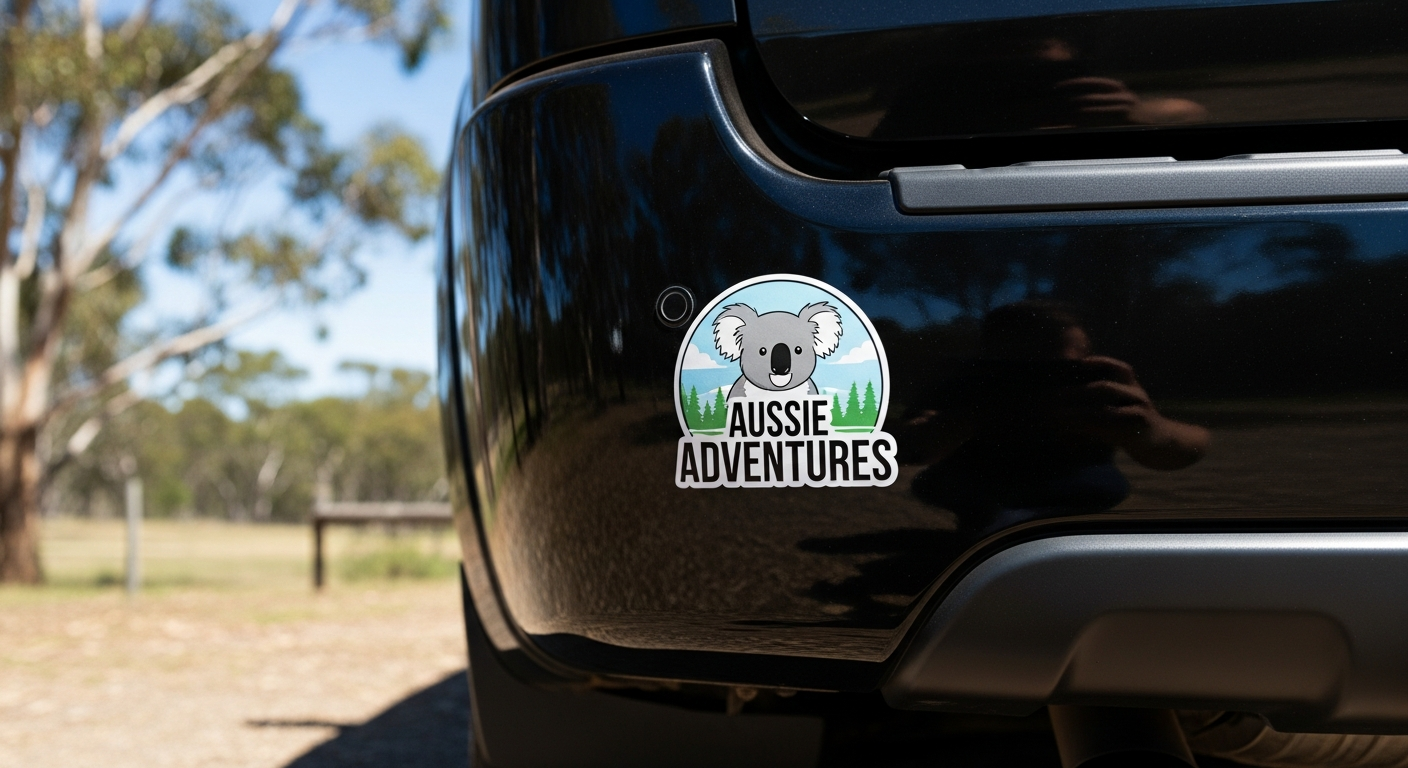
Your bumper is prime real estate for personal expression, business promotion, or cause advocacy. Whether you’re a small business owner looking to increase brand visibility, an event organizer promoting an upcoming festival, or simply someone who wants to share a message with fellow Australians on the road, custom bumper stickers offer an affordable and impactful way to communicate. This comprehensive guide walks you through everything you need to know about creating, designing, and ordering custom bumper stickers in Australia—from initial concept to final installation. By the end, you’ll have the knowledge and confidence to create bumper stickers that look professional, last for years, and effectively convey your message to thousands of daily viewers on Australian roads.
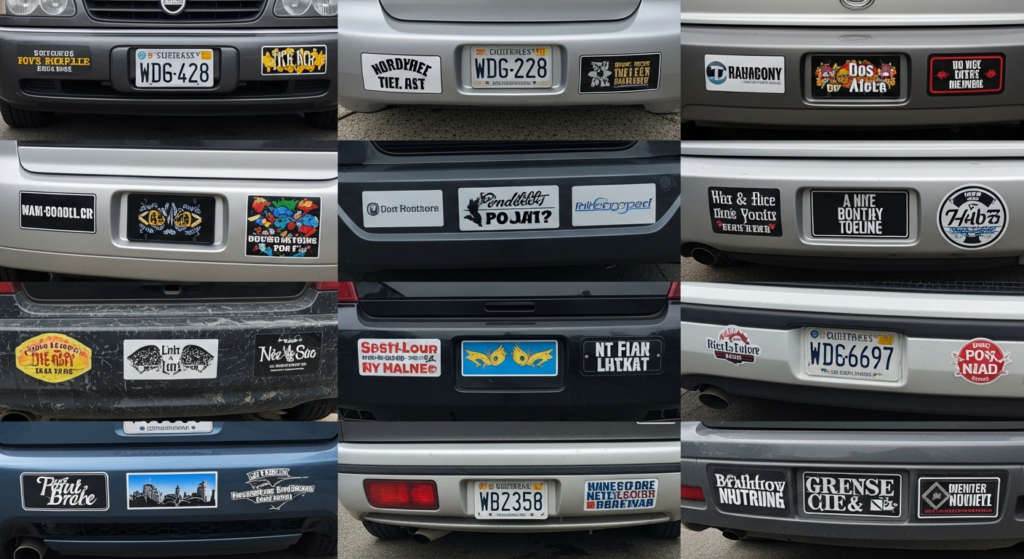
In the bustling streets of Melbourne, the sprawling highways of Queensland, and the scenic coastal roads of Western Australia, millions of vehicles serve as moving billboards every single day. What many Australian business owners and organizations don’t realize is that they’re missing out on one of the most cost-effective advertising opportunities available: custom bumper stickers that transform every journey into a marketing campaign.
Consider the mathematics of mobile advertising. A single vehicle traveling through urban Australian cities like Sydney or Brisbane can generate over 30,000 daily impressions. That’s more eyeballs on your message in one day than many small businesses see on their social media posts in a month. When you factor in the one-time investment of a quality custom bumper sticker versus the recurring costs of radio advertisements, print media, or digital campaigns, the cost-per-impression becomes remarkably low—often less than a fraction of a cent per view.
The versatility of custom bumper stickers makes them particularly valuable in the Australian market. Local tradies use them to build brand recognition as they travel between job sites, displaying their company logo and phone number to potential customers in every suburb they visit. Event organizers promoting music festivals, charity runs, or community gatherings can create buzz weeks before the actual event, turning early supporters into mobile ambassadors. Political campaigns leverage bumper stickers to maintain visibility between election cycles, while sports fans proudly display team loyalties that spark conversations in car parks from Perth to Cairns.
Australia’s unique automotive culture amplifies the effectiveness of bumper sticker advertising. With high vehicle ownership rates and longer average commute distances compared to many other countries, Australian vehicles spend significant time on roads where they’re visible to other drivers, pedestrians, and passengers. The outdoor-oriented lifestyle that defines much of Australian culture means vehicles frequently travel to beaches, national parks, shopping centers, and community events—exposing your message to diverse audiences across different demographics and geographic regions.
The durability factor cannot be overlooked when evaluating the cost-effectiveness of vehicle advertising. Quality vinyl bumper stickers designed for Australian conditions can withstand 3-7 years of exposure to harsh UV rays, temperature extremes, and unpredictable weather patterns. This longevity means a single $20-50 investment in custom bumper stickers can generate hundreds of thousands of impressions over its lifetime, making it one of the most efficient marketing strategies available to Australian businesses and organizations.
Local businesses particularly benefit from bumper sticker advertising because it targets audiences within their service areas. A plumber’s bumper sticker seen in local neighborhoods signals availability and reliability to potential customers. A restaurant’s creative bumper sticker can attract diners who live or work nearby. Real estate agents use custom bumper stickers to build name recognition within their target suburbs, ensuring their contact information is visible to potential clients and referral sources throughout their daily routines.
The personal expression aspect shouldn’t be underestimated either. Australians value authenticity and individual character, making bumper stickers an ideal medium for sharing personal interests, supporting local causes, or simply adding personality to their vehicles. This cultural acceptance means well-designed bumper stickers are viewed positively rather than as intrusive advertising, increasing the likelihood that your message will be read and remembered.
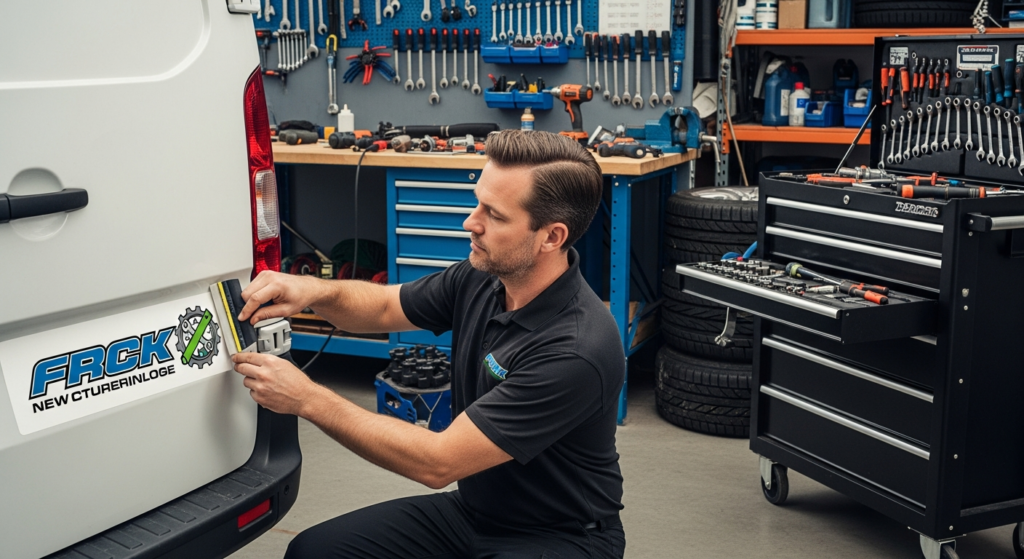
Unlike digital advertising that can be blocked, skipped, or ignored, bumper stickers deliver guaranteed visibility. Every person stuck in traffic behind your vehicle becomes a captive audience for your message. During peak commute hours on major Australian highways like the Pacific Highway, Western Ring Road, or Gateway Motorway, a single bumper sticker can reach hundreds of potential customers who have nothing else to do but read the messages displayed on surrounding vehicles.
The psychological impact of mobile advertising also deserves consideration. Messages encountered during daily routines—like commuting—tend to have higher recall rates because they’re associated with regular, memorable contexts. A potential customer might see your business bumper sticker during their drive to work for weeks before they actually need your services, but when they do require a plumber, electrician, or caterer, your brand name will have subconscious familiarity that influences their decision-making process.
Once you understand the powerful impact custom bumper stickers can have on your visibility and brand recognition, the next step is creating a design that captures attention and communicates effectively while vehicles move at highway speeds.
Creating an effective bumper sticker design requires understanding the unique challenges of mobile advertising. Unlike stationary signage that viewers can study at their leisure, bumper stickers must communicate their message within the 3-5 seconds it takes for traffic to flow or for a driver to glance at your vehicle while stopped at traffic lights. This time constraint demands design principles that prioritize instant recognition and crystal-clear communication over artistic complexity.
Simplicity emerges as the most critical design principle for bumper sticker success. Complex graphics, intricate illustrations, or cluttered layouts that might look impressive on a computer screen become unreadable chaos when viewed from 10-20 meters away while traveling at 60 kilometers per hour. The human eye and brain can only process so much information in those crucial few seconds, making it essential to focus on one primary message supported by minimal secondary elements.
Typography selection and sizing directly determine whether your message reaches its intended audience or gets lost in the visual noise of traffic. Sans-serif fonts like Arial, Helvetica, or Futura provide maximum legibility at distance because their clean lines and open letter forms remain distinct even when subject to road vibration, varying light conditions, and quick viewing angles. Script fonts, decorative typefaces, or overly stylized lettering that might look elegant in print become illegible blurs when reduced to bumper sticker proportions and viewed through vehicle windscreens.
The minimum font size for effective bumper sticker typography is 6-point for secondary information like phone numbers or websites, while primary messages should utilize fonts of 12-point or larger to ensure readability from typical following distances on Australian roads. Consider that many viewers will be seeing your sticker through their own windscreen, which may be tinted, rain-spotted, or reflecting glare from the Australian sun. What looks perfectly readable on your computer monitor may prove challenging to decipher under real-world driving conditions.
Color selection can make or break a bumper sticker’s effectiveness. High-contrast color combinations create the visual separation necessary for quick comprehension, with dark text on light backgrounds or light text on dark backgrounds providing optimal results. The classic combination of black text on white or yellow backgrounds remains popular because it delivers maximum contrast under various lighting conditions, from bright midday sun to evening twilight hours when many Australians are commuting home from work.
Avoid color combinations that reduce visibility or create eye strain, such as red text on blue backgrounds, purple on black, or any pairing where the colors have similar brightness values. These low-contrast combinations might appear sophisticated or creative in design theory, but they fail the practical test of roadside readability. Remember that color perception changes under different lighting conditions—what looks distinct in office fluorescent lighting may appear nearly identical under the yellow glow of street lamps or the harsh brightness of Australian summer sunshine.
Strategic use of white space (or negative space) prevents visual overcrowding and allows important elements to stand out prominently. Amateur designers often try to fill every available inch of sticker space with text, graphics, or decorative elements, but professional designers understand that empty space serves important functions. White space guides the viewer’s eye to the most important information, reduces cognitive load during quick viewing, and creates visual breathing room that makes the overall design more pleasant and professional in appearance.
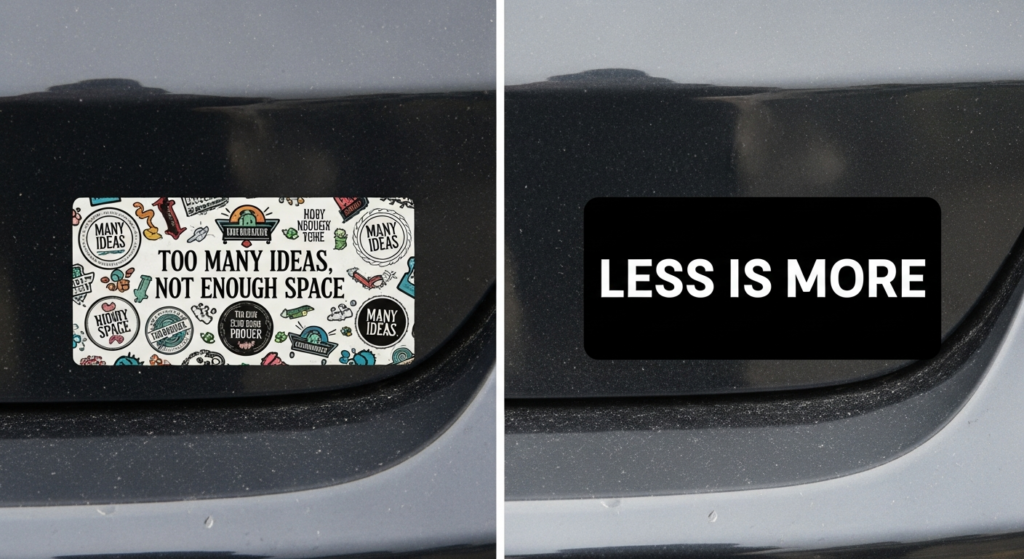
Brand consistency principles must be adapted for the bumper sticker format while maintaining recognizable connections to your existing marketing materials. If your business cards, website, and storefront signage all use a specific color palette and font combination, your bumper stickers should incorporate these elements in a way that’s appropriate for mobile viewing. This might mean using a bolder version of your brand font or adjusting color saturation to account for outdoor viewing conditions, but the essential brand DNA should remain recognizable to customers who know your business from other contexts.
Message hierarchy determines which information receives primary attention and which details serve supporting roles. Your business name or primary message should dominate the design, typically occupying 60-70% of the visual weight. Secondary information like phone numbers, websites, or taglines should be smaller but still legible, positioned in areas that don’t compete with the primary message for attention. Tertiary details like addresses or social media handles may need to be omitted entirely if space is limited—remember that a bumper sticker’s job is to create brand awareness and interest, not necessarily to provide every piece of contact information.
The viewing distance and angle must be considered during design development. Most bumper stickers will be viewed from 5-20 meters away at various angles depending on traffic flow, lane changes, and parking situations. Text that appears perfectly sized at arm’s length may become too small to read from a realistic following distance. Create test prints and view them from across a parking lot to simulate real-world viewing conditions, making adjustments to sizing, contrast, and layout based on these practical tests.
Legibility testing should include various lighting conditions that reflect actual Australian driving environments. View your design in bright sunlight, shade, twilight, and artificial lighting to ensure consistent readability. Consider seasonal factors like winter rain that may reduce visibility, or summer heat shimmer that can distort distant objects. A design that only works under perfect conditions will fail to deliver results during the majority of real-world viewing situations.
Great design provides the foundation for effective communication, but technical specifications and material choices determine whether your creative vision translates into a professional, long-lasting product that can withstand Australia’s challenging environmental conditions.
The transition from digital design to physical product requires careful attention to technical specifications that ensure your bumper sticker reproduces accurately and performs reliably under Australia’s demanding environmental conditions. Understanding these technical requirements prevents costly reprints, customer dissatisfaction, and premature failure that undermines your marketing investment.
File preparation begins with resolution requirements that guarantee crisp, professional reproduction. Digital images must be created or saved at 300 DPI (dots per inch) minimum resolution at the actual print size to avoid pixelation or blurriness in the final product. Many designers make the mistake of working at screen resolution (72 DPI) and then enlarging the file for printing, which results in jagged edges, unclear text, and unprofessional appearance. Complete artwork requirements specify that files should be created at final dimensions with appropriate resolution from the beginning of the design process.
Color mode selection dramatically affects how your design appears when printed. CMYK (Cyan, Magenta, Yellow, Key/Black) color mode matches the printing process used for professional sticker production, ensuring colors reproduce as intended. RGB color mode, designed for screen display, often produces significantly different colors when converted for printing—that vibrant red you see on your computer monitor may appear dull orange or muddy brown when printed using CMYK inks. Converting designs to CMYK early in the design process allows you to make color adjustments while you can still modify other design elements if needed.
Bleed requirements prevent white edges or borders that create amateur appearance when stickers are cut to final size. Professional printing requires a 3mm bleed around all edges of your design, meaning important elements like text and logos must be positioned at least 3mm from the trim line, while background colors and patterns should extend 3mm beyond the intended final dimensions. This extra material ensures that minor variations in cutting equipment or material handling don’t result in unprinted edges showing on your finished stickers.
Standard Australian bumper sticker sizes have evolved to optimize visibility while fitting common vehicle designs. The most popular dimensions are 3” × 11.5” (76mm × 292mm) and 4” × 15” (102mm × 381mm), proportions that work well on most passenger vehicles, SUVs, and light commercial vehicles. These sizes provide sufficient space for readable text while maintaining proportions that look balanced and professional on vehicle bumpers. Sticker size standards and custom options offer flexibility for specific applications, but standard sizes typically provide better pricing due to efficient use of printing materials and established cutting tools.
Material selection represents perhaps the most critical decision affecting your sticker’s longevity and appearance under Australian conditions. Vinyl materials specifically engineered for outdoor use provide the durability necessary to withstand years of UV exposure, temperature extremes, and weather challenges that would quickly destroy paper-based alternatives. Paper stickers, while less expensive initially, fade within weeks under Australian sunshine and disintegrate completely when exposed to rain or humidity, making them suitable only for temporary indoor applications.
Outdoor-grade vinyl incorporates UV inhibitors and plasticizers that maintain flexibility and color stability under harsh conditions. Queensland’s intense tropical sun, South Australia’s extreme temperature variations, and Tasmania’s moisture challenges all demand materials engineered specifically for these environmental stresses. Material durability testing results demonstrate significant performance differences between economy materials and premium outdoor vinyl, with quality materials lasting 3-7 years compared to months for inferior alternatives.
Surface finish options affect both appearance and durability characteristics. Gloss finishes enhance color vibrancy and provide easy cleaning, making them ideal for designs that rely on bright colors or photographic images. However, gloss surfaces show scratches and scuff marks more readily, which can accumulate over time from car washes, road debris, and general handling. Matte finishes reduce glare that can interfere with readability under bright Australian sunshine while hiding minor scratches and imperfections that develop during normal use. The reduced reflection also improves legibility from various viewing angles, particularly important for bumper stickers that may be viewed while the vehicle is parked at different orientations relative to the sun.
UV-resistant coating application extends color life significantly beyond uncoated materials. Australia’s high UV levels, particularly in northern regions and at high altitudes, accelerate color fading that can render text unreadable or make brand colors unrecognizable within months. Quality UV coatings absorb harmful wavelengths while allowing visible light to pass through, preserving color accuracy and text clarity throughout the sticker’s intended lifespan.
Adhesive considerations must balance holding power with removal requirements. Permanent adhesive formulations create strong bonds with clean surfaces and resist lifting or peeling under normal conditions, making them ideal for long-term applications where the sticker should remain in place for years. However, permanent adhesives can damage paint or leave residue when removal becomes necessary, potentially creating problems for vehicle owners who lease their cars or want to change messages seasonally.
Removable adhesive alternatives provide easier removal with minimal residue while still maintaining adequate holding power for most applications. These formulations work well for temporary promotions, seasonal campaigns, or situations where the vehicle may need to be returned to original condition. The trade-off involves slightly reduced holding power under extreme conditions, making them less suitable for commercial vehicles that experience frequent washing or harsh environmental exposure.
File format requirements ensure compatibility with professional printing equipment while preserving design integrity throughout the production process. PDF or EPS formats provide the most reliable results because they maintain vector graphics at full resolution while embedding fonts and images properly. These formats prevent font substitution issues that can dramatically alter your design’s appearance and ensure consistent color reproduction across different printing systems.
Font outlining eliminates potential problems when your design files are processed on systems that don’t have your specific fonts installed. Converting text to outlines (curves) preserves the exact appearance of your typography while ensuring compatibility, but it also makes text editing impossible after conversion. Save a copy of your file with editable text before outlining fonts, allowing future modifications if needed.
JPEG formats should be avoided for final artwork submission because they use compression algorithms that reduce image quality and can introduce artifacts that become visible in large format printing. While JPEG files appear acceptable on computer screens, the compression artifacts become apparent when enlarged to bumper sticker dimensions and can create unprofessional results.
Professional material selection and technical precision lay the groundwork for successful production, but ensuring your bumper sticker placement complies with Australian road regulations protects you from potential legal issues while maintaining road safety standards.
Understanding and complying with Australian legal requirements for vehicle stickers protects you from potential fines while ensuring your message reaches its intended audience without compromising road safety. Different states and territories maintain varying regulations, making it essential to understand both general principles and specific local requirements that apply to your situation.
Number plate visibility requirements represent the most universally enforced regulation across all Australian jurisdictions. Legal bumper sticker placement guidelines specify that all letters and numbers on registration plates must remain completely legible from 18 meters distance under normal daylight conditions. This requirement means stickers cannot overlap, obscure, or even partially cover any portion of the registration plate, including border areas that might seem unimportant but are actually part of the required visibility zone.
The 18-meter legibility requirement accounts for normal following distances and allows law enforcement, parking officers, and automated systems to identify vehicles reliably. Even minor obstructions that don’t completely hide letters or numbers can violate this requirement if they reduce contrast, create shadows, or otherwise interfere with clear identification. Reflective elements on stickers can be particularly problematic because they may create glare that obscures plate visibility under certain lighting conditions.
Windscreen placement restrictions vary significantly between states but generally prohibit stickers on front windscreens except for specific exemptions like registration stickers, inspection certificates, or parking permits issued by authorities. The rationale focuses on driver visibility and safety—any obstruction in the driver’s field of view can contribute to accidents by blocking sight lines or creating distracting visual elements.
Front windscreen regulations typically allow small stickers in lower corners where they don’t interfere with normal driving sight lines, but size limitations and positioning requirements vary between jurisdictions. New South Wales, for example, permits small stickers in the bottom 10 centimeters of the front windscreen, while other states have different specifications. Commercial advertising is generally prohibited on front windscreens regardless of size or position.
Rear window placement rules are more permissive in most states but still include important restrictions. Australian vehicle sticker regulations allow rear window stickers provided they don’t obstruct the driver’s rear vision or interfere with required equipment like brake lights or turn signals. The key consideration involves maintaining adequate visibility through rear-view mirrors, particularly important for vehicles without side mirrors or during reversing maneuvers.
Appropriate bumper placement zones offer the safest legal options for custom sticker placement while maximizing visibility to other road users. Vehicle bumpers, side panels below window level, and rear sections above the bumper line generally fall outside regulated visibility zones while still providing excellent exposure to your target audience. These areas allow creative freedom in sizing and positioning without triggering legal concerns or safety violations.

State-specific regulation variations require checking local transport authority guidelines before finalizing sticker placement plans. Queensland’s regulations differ from Victoria’s requirements, which vary from Western Australian rules, creating a complex landscape for businesses or individuals operating across state boundaries. What’s perfectly legal in one state might result in fines or vehicle inspection failures in another jurisdiction.
The Australian Capital Territory, Northern Territory, and Tasmania maintain their own distinct requirements that may be more or less restrictive than mainland state regulations. Commercial operators who travel between states should research requirements for all jurisdictions where their vehicles will operate, ensuring compliance regardless of location.
Commercial vehicle considerations add another layer of complexity for businesses using custom stickers for advertising purposes. Vehicle advertising laws include additional restrictions on commercial vehicles, including size limitations, content requirements, and registration obligations that don’t apply to personal vehicle stickers. Some states require registration or permits for commercial vehicle advertising, while others have specific rules about advertising content or placement.
Heavy vehicle regulations often include additional restrictions related to load visibility, safety equipment access, and mandatory signage requirements. Commercial vehicles may need to maintain clear access to safety equipment, warning devices, or regulatory notices that cannot be obstructed by custom stickers regardless of their placement on personal vehicles.
Offensive content restrictions apply broadly across Australian jurisdictions, prohibiting language or imagery that could be deemed offensive, discriminatory, or inappropriate for public display. These standards are generally consistent with community broadcasting standards but can be enforced more strictly for vehicle displays because they’re visible in family environments including school zones, shopping centers, and residential areas.
What constitutes offensive content can be subjective and varies with community standards, making it wise to err on the side of caution when developing sticker content. Language that might be acceptable in adult entertainment venues or late-night television could violate vehicle sticker regulations when displayed in public spaces accessible to children and families.
Religious or political content generally receives protection under free speech principles, but placement restrictions may still apply if the content is displayed in ways that obstruct required visibility zones or violate other technical requirements. The key distinction involves separating content restrictions (which are limited) from placement restrictions (which apply regardless of content).
Temporary event permits sometimes allow expanded sticker placement or sizing for specific promotional periods, particularly for community events, charity fundraisers, or political campaigns. These permits typically require advance application and may include specific conditions about removal dates, placement areas, or content requirements.
Enforcement practices vary between jurisdictions and individual officers, but violations can result in on-the-spot fines, vehicle inspection failures, or requirements for immediate removal before continuing operation. The most common enforcement occurs during routine traffic stops, vehicle inspections, or when stickers are reported as potentially violating regulations.
Understanding these legal frameworks ensures your investment in custom bumper stickers delivers maximum impact without creating legal complications. Now that you know where you can legally place your sticker, let’s walk through the ordering process to bring your design to life quickly and efficiently.
The transition from concept to finished product has never been more streamlined, thanks to modern printing technology and efficient order fulfillment systems. Understanding what to expect during the ordering process helps ensure smooth project completion while maximizing your satisfaction with the final results. At faststickers.com.au, the emphasis on lightning-fast turnaround times without compromising quality has revolutionized how quickly Australian businesses and individuals can implement their sticker marketing strategies.
Lightning-fast turnaround times begin with automated artwork review systems that can process and approve standard designs within hours rather than days. Traditional printing workflows often involved manual review processes that created delays while designs waited in queues for human attention. Modern systems use artificial intelligence and automated checking to verify file specifications, color accuracy, and technical requirements almost instantly, allowing simple designs to move directly into production scheduling without human intervention.
For designs that pass automated review, production typically begins within 1-2 business days, with actual printing completed in a matter of hours once materials are prepared and equipment is set up. Express shipping options across Australia mean customers in major cities can receive their custom bumper stickers within 3-4 business days from order placement, while regional areas might require an additional 1-2 days depending on courier routing and local delivery schedules.
Artwork submission options accommodate different customer needs and technical capabilities. Customers with print-ready files can upload PDF, EPS, or high-resolution graphics directly through online ordering systems, bypassing design phases entirely. These streamlined orders often qualify for the fastest processing times because they require minimal human intervention and can flow directly into production queues.
Online design tools serve customers who need assistance creating professional artwork but prefer the convenience and speed of self-service options. These browser-based platforms provide templates, font libraries, and layout assistance while maintaining print-quality output standards. Customers can experiment with different concepts, preview results in real-time, and make adjustments without waiting for designer availability or revision cycles.
Custom design assistance remains available for complex projects requiring professional expertise, unique illustrations, or specialized layouts that exceed template capabilities. Professional designers can work from rough sketches, logo files, or conceptual descriptions to create custom artwork that meets specific requirements. While custom design adds time to the overall process, experienced designers familiar with bumper sticker requirements can often complete projects within 24-48 hours depending on complexity and revision requirements.
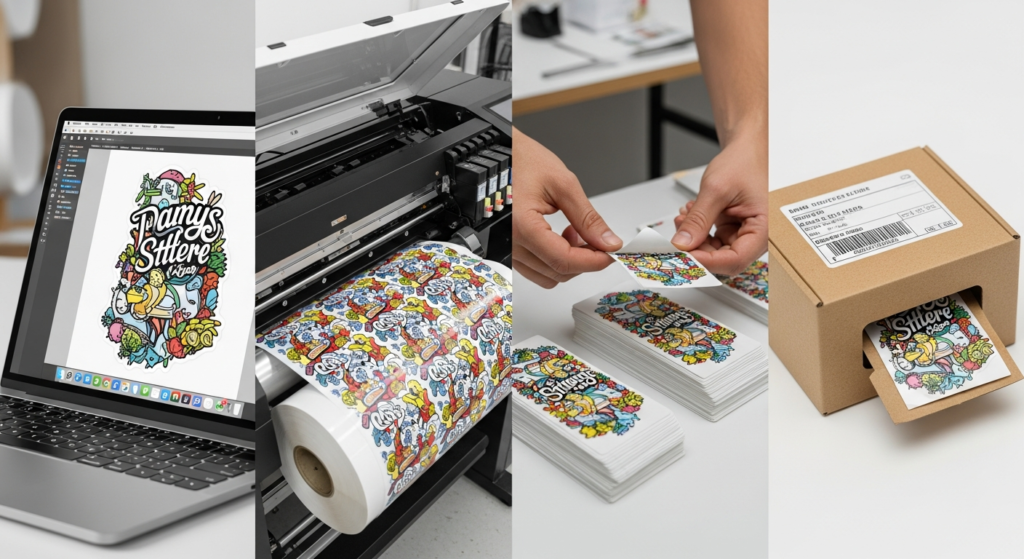
Quantity considerations significantly impact pricing and production scheduling. Minimum orders often start as low as 1-10 pieces for personal use or small-scale testing, making custom bumper stickers accessible for individual customers who might only need a few pieces. Small quantity orders typically cost more per unit due to setup costs and material handling, but they provide an affordable way to test designs or serve limited distribution needs.
Bulk pricing becomes increasingly attractive as quantities increase, with significant per-unit cost reductions for orders of 100, 500, or 1000+ pieces. Large quantity orders also qualify for faster per-piece production times because they justify dedicated press runs and more efficient material handling. Businesses planning ongoing campaigns or expecting future reorders should consider bulk ordering to capture these economies of scale.
Volume discounts reflect the reality that setup costs—including file processing, color matching, and equipment preparation—represent fixed costs that get distributed across all pieces in an order. Printing 100 stickers requires nearly the same setup work as printing 10 stickers, making larger quantities much more cost-effective per piece.
Proof and revision processes protect customers from expensive reprinting while ensuring final products match expectations. Digital proofs provide accurate representations of colors, fonts, and layout proportions before production begins, allowing customers to request changes while files remain editable. Professional printing companies use calibrated monitors and color-accurate proofing systems to ensure digital previews accurately represent printed results.
Revision rounds are typically included in custom orders to address legitimate design concerns or technical issues identified during proofing. However, unlimited revisions can delay production and increase costs, so most companies establish reasonable limits (usually 2-3 revision cycles) that allow refinement while maintaining project timelines.
Final approval requirements ensure customers take responsibility for approving designs before production begins, protecting both customers and printers from miscommunication or unrealistic expectations. Once final approval is given, changes typically aren’t possible without restarting the entire process, making careful review essential during the proofing stage.
Shipping and packaging considerations ensure products arrive in perfect condition despite the rigors of Australian postal and courier networks. Secure packaging prevents damage during transport, particularly important for larger orders or delicate finishes that might be susceptible to scratching or folding. Professional packaging also reflects the quality standards customers expect and creates a positive unboxing experience that reinforces brand perception.
Tracking information provides visibility into order progress and delivery timing, allowing customers to plan for arrival and ensure someone is available to receive packages if required. Express shipping options typically include more detailed tracking with real-time updates, while standard shipping provides basic milestone updates throughout the delivery process.
Multiple shipping speed options balance cost considerations with delivery urgency. Standard shipping provides economical delivery for orders where timing isn’t critical, while express and priority options serve urgent needs at higher costs. Regional shipping often requires additional time due to courier routing through major hubs, but specialized regional services can sometimes provide faster delivery to specific remote areas.
Quality guarantee policies provide customer protection and demonstrate confidence in production standards. Satisfaction guarantees typically cover production errors, color-matching issues, and material defects while excluding customer errors or design changes requested after approval. Understanding guarantee terms helps customers know what protection they have and what responsibilities they bear for accurate file submission and design approval.
Reprints for production errors should be provided at no charge when legitimate quality issues occur, but companies typically require return of defective products and may request photographic evidence of problems. Color-matching accuracy guarantees ensure printed colors match approved proofs within industry-standard tolerances, accounting for the inherent variations in printing processes and material characteristics.
Durability warranties reflect confidence in material quality and manufacturing processes, particularly important for outdoor applications where environmental stresses can cause premature failure. Quality warranties typically cover material degradation, adhesive failure, and color fading under normal use conditions but exclude damage from accidents, misuse, or extreme environmental conditions beyond normal expectations.
Step-by-step ordering guides provide detailed walkthroughs of the ordering process, helping first-time customers understand each stage and prepare appropriate files and information. These guides reduce confusion and prevent delays that result from incomplete orders or technical issues during submission.
Once your custom bumper stickers arrive, proper installation becomes crucial for achieving a professional appearance and maximizing the durability that protects your investment over the coming years.
The difference between amateur-looking and professionally applied bumper stickers often comes down to preparation, technique, and attention to detail during installation. Proper application not only ensures your sticker looks its best but also maximizes longevity by creating optimal adhesion and preventing premature failure caused by poor installation practices.
Surface preparation represents the most critical factor determining installation success and long-term performance. Professional installation guidelines emphasize that clean, properly prepared surfaces create stronger adhesive bonds and prevent contamination that can cause lifting, bubbling, or premature failure. The preparation process begins with thorough washing using soapy water to remove road grime, oils, and accumulated dirt that would prevent proper adhesion.
Soap selection matters more than many people realize—dish soap provides excellent grease-cutting properties without leaving residues that can interfere with adhesive bonding. Automotive soaps designed for vehicle washing also work well, but avoid products containing wax, gloss enhancers, or protective coatings that can create barriers between the sticker adhesive and the vehicle surface.
Isopropyl alcohol application following soap cleaning removes any remaining residues and ensures the surface is chemically clean for optimal adhesion. A 50-70% isopropyl alcohol solution works effectively for final surface preparation, removing soap residues, skin oils from handling, and other contaminants that might not be visible but could compromise adhesive performance. Allow the alcohol to evaporate completely before proceeding with sticker application—rushing this step can trap moisture under the sticker, leading to adhesion problems.
Surface texture considerations affect both adhesion quality and visual appearance. Smooth, non-porous surfaces like painted metal or fiberglass provide ideal conditions for sticker application, creating even contact across the entire adhesive area. Textured surfaces, including textured bumper materials or areas with minor damage like scratches or dents, can prevent full adhesive contact and create air pockets that lead to lifting or peeling.
Avoid applying stickers over damaged surfaces, rust spots, or areas where paint is loose or flaking. These conditions prevent proper adhesion and often worsen over time as moisture penetrates through damaged areas. If necessary, sand, prime, and repaint damaged areas before sticker application, or choose alternative placement locations with better surface conditions.
Application techniques vary depending on sticker size, shape, and environmental conditions, but certain principles apply universally. The wet method allows repositioning for larger stickers and provides more control during initial placement, particularly helpful for first-time installers or complex shapes. Mix a few drops of dish soap in a spray bottle with water to create a slippery solution that allows the sticker to be positioned without immediately bonding to the surface.
INSERT IMAGE HERE: Step-by-step photo sequence showing hands properly installing a bumper sticker, from surface cleaning through final smoothing, demonstrating professional technique
Starting from the center and working outward eliminates air bubbles and ensures even pressure distribution across the entire sticker surface. This technique prevents the formation of large air pockets that can be difficult to remove and ensures the adhesive makes complete contact with the vehicle surface. Use a plastic application squeegee or credit card wrapped in a soft cloth to avoid scratching the sticker surface while applying pressure.
Timing and weather considerations significantly impact installation success and final appearance. Ideal installation conditions occur when temperatures range between 15-25°C (59-77°F), providing optimal adhesive flow properties and preventing thermal expansion or contraction that can stress the sticker material. Avoid installation during extreme temperatures—hot surfaces can cause adhesive to set too quickly, preventing proper positioning, while cold conditions can make vinyl stiff and difficult to conform to surface contours.
Direct sunlight during installation can create uneven heating that causes sticker materials to expand in unpredictable ways, leading to wrinkles, bubbles, or poor adhesion in shadowed areas. Choose installation times during mild weather conditions, or move vehicles into shaded areas for installation when possible.
Wind conditions affect large stickers disproportionately, making positioning difficult and increasing the risk of contaminants landing on adhesive surfaces before application is complete. Calm conditions or enclosed spaces provide better control and reduce the likelihood of installation problems caused by environmental factors.
Curing time requirements ensure adhesive reaches full strength before exposure to stresses that could compromise bonding. Most high-quality adhesives require 48-hour cure periods before reaching maximum strength, during which stickers should be protected from harsh conditions like pressure washing, extreme temperatures, or mechanical stress. Installation best practices recommend avoiding car washes or high-pressure cleaning for at least 48 hours after installation to allow adhesive chemistry to stabilize fully.
Bubble and wrinkle prevention starts with proper preparation and technique, but minor issues can often be corrected if addressed promptly. Small air bubbles can be eliminated by pricking with a fine needle and smoothing air out through the hole, but this technique works best on bubbles smaller than a few millimeters. Larger bubbles typically indicate application problems that may require sticker removal and reinstallation.
Persistent bubbles or wrinkles often indicate surface preparation issues, contamination, or inappropriate environmental conditions during installation. Rather than accepting poor results, it’s usually better to remove and reinstall stickers properly—the adhesive strength after improper installation will likely lead to premature failure anyway.
Long-term maintenance strategies extend sticker life significantly beyond basic installation. Maintenance and care guidelines recommend gentle cleaning with mild soap solutions rather than harsh chemicals or abrasive cleaners that can damage sticker surfaces or break down adhesive bonds. Automotive soaps designed for regular vehicle washing provide effective cleaning without damaging sticker materials.
High-pressure car wash systems require careful attention to avoid directing high-pressure water streams directly at sticker edges where they might penetrate under the material and compromise adhesion. Automatic car washes with brush systems can be particularly hard on stickers, potentially causing lifting or edge damage that accelerates deterioration.
Warranty and care guidelines typically specify acceptable cleaning methods and products to maintain warranty coverage, making it important to understand manufacturer recommendations for specific sticker materials and adhesive types.
Parking considerations affect sticker longevity significantly. Whenever possible, park vehicles in shaded areas to reduce UV exposure and temperature extremes that accelerate material aging. While quality stickers are designed to withstand Australian sun exposure, reducing unnecessary UV stress extends color life and material flexibility.
Removal techniques become necessary when stickers reach the end of their useful life, when messages need updating, or when vehicles change ownership. Heat application using a hair dryer or heat gun softens adhesive chemistry, making removal easier and reducing the likelihood of surface damage. Work slowly and consistently, heating small sections and peeling gradually to avoid tearing the sticker or leaving adhesive residues.
Adhesive remover products help clean residual adhesive that remains after sticker removal, but test these products in inconspicuous areas first to ensure they don’t damage paint or other surface materials. Citrus-based adhesive removers tend to be gentler on automotive finishes than petroleum-based solvents, but all chemical removers should be used carefully and according to manufacturer instructions.
Plastic scrapers or old credit cards provide effective tools for removing stubborn adhesive without scratching painted surfaces. Avoid metal tools that can damage paint or create scratches that compromise the vehicle’s appearance and value.
With proper installation and care, your custom bumper stickers will serve as effective, long-lasting ambassadors for your message, reaching thousands of potential customers, supporters, or fellow enthusiasts throughout their multi-year service life on Australian roads.
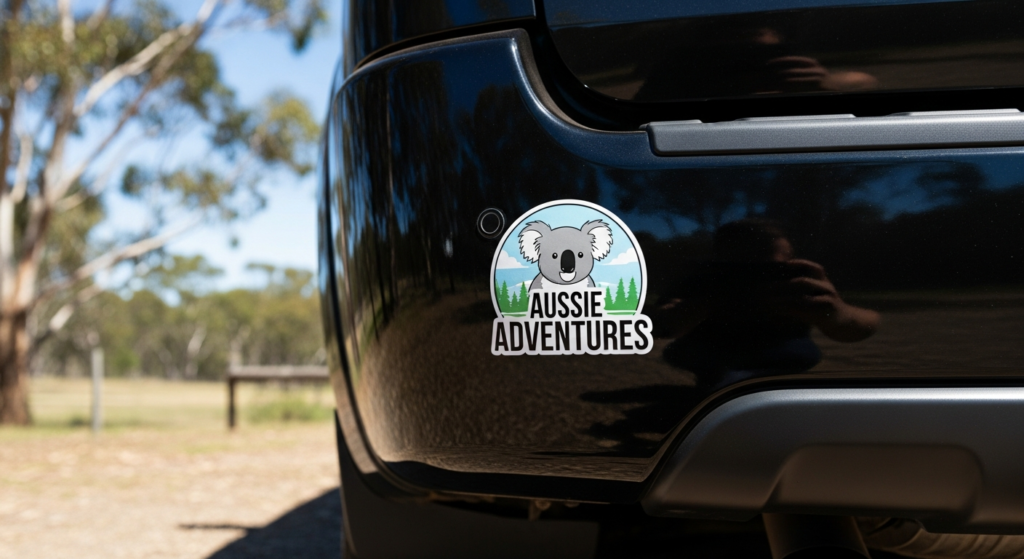
Creating custom bumper stickers in Australia has evolved from a simple craft project into a sophisticated marketing strategy that delivers measurable results for businesses, organizations, and individuals who want to amplify their message beyond traditional advertising boundaries. From understanding the powerful reach of mobile advertising to navigating design principles, technical specifications, legal requirements, and professional installation practices, you now possess a comprehensive roadmap for transforming your ideas into effective communication tools that work around the clock on Australian roads.
The mathematics of mobile advertising make custom bumper stickers one of the most cost-effective marketing investments available to Australian businesses and organizations. A single quality bumper sticker generating 30,000+ daily impressions over a multi-year lifespan delivers cost-per-impression rates that traditional advertising mediums simply cannot match. Whether you’re a local tradie building brand recognition, an event organizer creating buzz, or a business owner seeking affordable visibility, bumper stickers offer proven results at accessible price points.
The design principles outlined in this guide—emphasizing simplicity, legibility, contrast, and strategic messaging—ensure your investment delivers maximum impact rather than joining the visual noise that clutters less thoughtful advertising efforts. Remember that successful bumper stickers communicate one clear message exceptionally well rather than trying to convey multiple concepts adequately. The three-to-five-second viewing window demands design discipline that prioritizes clarity over complexity, resulting in more memorable and effective messaging.
Technical specifications and material selection directly determine whether your creative vision survives Australia’s challenging environmental conditions. The harsh UV exposure, temperature extremes, and weather variability that define the Australian climate demand premium materials and professional production standards. Investing in outdoor-grade vinyl, proper file preparation, and appropriate finishes protects your marketing investment while ensuring professional appearance throughout the sticker’s intended lifespan.
Legal compliance across Australian jurisdictions protects you from potential fines while ensuring your message reaches its intended audience without compromising road safety. The varying regulations between states and territories require attention to detail, but the basic principles—maintaining number plate visibility, avoiding windscreen obstructions, and placing stickers in appropriate zones—provide clear guidance for compliant placement that maximizes visibility while respecting legal requirements.
The ordering process has been streamlined through modern technology and efficient production systems that can deliver professional results in record time. Lightning-fast turnaround times, automated quality checking, and express shipping options mean you can implement bumper sticker campaigns quickly enough to respond to market opportunities, seasonal promotions, or emerging trends. The key lies in understanding the process and preparing appropriate files that flow smoothly through production systems without delays or quality compromises.
Professional installation and long-term care practices ensure your investment delivers optimal returns throughout its intended lifespan. Proper surface preparation, appropriate application techniques, and ongoing maintenance protect both appearance and adhesive performance, preventing premature failure that undermines marketing effectiveness. The time invested in correct installation pays dividends through improved durability and professional presentation that reflects positively on your brand or message.
Custom bumper stickers represent more than just advertising tools—they serve as mobile ambassadors that carry your message into communities, demographics, and geographic areas that traditional advertising might never reach. Every journey becomes an opportunity to build brand recognition, generate leads, or share important messages with fellow Australians who share the road with your vehicle.
The versatility of bumper sticker applications means they adapt to virtually any communication need. Small businesses use them to build local recognition and generate referrals. Event organizers create buzz and build anticipation for upcoming activities. Political campaigns maintain visibility between election cycles. Sports teams rally support and build community connections. Personal expression finds outlet through messages that reflect individual values, interests, or humor.
Quality and speed have become complementary rather than competing priorities in modern sticker production. Advances in printing technology, materials science, and order fulfillment systems enable delivery of premium products within timeframes that support responsive marketing strategies. You no longer need to choose between fast delivery and professional quality—both are achievable when working with experienced providers who understand Australian market requirements.
The Australian automotive culture, with its emphasis on personal expression and outdoor lifestyle, provides an ideal environment for bumper sticker marketing. High vehicle ownership rates, long commute distances, and cultural acceptance of vehicle customization create opportunities that businesses in other markets might not enjoy. This unique combination of factors amplifies the effectiveness of well-designed bumper stickers beyond what pure population numbers might suggest.
Looking ahead, custom bumper stickers will continue evolving through new materials, production techniques, and design technologies that expand creative possibilities while improving durability and cost-effectiveness. However, the fundamental principles of clear communication, quality execution, and strategic placement remain constant factors that determine success regardless of technological advances.
Your investment in custom bumper stickers should be viewed as a long-term marketing asset that continues delivering value year after year rather than a one-time expense. Unlike traditional advertising that stops working the moment you stop paying for it, quality bumper stickers continue generating impressions, building recognition, and driving response throughout their multi-year lifespan.
The road to effective mobile marketing begins with transforming your message from concept to reality. Every day your message remains in a design file rather than on Australian roads represents missed opportunities to connect with potential customers, supporters, or fellow community members who share your values or need your services.
At faststickers.com.au, we’ve eliminated the traditional barriers that once made custom bumper stickers slow, expensive, or complicated to produce. Our lightning-fast production systems, premium Australian-grade materials, and streamlined ordering process ensure you can implement your mobile marketing strategy within days rather than weeks. We understand that timing matters in marketing, and our systems are designed to support responsive campaigns that capitalize on market opportunities or seasonal trends.
Whether you’re a small business owner seeking cost-effective advertising that works 24/7, an event organizer building anticipation for an upcoming celebration, or simply someone with a message worth sharing, professional custom bumper stickers provide the perfect medium for reaching your Australian audience. Our satisfaction guarantee and express shipping options across Australia mean you can move forward with confidence, knowing your investment is protected and your timeline will be met.
The expertise gained through thousands of successful projects across Australia has taught us that great bumper stickers combine compelling design with quality materials and professional execution. Our team stands ready to assist with any aspect of your project, from design consultation through technical file preparation to material selection that matches your specific requirements and environmental conditions.
Don’t let another day pass while your message waits for implementation. Every journey could be an opportunity to build recognition, generate leads, or share your message with fellow Australians who might become customers, supporters, or advocates for your cause.
Transform your message into mobile marketing magic: Upload your design or use our online design tools to create custom bumper stickers that represent your brand, cause, or personal message with the professional quality and Australian durability you deserve. With our lightning-fast turnaround times and satisfaction guarantee, you’ll have impressive results in hand faster than you imagined possible.
Transform Your Celebrations with Custom Party Decals: The Ultimate Guide to Event Vinyl Signs Turn any space into a picture-perfect party venue with professional custom

Restaurant Window Graphics & Menu Displays: The Complete 2026 Guide to Boosting Walk-In Traffic Introduction: The Window Display That Saved a Struggling Restaurant When Tony’s
Clear Stickers vs White Stickers: The Complete Guide to Choosing the Right Type for Your Brand Picture this: You’re standing in your office, holding two

Custom Stickers for Small Business Australia: Marketing Solutions That Drive Growth Sarah stares at her laptop screen, calculator in hand, wrestling with the eternal small
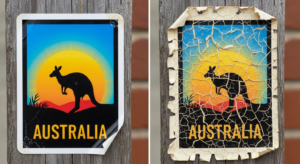
Vinyl vs Paper Stickers: Which Material is Right for Your Business? When you’re investing in custom stickers for your business, the material choice can make