
Party Decals
Transform Your Celebrations with Custom Party Decals: The Ultimate Guide to Event Vinyl Signs Turn any space into a picture-perfect party venue with professional custom

When you’re investing in custom stickers for your business, the material choice can make or break your marketing efforts and brand perception. Every day, Australian businesses face the critical decision between vinyl and paper stickers, often without understanding how this choice impacts durability, cost-effectiveness, and brand presentation. Whether you’re labeling products, creating promotional materials, or establishing outdoor branding, selecting the wrong material can lead to faded graphics, peeling edges, and wasted marketing budgets.
This comprehensive guide examines both materials through the lens of Australian business needs, climate considerations, and practical applications, providing you with the expertise to make confident decisions that enhance your brand and maximize your investment. From understanding the technical properties that make each material unique to navigating Australia’s harsh UV conditions, we’ll explore every factor that influences your sticker investment success.
The stakes are higher than many business owners realize. A poorly chosen sticker material doesn’t just waste money—it can damage brand credibility, create customer frustration, and force costly replacements at the worst possible times. Conversely, selecting the right material for your specific application ensures your investment delivers maximum impact, whether you’re building long-term brand recognition or executing a targeted promotional campaign.
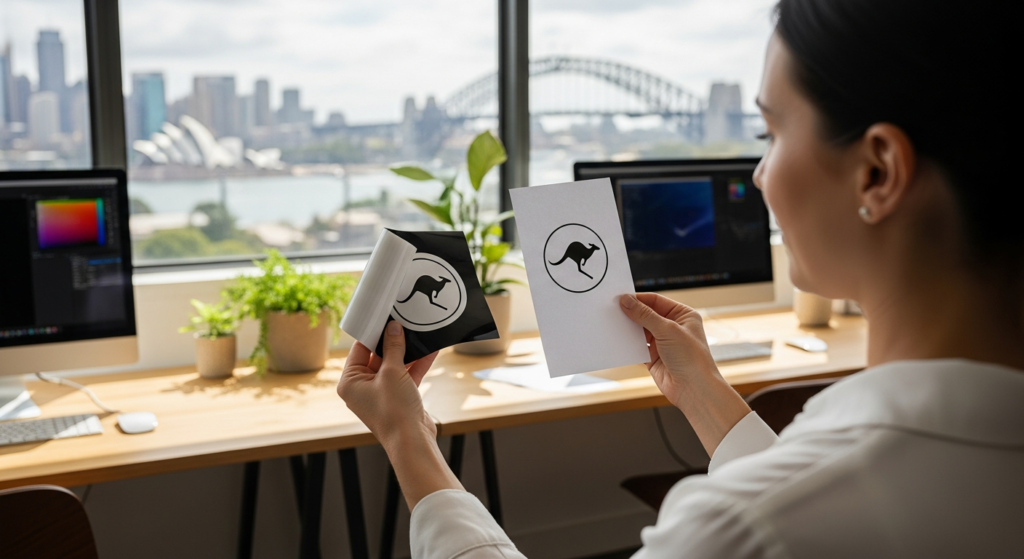
When businesses demand performance, reliability, and professional appearance from their adhesive materials, vinyl stickers consistently emerge as the premium solution. Understanding what makes vinyl stickers exceptional begins with examining their composition and manufacturing process, which creates inherently superior properties for demanding applications.
Vinyl stickers are manufactured from polyvinyl chloride (PVC), a synthetic polymer that undergoes specialized processing to create flexible, durable sheets ideal for printing and adhesive applications. Unlike paper-based alternatives, PVC material possesses molecular structures that resist water penetration, UV degradation, and temperature fluctuations. During manufacturing, vinyl sheets receive protective treatments and specialized adhesive applications that enhance their performance characteristics far beyond what natural materials can achieve.
The durability factors that set vinyl apart are impressive by any measure. Quality vinyl stickers typically maintain their appearance and adhesive properties for three to five years in outdoor applications, with many installations lasting significantly longer under optimal conditions. This longevity stems from vinyl’s inherent resistance to cracking, even when subjected to temperature cycles that would destroy paper alternatives. The material’s flexibility allows it to expand and contract with temperature changes while maintaining structural integrity and adhesive bond strength.
Weather resistance capabilities make vinyl particularly valuable for Australian businesses dealing with extreme environmental conditions. Vinyl’s UV protection prevents the color fading and material degradation that plague other sticker materials under Australia’s intense sunlight. Temperature tolerance ranges from -10°C to +60°C ensure performance across Australia’s diverse climate zones, from Tasmania’s winter conditions to Queensland’s tropical heat. The waterproof characteristics protect against rain, humidity, and cleaning processes that would quickly destroy paper stickers.
Advanced adhesive technologies represent another crucial advantage of vinyl stickers. Manufacturers engineer vinyl adhesives to maintain bond strength across various surfaces, including metals, plastics, glass, and painted surfaces. These adhesives resist environmental challenges while providing options for both permanent and removable applications. The adhesive chemistry complements vinyl’s durability, creating systems that perform reliably throughout their intended lifespan.
Cost implications of choosing vinyl require careful consideration beyond initial purchase prices. While vinyl stickers command higher upfront costs than paper alternatives, their extended lifespan often delivers superior value for long-term applications. Businesses investing in outdoor signage, vehicle graphics, or durable product labeling frequently discover that vinyl’s longevity eliminates repeated replacement costs that make paper alternatives more expensive over time. The calculation becomes particularly compelling for applications where replacement involves labor costs, downtime, or lost marketing opportunities.
Professional appearance factors significantly influence brand perception and credibility. Vinyl stickers maintain crisp edges, vibrant colors, and smooth surfaces that convey quality and attention to detail. The material’s consistency and durability prevent the curling, fading, and deterioration that can make businesses appear unprofessional or outdated. For companies building premium brand positioning, vinyl’s appearance advantages often justify the investment regardless of durability considerations.
Our complete guide to vinyl stickers provides additional technical specifications and application guidance, demonstrating the depth of considerations that influence optimal vinyl sticker selection for specific business needs.

The manufacturing quality control processes for vinyl stickers ensure consistent performance across production runs. Reputable manufacturers implement testing protocols that verify adhesion strength, UV resistance, and temperature tolerance before materials reach customers. These quality assurance measures protect businesses from performance failures that could damage their reputation or waste marketing investments.
Understanding these foundational properties of vinyl stickers establishes the framework for evaluating whether this premium material aligns with your specific business requirements and applications.
While vinyl stickers excel in demanding applications, paper sticker rolls serve legitimate business needs where cost-effectiveness, natural aesthetics, and specific application requirements make them the optimal choice. Understanding paper stickers’ composition, capabilities, and appropriate applications ensures businesses can leverage their advantages while avoiding inappropriate uses that lead to disappointing results.
Paper sticker composition begins with wood pulp or recycled paper substrates that undergo specialized treatments to accept printing inks and adhesive applications. The manufacturing process creates materials with natural texture and organic appearance that appeals to eco-conscious consumers and businesses emphasizing sustainability messaging. Unlike synthetic materials, paper maintains connection to natural origins that resonate with customers seeking authentic, environmentally responsible products.
The natural aesthetic properties of paper stickers offer unique advantages for specific brand positioning strategies. Paper’s texture provides tactile appeal that synthetic materials cannot replicate, creating sensory experiences that enhance customer engagement. The material’s ability to accept various printing techniques, from digital to letterpress, enables creative possibilities that complement organic or artisanal brand messaging. Many food producers, craft businesses, and lifestyle brands find paper stickers essential for maintaining authentic brand presentation.
Cost advantages represent paper stickers’ most compelling benefit for appropriate applications. Paper materials cost significantly less than vinyl alternatives, making them ideal for short-term campaigns, high-volume temporary labeling needs, and budget-constrained marketing initiatives. Businesses executing seasonal promotions, temporary signage, or disposable product labeling often discover paper stickers provide necessary functionality at fraction of vinyl’s cost.
Ideal applications for paper stickers include product labeling for packaged goods, temporary promotional campaigns, indoor event materials, and situations requiring easy removal without residue. Our food label stickers guide demonstrates how paper stickers excel in retail packaging applications where durability requirements remain moderate while cost control and natural appearance provide significant advantages.
Print quality capabilities of paper stickers often surprise businesses accustomed to compromised results from budget materials. Modern paper substrates accept high-resolution digital printing that delivers excellent color reproduction and detail clarity. The material’s absorbent properties can enhance certain ink applications, creating rich, saturated colors that complement natural aesthetics. Many premium paper stickers rival vinyl’s print quality while maintaining cost advantages that make them attractive for appropriate applications.
However, honest assessment of paper stickers’ limitations remains crucial for appropriate material selection. Weather resistance limitations make paper inappropriate for outdoor applications or humid environments. Moisture exposure causes rapid deterioration, including adhesive failure, material degradation, and print quality loss. Even indoor applications with high humidity or cleaning requirements can compromise paper sticker performance.
Durability considerations show paper stickers typically maintaining acceptable appearance for six to twelve months in protected indoor environments. This lifespan may satisfy temporary promotional campaigns or seasonal product labeling but proves inadequate for long-term branding or permanent identification applications. Temperature sensitivity can cause paper stickers to become brittle in cold conditions or lose adhesive properties in extreme heat.
Environmental considerations add complexity to paper sticker evaluation. While paper substrates offer recyclability advantages over synthetic materials, adhesive coatings and printing inks may limit recycling options. Businesses prioritizing sustainability must evaluate complete lifecycle impacts rather than focusing solely on base material characteristics. Some paper stickers incorporate eco-friendly adhesives and soy-based inks that enhance environmental compatibility.

Adhesive performance in paper stickers varies significantly based on application requirements and environmental conditions. Standard paper sticker adhesives provide adequate bonding for temporary applications but lack the aggressive bonding and environmental resistance of vinyl adhesives. Removable adhesive options enable clean removal from most surfaces, making paper stickers excellent choices for temporary identification or promotional applications.
Surface compatibility considerations show paper stickers performing best on smooth, clean surfaces in controlled environments. Textured surfaces, outdoor conditions, or challenging application environments often exceed paper stickers’ capabilities. Understanding these limitations prevents disappointing results and ensures appropriate material selection for specific applications.
The cost-effectiveness calculation for paper stickers extends beyond material costs to include replacement frequency, labor requirements, and total campaign effectiveness. While paper stickers cost less initially, applications requiring frequent replacement may favor more durable alternatives despite higher upfront costs. Businesses must evaluate total cost of ownership rather than focusing exclusively on purchase price.
This foundation of understanding paper stickers’ capabilities and limitations sets the stage for systematic comparison with vinyl alternatives, enabling data-driven material selection decisions.
Making informed material selection decisions requires systematic comparison of vinyl and paper stickers across all critical performance dimensions. This comprehensive analysis provides objective evaluation criteria that enable businesses to weigh options based on their specific requirements, budget constraints, and application demands.
Durability comparison reveals the most significant performance gap between these materials. Vinyl stickers consistently deliver three to five years of acceptable outdoor performance under Australian conditions, with many installations exceeding these timeframes when properly applied and maintained. The material’s resistance to UV degradation, temperature cycling, and moisture exposure enables long-term reliability that protects marketing investments and maintains professional brand presentation.
Paper stickers, conversely, typically maintain acceptable appearance for six to twelve months in protected indoor environments, with outdoor exposure dramatically reducing this lifespan to weeks or months depending on weather conditions. The material’s organic composition makes it inherently vulnerable to moisture, temperature extremes, and UV exposure that cause rapid deterioration in challenging environments.
Weather resistance analysis demonstrates why material selection significantly impacts application success. Vinyl’s waterproof properties prevent moisture penetration that causes adhesive failure and material degradation. UV-resistant formulations protect against Australia’s intense sunlight that fades colors and breaks down molecular structures. Temperature stability ensures performance from Tasmania’s winter conditions to Northern Australia’s extreme heat.
Paper stickers lack inherent weather resistance, making them inappropriate for outdoor applications or environments with high humidity, temperature fluctuations, or UV exposure. Even indoor applications with cleaning requirements or temperature control challenges can compromise paper sticker performance and appearance.
Cost analysis requires evaluating both initial investment and long-term value considerations. Paper stickers typically cost 30-50% less than comparable vinyl alternatives for initial purchase, creating immediate budget advantages for cost-sensitive applications. However, replacement frequency significantly impacts total cost of ownership calculations.
For applications requiring three-year durability, vinyl stickers’ higher initial cost often delivers superior value through eliminated replacement costs, reduced labor requirements, and maintained brand presentation. The cost-per-year calculation frequently favors vinyl for long-term applications, while paper maintains advantages for genuinely temporary uses.
Our analysis of outdoor branding with vinyl stickers demonstrates how material longevity impacts marketing ROI and brand consistency over extended periods.
Application versatility comparison shows significant differences in surface compatibility and environmental tolerance. Vinyl stickers perform reliably on diverse surfaces including metals, plastics, glass, painted surfaces, and textured materials. Aggressive adhesives enable bonding to challenging surfaces while maintaining removability options for appropriate applications.
Paper stickers perform best on smooth, clean surfaces in controlled environments. Textured surfaces, irregular shapes, or challenging application conditions often exceed paper capabilities. Surface preparation requirements may increase installation complexity and compromise adhesive performance.
Print quality differences impact brand presentation and customer perception. Both materials accept high-resolution digital printing that delivers excellent color reproduction and detail clarity under appropriate conditions. Vinyl’s synthetic substrate provides consistent ink absorption and color stability that maintains appearance throughout the sticker’s lifespan.
Paper’s natural absorbency can enhance certain printing techniques, creating rich color saturation and texture effects that complement organic brand messaging. However, UV exposure and environmental factors cause paper-based inks to fade more rapidly than vinyl alternatives.

Australian climate impact considerations add unique evaluation criteria for businesses operating in this challenging environment. Australia’s UV index regularly exceeds levels that rapidly degrade unprotected materials, making UV resistance crucial for outdoor applications. Vinyl stickers incorporate UV-resistant formulations specifically designed to withstand these conditions.
Temperature extremes across Australian regions create expansion and contraction cycles that test material flexibility and adhesive performance. Vinyl’s engineered properties handle these cycles while maintaining structural integrity. Paper materials become brittle in cold conditions and may experience adhesive failure in extreme heat.
Humidity variations, particularly in coastal and tropical regions, create additional challenges for organic materials. Salt air accelerates paper degradation while vinyl remains unaffected. Seasonal weather patterns that combine high UV, temperature extremes, and humidity create perfect storms for material failure in inappropriate applications.
Removal characteristics present another important comparison dimension. Vinyl stickers offer both permanent and removable adhesive options, enabling clean removal when appropriate formulations are selected. Permanent vinyl adhesives provide extremely strong bonding that may damage substrates during removal.
Paper stickers typically remove more easily due to weaker adhesive systems, but material degradation can complicate removal processes. Aged paper stickers may tear during removal, leaving adhesive residue that requires additional cleaning efforts.
Brand perception factors influence customer impressions and business credibility. Vinyl stickers’ professional appearance, durability, and consistency convey quality and attention to detail that enhance brand positioning. Faded, peeling, or damaged stickers reflect poorly on businesses regardless of initial quality.
Paper stickers’ natural appearance appeals to customers seeking authentic, environmentally conscious brands. However, visible deterioration quickly undermines these benefits and may suggest poor quality or lack of professionalism.
This comprehensive comparison provides the foundation for systematic decision-making that aligns material selection with specific business requirements and performance expectations.
Transforming comparison data into actionable decisions requires systematic evaluation of business-specific factors that determine optimal material selection. This decision framework provides structured approach for Australian businesses to assess their requirements, evaluate options, and make confident choices that deliver maximum value and performance.
Application assessment forms the foundation of material selection decisions. Indoor applications in controlled environments expand material options since environmental stresses remain minimal. Climate-controlled retail spaces, offices, and warehouses enable successful paper sticker use for temporary signage, product labeling, and promotional materials. These environments protect against UV exposure, moisture, and temperature extremes that compromise paper performance.
Outdoor applications demand careful material evaluation due to Australia’s challenging environmental conditions. UV exposure, temperature cycling, moisture, and wind stress require materials engineered for these challenges. Vinyl stickers’ synthetic composition and protective treatments make them essential for vehicle graphics, outdoor signage, equipment labeling, and any application exposed to weather conditions.
Duration requirements significantly influence cost-effectiveness calculations and performance expectations. Applications requiring less than six months of acceptable appearance may favor paper stickers due to cost advantages and adequate short-term performance. Seasonal promotions, temporary events, and disposable product labeling often fit these criteria.
Long-term applications exceeding one year typically justify vinyl stickers’ higher initial costs through eliminated replacement expenses and maintained professional appearance. Brand consistency requirements, permanent identification needs, and marketing investments designed for extended impact favor durable materials regardless of cost premiums.
Brand positioning considerations align material selection with customer perceptions and marketing objectives. Premium brands requiring consistent, professional presentation benefit from vinyl stickers’ durability and appearance advantages. The material’s resistance to degradation ensures brand presentation remains consistent throughout the application’s lifespan.
Eco-conscious brands targeting environmentally aware customers may prefer paper stickers despite performance limitations. The natural material composition and recyclability features support sustainability messaging that resonates with specific customer segments. However, frequent replacements due to durability issues may undermine environmental benefits.
Budget optimization strategies require evaluating total cost of ownership rather than focusing exclusively on purchase prices. Initial cost differences between vinyl and paper stickers become less significant when replacement frequency, labor costs, and marketing effectiveness are considered comprehensively.
Our choosing the perfect sticker guide provides additional decision criteria and evaluation methods for businesses navigating complex material selection decisions.
Volume and timeline considerations impact both material choice and supplier selection. High-volume applications may favor paper stickers when cost savings offset performance limitations. Bulk purchasing advantages can improve paper stickers’ cost-effectiveness for appropriate applications.
Rush timeline requirements may limit material options based on supplier capabilities and inventory availability. Emergency replacements or last-minute marketing needs require immediate availability that may influence material selection regardless of optimal performance characteristics.
Industry-specific recommendations help narrow material choices based on proven applications and regulatory requirements. Retail packaging typically benefits from paper stickers’ natural appearance and cost-effectiveness for products with limited shelf life. Food labeling applications may require specific materials that comply with safety regulations and resist moisture exposure.
Promotional campaigns often favor paper stickers when duration remains limited and cost control takes priority. Concert merchandise, temporary retail displays, and seasonal marketing initiatives rarely justify vinyl’s performance advantages given their temporary nature.
Product labeling decisions depend on product lifecycle, storage conditions, and customer interaction patterns. Durable goods requiring long-term identification favor vinyl stickers that maintain legibility throughout the product’s lifespan. Consumable products with rapid turnover may use paper stickers appropriately.
Risk assessment frameworks help identify potential failure modes and their business impact. Adhesive failure in critical applications can create safety hazards, regulatory violations, or customer dissatisfaction that far exceeds material cost savings. Identifying high-risk applications ensures appropriate material selection regardless of cost considerations.
Brand reputation protection requires considering worst-case scenarios and their potential impact. Faded, peeling stickers in high-visibility applications can damage customer perceptions and undermine marketing investments. Professional services, premium products, and customer-facing applications typically justify vinyl stickers’ reliability advantages.

Implementation planning addresses practical considerations that influence material selection success. Surface preparation requirements vary between materials and affect installation complexity. Vinyl stickers often require more thorough surface cleaning and preparation to achieve optimal adhesive bonding.
Application tools and techniques may differ between materials, affecting labor requirements and installation quality. Professional installation may be necessary for critical vinyl applications, while paper stickers often enable simpler installation processes.
Maintenance considerations influence long-term performance and appearance. Vinyl stickers typically require minimal maintenance but benefit from periodic cleaning to maintain appearance. Paper stickers may require more frequent inspection and earlier replacement as they approach performance limits.
Ready to make the right choice for your specific application? Our team provides personalized consultation to help you evaluate these factors and select optimal materials for your business needs. Get your custom quote and expert guidance to ensure your sticker investment delivers maximum value and performance.
This decision framework transforms complex material comparisons into manageable evaluation processes that align with business objectives and performance requirements, but understanding Australia’s unique environmental challenges adds another crucial layer to material selection decisions.
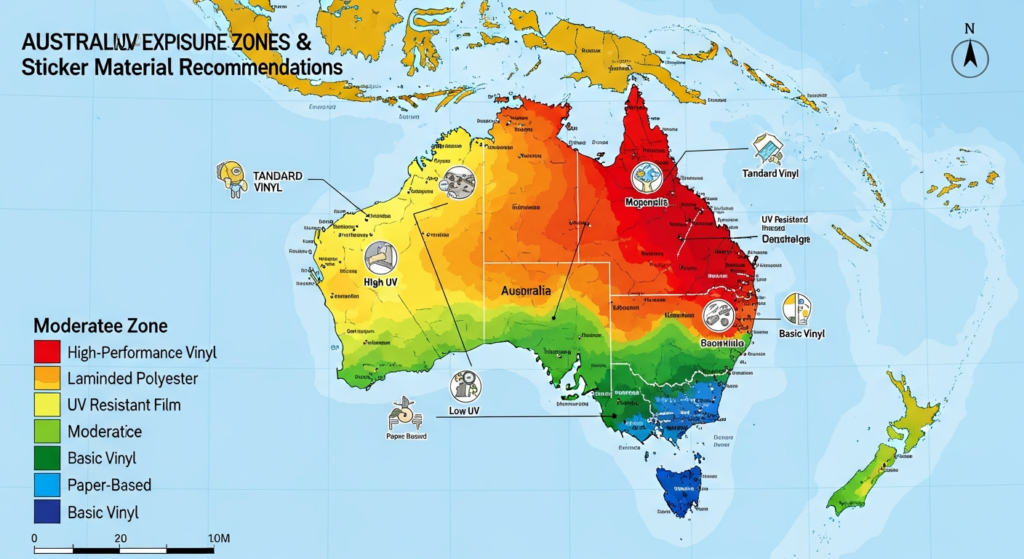
Australia’s unique environmental conditions create specific challenges that significantly influence sticker material performance and longevity. Understanding these local factors enables businesses to make informed decisions that account for the continent’s extreme UV exposure, temperature variations, and diverse climate zones that can dramatically impact material selection success.
UV exposure analysis reveals why Australia presents unique challenges for outdoor signage and branding materials. The continent’s UV index regularly reaches extreme levels, with many regions experiencing UV index readings of 12-15 during summer months. These intensity levels far exceed what most materials encounter in other global markets, creating accelerated degradation that shortens material lifespans and compromises appearance.
Standard paper materials lack inherent UV protection, making them inappropriate for any outdoor application in Australian conditions. Even brief exposure to Australia’s intense sunlight can cause rapid color fading, material brittleness, and adhesive failure that renders stickers unusable within weeks. The molecular structure of organic materials proves vulnerable to photochemical breakdown that occurs rapidly under extreme UV conditions.
Vinyl stickers incorporate UV-resistant formulations specifically designed to withstand high-intensity solar exposure. These engineered materials include UV stabilizers and protective additives that prevent photochemical degradation while maintaining color stability and structural integrity. Quality vinyl stickers can maintain acceptable appearance for multiple years even under Australia’s challenging UV conditions.
Temperature extremes across Australian regions create additional material performance challenges that businesses must consider. The continent’s diverse climate zones subject materials to temperature ranges from -10°C in alpine regions to +60°C in desert areas. These extreme variations create expansion and contraction cycles that test material flexibility and adhesive performance.
Our static cling stickers demonstrate engineered temperature tolerance spanning -10°C to +60°C, showing how specialized materials address Australia’s challenging climate requirements through careful formulation and testing.
Perth’s dry heat conditions create specific challenges for adhesive materials, with temperatures regularly exceeding 40°C and humidity levels dropping below 20%. These conditions can cause paper materials to become brittle and prone to cracking, while inadequate adhesives may fail due to thermal stress. Vinyl materials engineered for Australian conditions maintain flexibility and adhesive performance throughout these temperature extremes.
Melbourne’s variable weather patterns subject materials to rapid temperature changes and high humidity levels that can compromise paper sticker performance. The city’s four-seasons-in-one-day climate creates thermal cycling that tests material durability and adhesive stability. Businesses requiring consistent performance throughout seasonal variations benefit from vinyl’s engineered stability.
Darwin’s tropical humidity presents unique challenges for organic materials that absorb moisture from the environment. Paper stickers quickly deteriorate in these conditions, experiencing dimensional changes, adhesive failure, and potential mold growth that makes them unsuitable for most applications. Vinyl’s waterproof properties provide necessary protection against humid tropical conditions.
Regional variations influence material selection strategies for businesses operating across multiple Australian markets. Companies with national operations must consider worst-case environmental conditions to ensure consistent brand presentation and performance standards. Material selection based on the most challenging operating environment ensures adequate performance across all locations.
Coastal salt air exposure adds another environmental challenge that affects material longevity and appearance. Salt crystallization can damage organic materials while accelerating corrosion of metal substrates. Vinyl stickers’ synthetic composition resists salt exposure while providing barrier protection for underlying surfaces.
Bushfire smoke and ash exposure during Australia’s fire seasons create additional contamination challenges for outdoor signage materials. Fine particulates can embed in organic materials while smoke exposure may cause odor retention that affects customer perception. Vinyl’s smooth, non-porous surface enables easier cleaning and prevents contamination absorption.
Local compliance requirements add regulatory considerations to material selection decisions. Australian food safety standards specify acceptable materials for direct food contact applications, influencing labeling choices for food producers. Understanding these requirements prevents compliance issues that could disrupt business operations.
Industry-specific standards may mandate particular material properties for safety or performance reasons. Mining, construction, and industrial applications often require materials that meet specific durability or chemical resistance standards. Vinyl formulations can address these specialized requirements while paper alternatives typically cannot.
FastStickers’ local expertise advantage stems from fifteen years of experience helping Australian businesses navigate these challenging environmental conditions. Our about us page highlights our Gippsland location and deep understanding of Australian climate impacts on material performance.
This local knowledge enables precise material recommendations that account for specific regional conditions, application requirements, and performance expectations. We understand which vinyl formulations perform best in Queensland’s tropical conditions versus Tasmania’s temperate climate, ensuring optimal material selection for each unique situation.
Weather monitoring and seasonal planning help businesses optimize sticker installation timing and material selection. Installing outdoor stickers during moderate weather conditions improves initial adhesive bonding and long-term performance. Understanding seasonal UV intensity patterns enables strategic timing for maximum material lifespan.
Maintenance scheduling aligned with Australian climate patterns helps preserve sticker appearance and performance. Regular inspection during high-stress periods enables early identification of degradation that could compromise brand presentation or safety requirements.

Quality assurance testing specific to Australian conditions ensures material performance meets local requirements. Manufacturers serving the Australian market should provide UV exposure testing, temperature cycling verification, and humidity resistance data that reflect realistic operating conditions.
Understanding these Australian-specific factors ensures material selection decisions account for local realities rather than generic global recommendations, leading to better performance outcomes and improved return on investment for businesses across the continent.
Choosing between vinyl and paper stickers isn’t just about material properties—it’s about aligning your selection with business objectives, budget constraints, and Australian environmental realities. Throughout this comprehensive analysis, we’ve explored how each material serves distinct purposes within the broader spectrum of business communication and branding needs.
Vinyl stickers excel in outdoor applications, long-term branding, and situations demanding maximum durability, making them ideal for vehicle graphics, outdoor signage, and premium product labeling. Their engineered composition delivers consistent performance under Australia’s extreme UV conditions, temperature cycling, and environmental challenges that quickly compromise alternative materials. The higher initial investment typically delivers superior long-term value through eliminated replacement costs and maintained professional brand presentation.
Paper stickers provide cost-effective solutions for temporary campaigns, indoor applications, and businesses prioritizing natural aesthetics or sustainability messaging. Their organic composition and recyclable properties appeal to environmentally conscious customers while delivering adequate performance for appropriate short-term uses. The cost advantages become particularly compelling for high-volume temporary applications where durability requirements remain modest.
The key to success lies in matching material capabilities with intended applications while considering Australia’s unique climate challenges. Businesses operating across diverse Australian regions must evaluate worst-case environmental conditions to ensure consistent performance and brand presentation. From Perth’s dry heat to Darwin’s tropical humidity, understanding local environmental factors prevents costly material failures and ensures optimal investment returns.
Strategic material selection requires evaluating total cost of ownership rather than focusing exclusively on purchase prices. Applications requiring extended durability typically justify vinyl’s performance advantages despite higher upfront costs. Conversely, genuinely temporary uses may benefit from paper’s cost advantages when replacement frequency remains minimal.
Whether you need weather-resistant vinyl for harsh outdoor conditions or budget-friendly paper for short-term indoor promotions, understanding these factors ensures your investment delivers maximum impact and value. The decision framework we’ve explored provides systematic evaluation criteria that align material selection with specific business requirements and performance expectations.
FastStickers’ team of local experts understands Australian conditions and business needs better than anyone. With 15+ years of experience helping businesses across Australia choose optimal sticker materials, we provide personalized guidance, competitive pricing, and lightning-fast turnaround times that keep your projects on schedule and within budget.
Our Gippsland-based team has witnessed firsthand how Australia’s challenging environmental conditions affect material performance across diverse applications and industries. This local expertise enables precise recommendations that account for your specific regional climate, application requirements, and business objectives.
Get your free consultation and quote today—whether you need durable vinyl stickers for outdoor branding or cost-effective paper sticker solutions for your next campaign, we’ll ensure you get exactly what your business needs. Contact our sticker experts now to transform your material selection challenges into confident decisions that deliver exceptional results for your Australian business.
Transform Your Celebrations with Custom Party Decals: The Ultimate Guide to Event Vinyl Signs Turn any space into a picture-perfect party venue with professional custom
Restaurant Window Graphics & Menu Displays: The Complete 2026 Guide to Boosting Walk-In Traffic Introduction: The Window Display That Saved a Struggling Restaurant When Tony’s
Clear Stickers vs White Stickers: The Complete Guide to Choosing the Right Type for Your Brand Picture this: You’re standing in your office, holding two

Custom Stickers for Small Business Australia: Marketing Solutions That Drive Growth Sarah stares at her laptop screen, calculator in hand, wrestling with the eternal small
QR Code Stickers Australia: Smart Solutions for Business Growth In just three short years, Australia has witnessed a digital revolution that transformed how businesses interact