
Custom Stickers Melbourne
Custom Stickers Melbourne: The Complete 2026 Guide for Victorian Businesses Picture this: it’s a Thursday afternoon in a Brunswick café. The new logo finally landed
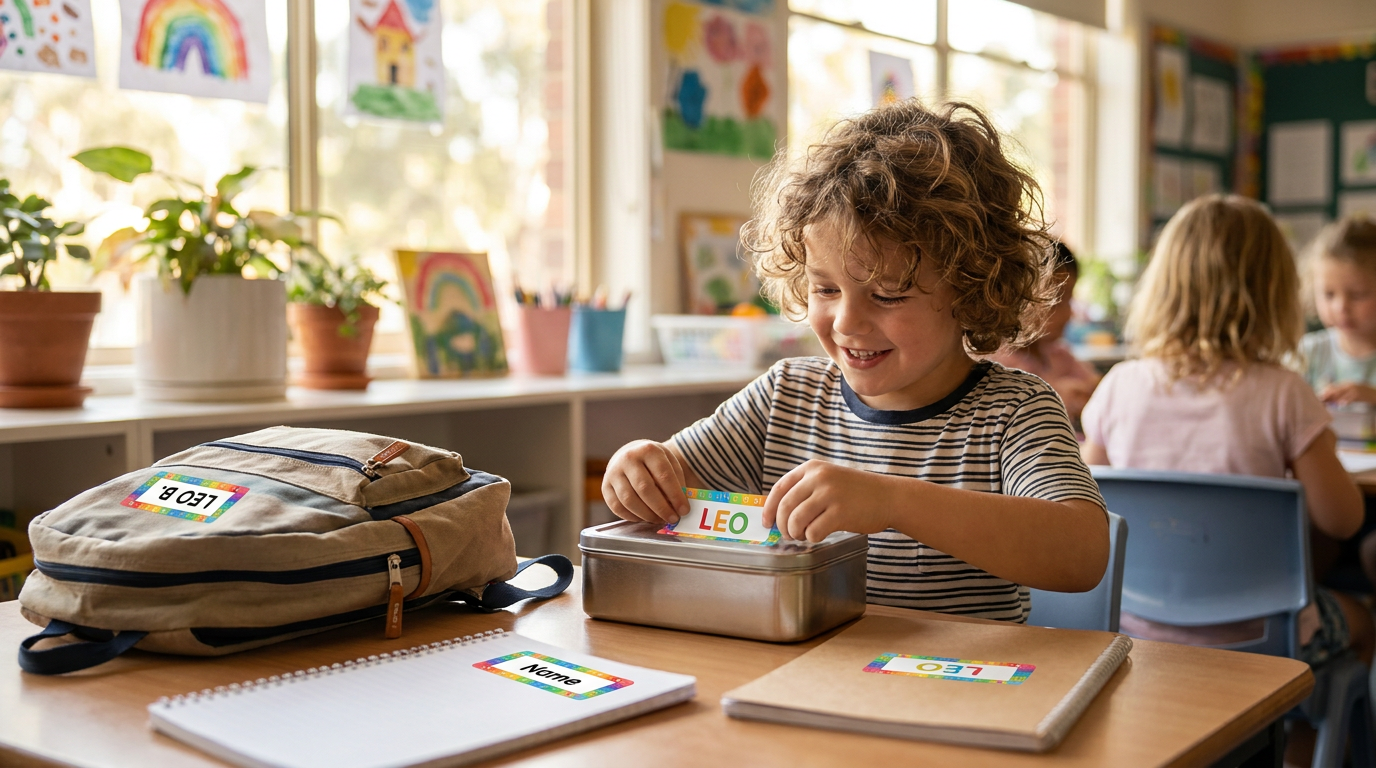
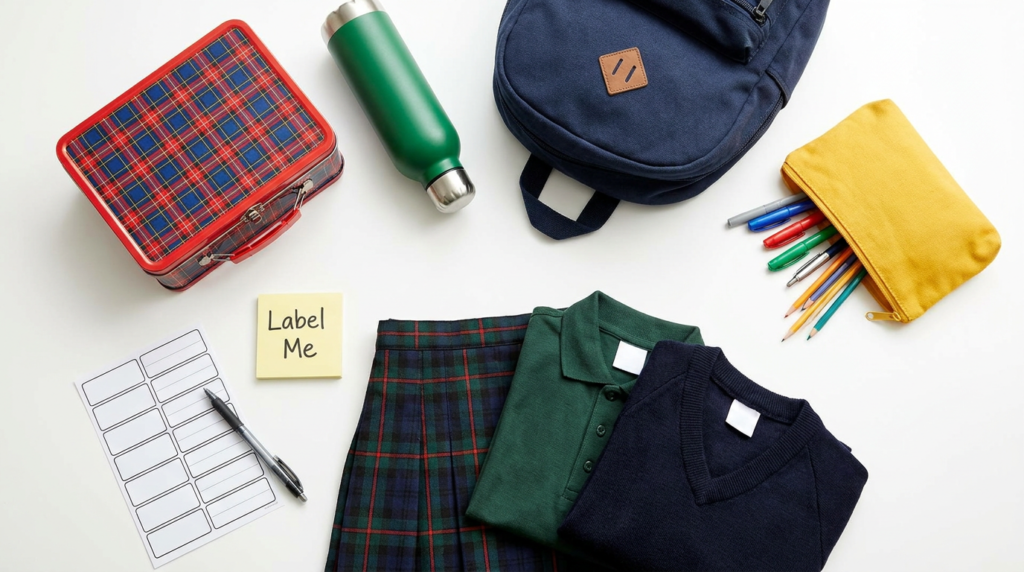
Picture this: it’s the Sunday night before the first day of school. The kitchen table is buried under a mountain of freshly ironed uniforms, a brand-new lunchbox, three drink bottles (because somehow you ended up with three), a pencil case bulging with supplies, and a backpack that still has the store tag on it. Your child is in bed. The house is quiet. And you’re standing there with a packet of generic peel-and-stick labels from the supermarket, wondering if these things are actually going to survive the dishwasher — or if they’ll dissolve into a soggy mess by Wednesday lunchtime.
If that scene feels familiar, you are absolutely not alone. Every Australian parent who has ever sent a child to school has navigated this exact moment of low-key panic. And here’s the truth that the generic label aisle doesn’t tell you: not all school labels are created equal. The wrong label on a lunchbox will bubble and peel in the dishwasher. The wrong label on a school jumper will leave a sticky ghost residue after the first wash. The right label, applied to the right surface, will still be there at the end of the school year looking almost as good as the day you stuck it on.
This guide exists to cut through that confusion entirely. As a printer that works with these materials every single day, we’ve seen what holds up and what falls apart — on every surface, through every wash cycle, under the Australian summer sun. Whether you’re labelling a kindy bag for the first time or re-labelling a teenager’s growing collection of devices and sports gear, this guide covers school labels Australia-wide, from every angle. By the end, you’ll know exactly which label type goes on which item — and why.
It’s worth noting that school labelling is one of the most practical, high-frequency uses for custom printed labels across Australia — a purchase decision that parents make every single year, often under time pressure. So let’s make sure you make it well.
Let’s start with the most fundamental question: what actually needs a label? The answer, if you’ve spent any time near a primary school lost property box, is: more than you think.
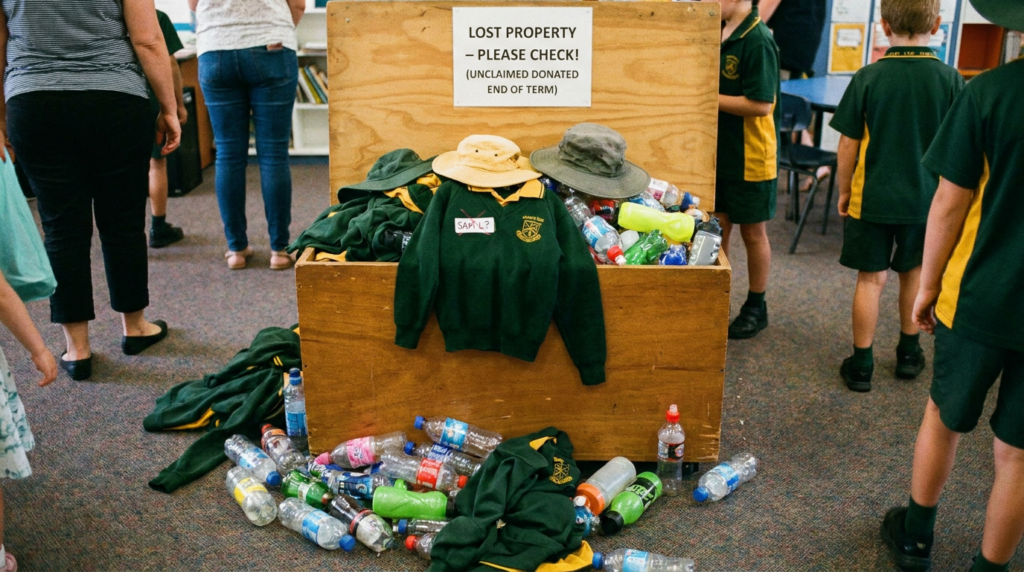
Lost property is one of those universal Australian school experiences that unites parents across every state and territory. Within the first two weeks of Term 1, the lost property box at most primary schools is already overflowing with unlabelled hats, jumpers without names, and drink bottles whose owners remain a complete mystery. Labelled items get returned. Unlabelled ones sit in a pile until the end of term, get donated to charity, or simply disappear. A few dollars and twenty minutes spent labelling at the start of the year will save you the cost — and the frustration — of replacing things that should never have been lost.
So here is a genuinely comprehensive master list, organised by category, of every item worth labelling before school starts.
Every piece of your child’s lunch kit needs its own label — and that includes the individual components. A lunchbox lid separated from its base is an unlabelled orphan. Label the lunchbox lid AND the lunchbox base separately. Label the drink bottle AND the drink bottle lid — because they separate constantly in schoolbags and on benches. Don’t forget the thermos, reusable snack bags, ice packs, and any sauce containers or dip pots. If it goes in the lunchbox, it needs a name.
The pencil case exterior is obvious. What’s easy to forget is everything inside it: individual pens and pencils (yes, really — especially the nice ones), rulers, scissors, calculators, protractors, USB drives, and notebooks. Every exercise book, folder, and workbook should have a name labels for school applied to the cover. Stationery is the category most parents under-label and most children under-value — until the good scissors go missing.
This is the big one. School uniforms, sports uniforms, hats, jumpers, jackets, and shoes — particularly at prep and kindy age — should all be labelled. Jumpers and jackets are the single most commonly lost item in Australian primary schools, because children shed them at recess and forget them on the oval. Hats are removed constantly and left on benches. Shoes, especially for younger children who change into runners for sport, go missing in pairs.
A critical safety note here: label clothing and bags on the inside — not the outside. Placing your child’s name visibly on the exterior of a backpack or jacket means a stranger can use that name to address your child directly, which is a recognised child safety risk. Australian child safety authorities and school safety advisers consistently recommend keeping children’s personal details discreet and internal — on the inside label of a collar, on the inner lining of a bag, or on the sweatband of a hat. The label still does its job (helping a teacher or student return the item to the right child) without broadcasting your child’s name to strangers.
Tablets, laptops, headphones, and musical instrument cases are high-value items that absolutely must be labelled — and labelled properly, not just with a bit of masking tape and a texta. These items also often require a contact phone number on the label so that if they’re found outside school grounds, a member of the public can return them directly.
For families with younger children in daycare or kindy, the labelling list expands further: sleeping mats, pillows, blankets, comfort items, spare clothes bags, and nappy bags all need kids name labels Australia-style — clear, durable, and friendly enough for a three-year-old to eventually recognise as “mine.”
Pro Tip: Don’t just label for lost property — label against it. The goal isn’t to get items returned after they’re lost; it’s to prevent them from going unclaimed in the first place. A clearly labelled item is less likely to be accidentally picked up by another child, and more likely to be proactively returned by a teacher or aide.
Now that you know what to label, the next question is the one that trips most parents up: which type of label do you actually use on each of these things?
Walk into any newsagency or office supply store and you’ll find a wall of generic label packs. None of them will tell you that there are actually several distinct label types — each engineered for different surfaces, environments, and levels of durability. Understanding this upfront will save you from the all-too-common experience of peeling, fading, or dissolving labels by the end of Week 3.
Here’s a clear-eyed breakdown of every label type available from an Australian printer’s perspective — and what each one is actually built for.
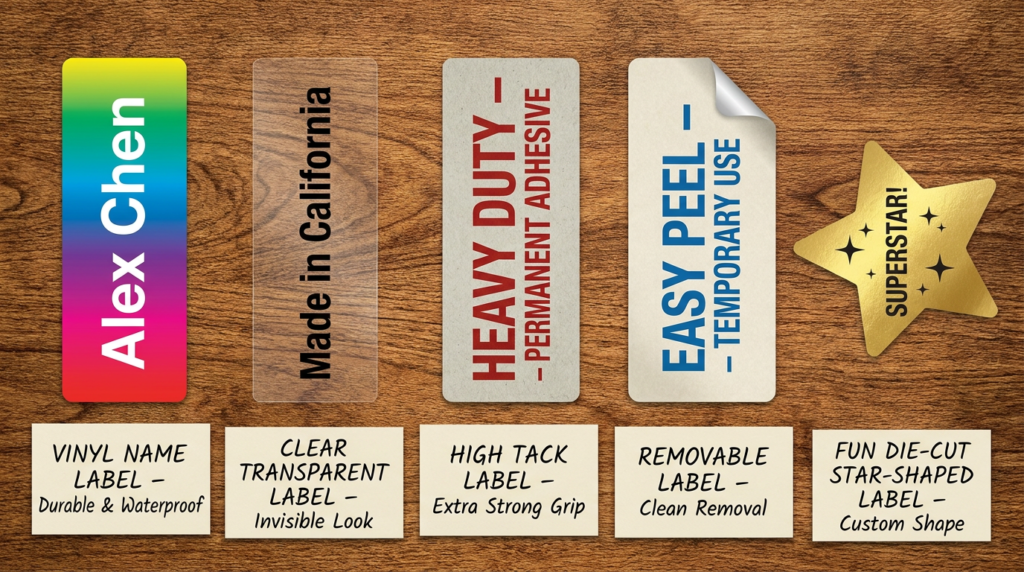
Standard vinyl stickers are the backbone of school name labels for a very good reason: they are waterproof, UV-resistant, and built with a strong permanent adhesive that bonds firmly to smooth hard surfaces. They come in white (opaque) or with a matte or gloss finish, and they handle the everyday abuse of school life — dishwashers, lunchbox stacking, drink bottle condensation, schoolbag compression — without flinching.
Vinyl is the most versatile school label material for Australian conditions. If you’re only going to order one type of label, make it vinyl. It covers lunchboxes, drink bottles, stationery, books, bags (on internal panels), and most hard surfaces your child’s school kit is made of. The adhesive is strong enough to stay put through daily use but applies cleanly without bubbling or air pockets when applied correctly.
Clear stickers use the same durable vinyl material and permanent adhesive as standard vinyl labels, but with a transparent backing — meaning only the printed text or design is visible on the surface. The effect is clean and seamless, particularly on coloured or patterned items where a white label would look visually jarring.
Clear labels are ideal for coloured drink bottles (so the label looks like it belongs rather than being slapped on as an afterthought), transparent pencil cases, and device backs where a white label would interrupt the aesthetic. They offer the same waterproof, UV-resistant durability as standard vinyl — just with a more refined, “invisible” look that older kids and teens often prefer.
Some surfaces are simply harder to stick to. Textured fabrics, rubber shoe soles, rough-grip sports equipment, and the embossed panels of some school bags present a real adhesion challenge for standard vinyl labels. That’s where high tack stickers come in.
High tack labels use an extra-strength adhesive that creates a significantly more aggressive bond with difficult surfaces. They are the right choice for shoes (particularly the insole or tongue), sports bags with nylon texturing, outdoor equipment that gets handled roughly, and any surface where a standard label might eventually lift at the edges. If you’ve ever applied a label to a drink bottle base only to watch it curl up within a week, a high tack label is the solution you’ve been looking for.
Not everything needs a permanent label. Library books change hands. School-issued devices get returned at the end of the year. Some equipment is borrowed or shared. For these use cases, removable stickers are the smart choice — they use a low-tack adhesive that bonds securely during use but peels cleanly at the end without leaving sticky residue behind.
Removable labels are also useful for parents who want the option to update label information each year — for example, if you include a class or grade on the label. They’re not designed for surfaces that will face repeated washing or dishwasher heat, but for indoor, handled items, they work beautifully.
Die-cut stickers are custom-shaped labels — stars, shields, animals, rockets, hearts, dinosaurs — cut to a unique silhouette rather than a standard rectangle or circle. They use the same durable vinyl material as standard labels, but the custom shape adds a visual personality that younger children absolutely love.
For kindy and early primary school age, a die-cut label in a child’s favourite shape is more than just fun — it’s functional. Children who can’t yet read reliably can recognise their own label by its shape and colour, making it easier for them to identify their belongings independently. Die-cuts are a particularly excellent choice for lunchboxes, pencil cases, and drink bottles at the prep-to-Year-2 stage.
Paper labels deserve a brief and honest mention. They are the most cost-effective option, and they have a legitimate place — specifically, for books, folders, and stationery items that live exclusively indoors and never encounter a dishwasher, washing machine, or outdoor conditions. For these limited use cases, a paper label is perfectly adequate.
But paper labels are a false economy for most school labelling situations. They won’t survive a dishwasher cycle. They’ll disintegrate if a drink bottle leaks in a bag. They’ll fade within weeks of outdoor UV exposure. If you want a deeper look at the material difference, Fast Stickers’ guide on vinyl vs paper stickers covers the full comparison. The short version: for anything that gets wet, hot, or used outdoors, vinyl is the only practical choice.
Iron-on fabric labels are the gold standard for school uniforms and soft clothing items — not because vinyl is inferior, but because fabric is a fundamentally different surface. Vinyl stick-on labels applied to fabric will hold initially but will eventually lift with repeated machine washing, because the fabric fibres flex and move in ways that challenge adhesive bonding. For the collar tag of a school jumper or the back of a sports shirt, iron-on labels outlast stick-on alternatives by a significant margin. For hard accessories that happen to go through the wash (like a hat brim or a drink bottle lid), vinyl holds well because the surface doesn’t flex.
Now that you understand the full label toolkit, let’s match each label type to each specific item in your child’s school kit — the question that sits at the heart of every parent’s labelling dilemma.
This is the section most parents are really here for — the practical, decisive, surface-by-surface breakdown that answers the question once and for all. No hedging, no “it depends.” Here are clear recommendations for every major item in your child’s school kit, with the reasoning to back them up.
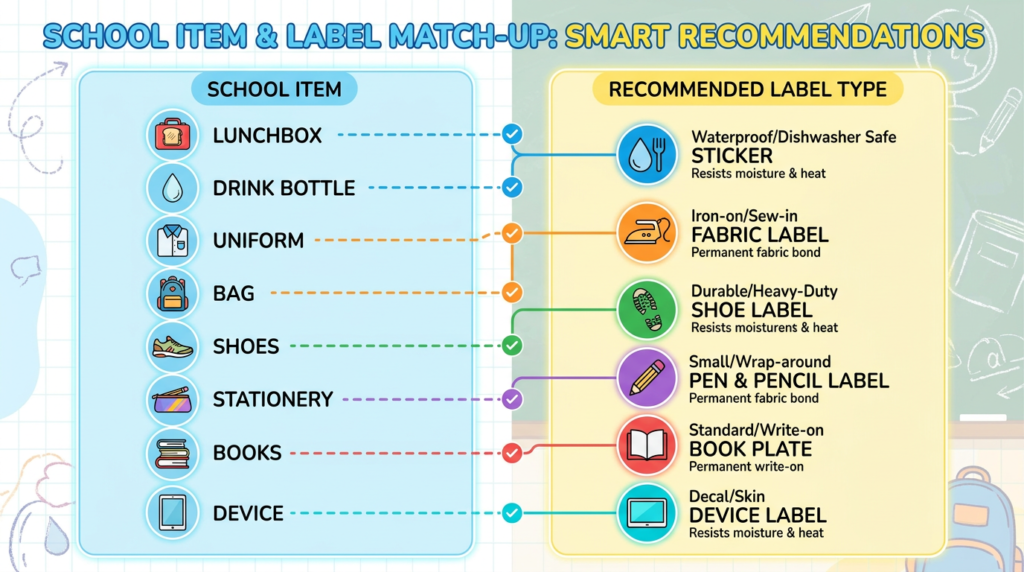
Needs: Waterproof, dishwasher-resistant, strong adhesive on smooth plastic.
Best choice: Standard vinyl label (or clear vinyl if the lunchbox is a colour you want to keep looking clean). Apply to the flat panel of the lid — not the curved edges where adhesive bond is weakest. Label both the lid and the base separately; they get separated constantly.
Application tip: Apply to the outside bottom of the base. When lunchboxes are stacked in lost property, the base label faces up and is immediately visible without needing to flip the box open.
Avoid: Paper labels entirely. They’ll dissolve in the dishwasher and leave a papery residue on the rack.
Needs: Waterproof, heat-tolerant, strong adhesion to curved cylindrical surfaces.
Best choice: Vinyl label in a wrap-around format or a small rectangular label sized to sit on the flat shoulder of the bottle. Clear labels look especially good on coloured or stainless steel bottles where the “invisible” finish keeps things looking intentional rather than stuck-on.
Critical tip: Label BOTH the bottle and the lid separately with name labels for kids. Bottle lids separate from their bottles with remarkable regularity — a labelled lid on an unlabelled bottle, or vice versa, creates the same lost-property problem you were trying to avoid.
Needs: Survives repeated machine washing at varying temperatures.
Best choice: Iron-on fabric labels for soft clothing — collar tags, inside waistbands, the back of sports shirts. For hard accessories that go through the wash (hat brims, vinyl-backed sweatbands), standard vinyl holds well because the surface is smooth and relatively rigid.
Important note: Vinyl stick-on labels applied directly to soft fabric will eventually peel with repeated washing — this is just the nature of how adhesive interacts with flexible, moving fabric fibres. Don’t fight the material; use the right label for the job.
Needs: Weatherproof, strong adhesion to nylon or polyester, discrete internal placement.
Best choice: High tack vinyl label applied to the inside of the bag — on the internal flat panel, or on the manufacturer’s care label tab inside. If the bag is borrowed or school-issued and might be returned, use a removable label instead. For the external luggage tag slot that many school bags include, a small vinyl label works well.
Safety reminder: Place the label inside the bag, not on the exterior. As discussed in the checklist section, a name label visible on the outside of a bag allows strangers to address your child by name — a genuine safety concern that Australian child safety advocates consistently flag.
Needs: Adhesion to leather, canvas, or rubber; survives outdoor exposure and physical handling.
Best choice: High tack labels on the insole or the inside of the tongue. The insole in particular is a smooth, flat surface that provides excellent adhesion — and it’s completely hidden from view, keeping the label safe from outdoor abrasion. High tack stickers are essential here because standard adhesive will struggle with the texture of most shoe materials.
Clear label tip: Clear labels look seamless on white canvas shoes or cream-coloured insoles — they sit invisibly and last through a school year of daily wear.
Needs: Indoor durability, adhesion to plastic and metal.
Best choice: Standard vinyl labels for most stationery. They adhere cleanly to plastic pencil cases, metal scissors, and the hard shell of calculators and rulers. Clear labels are excellent for transparent pencil cases — only the name shows through, no white rectangle interrupting the view of the contents. Paper labels are acceptable for notebooks and folders that will never go outdoors or near moisture, but vinyl is always the more durable choice.
Needs: Moderate durability; ideally removable at year’s end for library books.
Best choice: Removable vinyl labels for library books, textbooks, or any items that belong to the school and will be handed back. Standard vinyl labels for owned stationery, folders, and exercise books. Paper labels are adequate for purely indoor, owned books used within a single school year — but if you’re already ordering vinyl labels for everything else, there’s no reason to complicate the order.
Needs: Clean adhesion without damaging device surfaces; professional appearance.
Best choice: Clear vinyl label on the back of the device — it’s discreet, it looks intentional, and it doesn’t compromise the device’s appearance. Include a phone number as well as the child’s name so that if the device is found outside of school, it can be returned directly. If the device is school-issued and will be handed back at the end of the year, use a removable label to avoid any adhesive residue on the school’s property.
With a clear map of which label goes where, the natural next question is: how long will these labels actually last? Let’s get into the durability reality.
The most common school label complaint — from parents across every state in Australia — is labels that peel, bubble, fade, or fall off weeks after they were applied. Setting honest, realistic durability expectations is important, because the right label applied correctly should last through an entire school year. Here’s what each label type can realistically withstand.
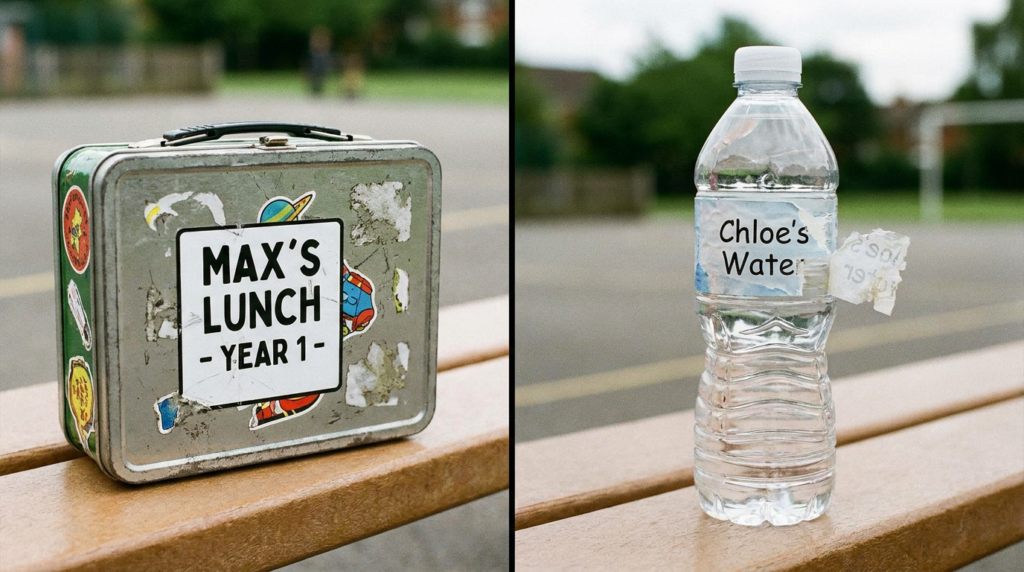
1. The Dishwasher Test
The dishwasher is arguably the most brutal environment a school label will ever face: high heat, pressurised water, steam, and detergent — repeated daily. Paper labels fail immediately; even a single dishwasher cycle will reduce them to soggy remnants. Standard vinyl labels survive the bottom rack reliably, though repeated top-rack heat cycling (which reaches significantly higher temperatures) may cause edges to lift over time. High tack vinyl is the most resistant to dishwasher conditions and is the best choice for lunchboxes and drink bottles that go through the machine regularly.
Critical application tip: Apply labels to a completely clean, dry, oil-free surface. Even microscopic traces of dishwasher residue, sunscreen, or food oils will compromise adhesion. After applying, allow 24 to 48 hours of cure time before the first dishwasher run — this allows the adhesive to fully bond to the surface and dramatically extends label life.
2. The Washing Machine Test
Clothing items and fabric accessories face repeated agitation, detergent exposure, and heat in the washing machine. As discussed, vinyl stick-on labels on soft fabric will eventually lift at the edges with washing — iron-on is the superior choice for fabric. However, for hard accessories that pass through the wash cycle (hat sweatbands, drink bottle lids, the hard panel inside a hat brim), vinyl labels hold well because the surface they’re bonded to doesn’t flex or stretch.
3. The Outdoor UV Test
This is where Australian conditions make a very real difference. According to Cancer Council Australia, Australia experiences some of the highest UV radiation levels in the world — with a UV Index that frequently exceeds 11 (classified as “extreme”) during summer months, and UV levels requiring protection year-round across most of the country. This level of UV exposure degrades materials faster than almost anywhere else on earth.
Paper labels exposed to direct Australian sunlight will fade and degrade within weeks. Fast Stickers’ vinyl labels use UV-resistant inks formulated to withstand Australian UV conditions — maintaining colour clarity and legibility through seasons of outdoor exposure on school bags, sports gear, and equipment that spends time outside.
4. The Rough Handling Test
School bags get thrown. Sports equipment gets dragged across courts. Shoes spend time on every conceivable surface. Standard vinyl labels handle everyday handling well on smooth surfaces, but on textured, rough, or porous surfaces, adhesive integrity under physical stress becomes the limiting factor. High tack labels are the clear winner here — their extra-strength adhesive maintains bond integrity even when the surface beneath is uneven or the label is repeatedly subjected to mechanical stress. Die-cut labels with fine edges should be pressed firmly from centre to edge during application and given adequate cure time to prevent corner lifting.
These aren’t marketing claims — they reflect real-world application results from everyday use. And critically, every one of these estimates assumes correct application: clean surface, adequate cure time, applied to appropriate surfaces. The print quality and material standards behind the label matter, but so does the application process — a premium label applied to a greasy surface won’t last as long as a standard label applied correctly.
Durability is about material and application — but the other half of the equation is getting the design right. A label that lasts the year but is illegible by Week 3 because the font was too small hasn’t done its job. Let’s talk design.
There’s a moment in the ordering process where many parents freeze: What do I actually put on the label? The good news is that effective school label design is straightforward once you know the principles. Here’s how to design personalised school labels that are both practical and genuinely enjoyable for your child to have on their things.
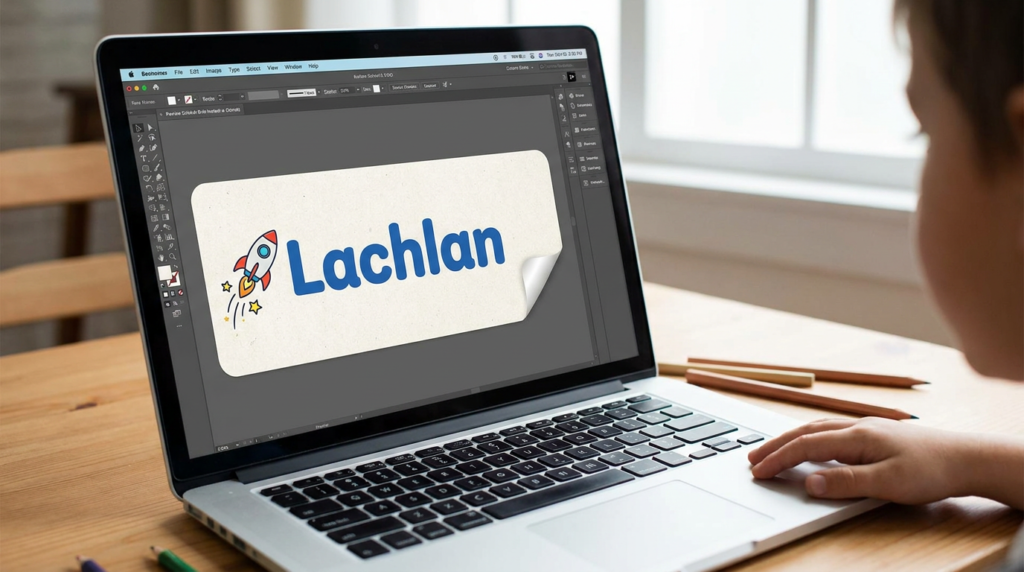
The essentials, at minimum:
What to leave off:
Small labels need simple, bold fonts. This sounds obvious, but it’s one of the most common design mistakes parents make — choosing a beautiful decorative script that becomes completely illegible at 8pt size on a pencil label. For labels under 40mm wide, stick to a clean sans-serif font in a bold weight. Readability beats style every time when a teacher is squinting at a lost hat brim.
High contrast is non-negotiable: dark text on a light label, or white text on a dark or coloured label. Avoid mid-tone text on a mid-tone background — it looks fine on screen and becomes invisible in the real world.
For kindy and early primary school children who are still developing their reading confidence, a visual identifier on the label is genuinely functional — not just decorative. A child who isn’t reading fluently yet can recognise their blue star label versus another child’s red dinosaur label. This is why die-cut stickers are so popular for younger children — the custom shape itself becomes a visual signature.
Custom colours can serve the same purpose. If you have two children at the same school, assign each child a colour scheme for their labels — child one gets green labels, child two gets orange. At a glance, without reading a word, a teacher or the children themselves can identify whose is whose.
Families with more than one child at the same school can use a custom printer to create different designs for each child — same name format, different colour or icon. This solves the sibling labelling problem elegantly and makes a full school kit easier to sort on a busy Monday morning.
For a typical primary school kit — lunchbox and lid, drink bottle and lid, hat, jumper, backpack (internal), shoes, pencil case, and a set of stationery — you’re looking at 30 to 50 labels as a sensible starting quantity. Purchasing in a sheet or roll format reduces the per-label cost significantly, and you’ll inevitably find more items to label once you start.
For parents who feel uncertain about designing their own labels, the process is far more approachable than it sounds. You can upload your own design directly, or use the free artwork design service — there are experienced designers on staff who will translate your brief into a ready-to-print label. You’ll receive a digital proof before printing, so you can see exactly what you’re getting before anything is produced. Unlimited revisions are included until you’re completely satisfied.
Custom sizes are available from tiny pencil-width labels to large bag tags — so whatever surface you’re labelling, there’s a size that fits. Get a free quote and digital proof before committing to your order — it costs nothing and gives you complete confidence before you proceed.
The design is sorted. The label type is chosen. The quantity is calculated. Now the final question is a very Australian one: can you actually get these labels in time for school?
There’s a practical reality about back to school labels Australia that often catches parents off guard: the buying window is extraordinarily tight. Australian schools return in late January and early February, and the labelling panic typically sets in during the final week of the holidays. International label suppliers — even fast ones — routinely quote 2 to 4 week delivery windows. Generic store-bought labels solve the timing problem but sacrifice personalisation entirely. An Australian printer with a 2 to 3 business day turnaround solves both problems simultaneously.
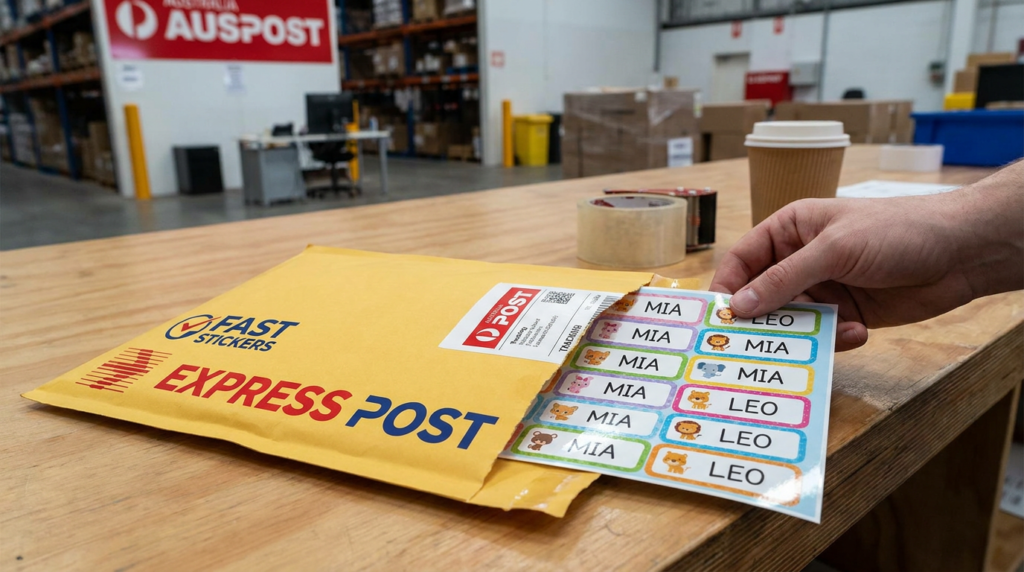
Fast Stickers operates on a 2 to 3 business day production timeline for most school label orders — meaning an order placed on a Tuesday is typically on its way by Thursday or Friday. For genuinely last-minute situations, rush order options are available. Free express shipping is included nationwide, which is a meaningful saving when you’re already spending on uniforms, stationery, shoes, and everything else that back-to-school season demands.
This isn’t something you can replicate with an overseas supplier, however competitively priced their labels might appear. A label that arrives in Week 3 of Term 1 hasn’t solved the lost property problem — it’s arrived after the first losses have already happened.
Australia’s UV environment is genuinely extreme by global standards. With a UV Index that routinely hits 11 or above during summer — the highest classification on the international scale — materials that perform adequately in European or North American conditions may degrade significantly faster in Australia. Fast Stickers uses materials specifically selected and tested for Australian UV and climate conditions: heat, intense sunlight, coastal humidity, and the general outdoor demands of Australian life.
Standard vinyl labels from international suppliers may not be formulated for this level of UV exposure. The ink may fade faster. The adhesive may soften in high heat. Choosing a label made by an Australian supplier — from materials chosen with Australian conditions in mind — is a straightforward way to ensure the labels you order actually deliver on their durability promise.
Pre-made name label packs from office supply chains are limited to a set list of common names, fixed designs, standard sizes, and predetermined colour options. If your child’s name is “Archie,” “Zephyr,” “Anika,” or “Bodhi” — names that are increasingly popular in Australian families but rarely make a generic label list — you’re simply out of luck.
With a custom printer, there are no name restrictions. Any name, any spelling, any language. Any colour. Any size from a 10mm pencil label to a 100mm bag tag. And a digital proof so you know exactly what you’re getting before the order goes to print. For kids name labels Australia-wide, custom is simply the better product.
For families with two or more children at the same school, a custom printer enables something a generic label pack never can: a distinct visual identity for each child. Child one gets teal labels with a whale icon. Child two gets orange labels with a football. At a glance — no reading required — a teacher, a lunchroom supervisor, or the children themselves can identify whose jumper is whose. This small design detail eliminates a surprising number of everyday mix-ups.
Fast Stickers is a family-owned business based in Gippsland, Victoria — with over 15 years of experience in custom label and sticker printing. When you order from Fast Stickers, you’re working with real people who understand the product intimately, offer genuine customer service, and take pride in the quality of what they produce. It’s a meaningfully different experience from placing an anonymous order with a faceless international company and hoping for the best.
Explore the full range at faststickers.com.au and see how easy it is to get a high-quality, personalised, Australian-made school label order sorted — well before the school bell rings.
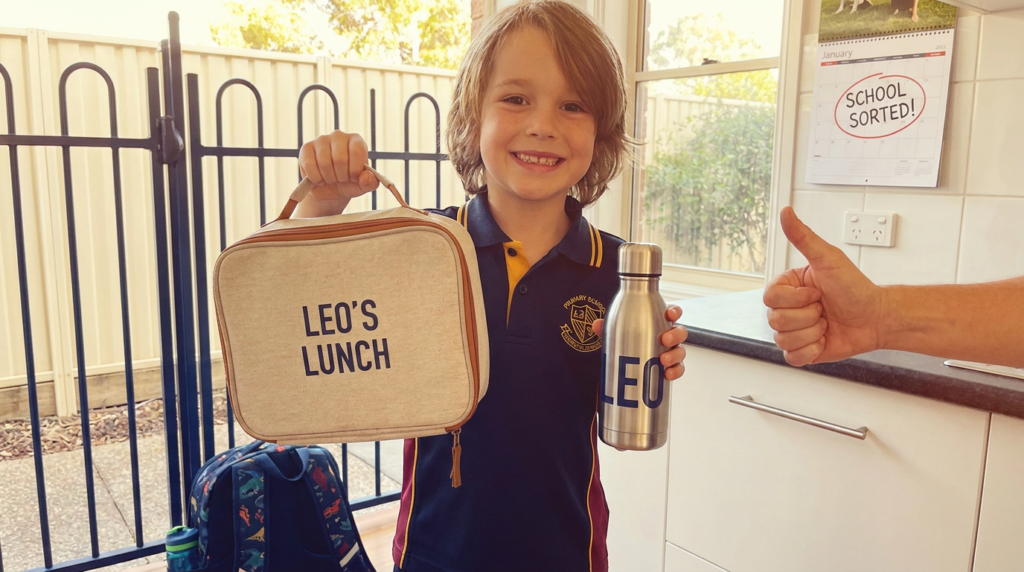
The overwhelm of standing at a kitchen table surrounded by unlabelled school supplies doesn’t have to be a recurring annual experience. The solution is genuinely simple once you understand the landscape: match the label type to the surface and its durability requirements, buy from an Australian printer who can deliver in time, and apply correctly for maximum longevity.
Here’s the decision framework, distilled to its essentials:
Buy in quantity — 30 to 50 labels covers a typical primary school kit — and invest in vinyl over paper for anything that leaves the classroom. Apply to clean, dry surfaces. Allow 48 hours before the first wash or dishwasher run. And label the lid separately from the container, every single time.
The labels you put on today are the ones that come home in June instead of sitting in a lost property box until the end of term. That’s a small investment with a very satisfying return.
Order custom, waterproof, personalised school labels from Australia’s local label specialists. Printed in Gippsland, shipped express nationwide — most orders ready in 2–3 business days. Free artwork design service included with every order. No name too unusual, no size too small.
Custom Stickers Melbourne: The Complete 2026 Guide for Victorian Businesses Picture this: it’s a Thursday afternoon in a Brunswick café. The new logo finally landed
Picture this: it’s 9pm on a Tuesday in a spare room in Bendigo, and you’re sitting cross-legged on the floor because the table ran out
Picture this. It’s Friday night in a suburban Australian street — the kind where the smell of melted cheese and wood-fired dough drifts through open
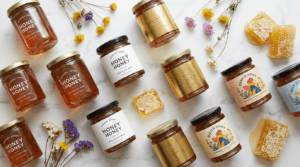
The Complete Australian Guide for Beekeepers and Honey Producers Picture this: it’s a warm December morning in the Yarra Valley. The flow has been extraordinary

Picture this: it’s 6am on the Saturday before Mother’s Day, and a florist in Melbourne’s inner north is already three hours deep into the morning.