

Custom Stickers Melbourne
Custom Stickers Melbourne: The Complete 2026 Guide for Victorian Businesses Picture this: it’s a Thursday afternoon in a Brunswick café. The new logo finally landed
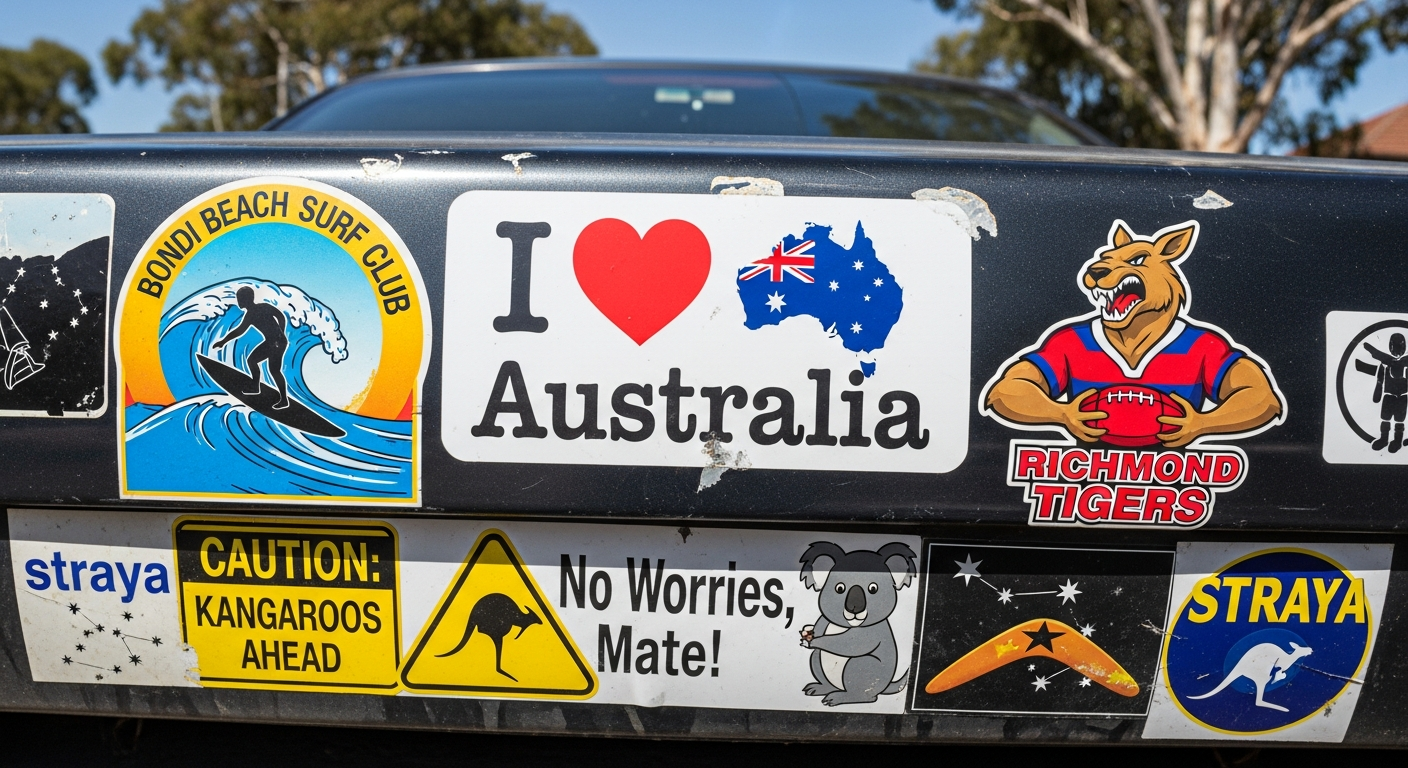
Picture this: you’re crawling through peak-hour traffic on the M1, the sun is beating down, the radio is playing something you’ve already heard three times this morning, and you’re two seconds away from losing the plot entirely — when you look up at the car in front of you and read: “I used to be indecisive. Now I’m not so sure.” Suddenly, life is just a little bit better.
That’s the magic of a great bumper sticker. These small, sticky rectangles of vinyl have been making Aussie drivers laugh, think, and nod in silent solidarity for decades. Technically speaking, bumper stickers are vinyl-backed adhesive labels affixed to a vehicle’s exterior to express personality, promote a cause, advocate for a belief, or advertise a brand — but that definition barely scratches the surface of what they actually do for people.
This is the ultimate guide to car bumper stickers in Australia — and it covers everything. We’re talking types and styles, the best materials for surviving our brutal climate, how to design your own from scratch, how to apply one without bubbles or peeling, how to remove one without wrecking your paint job, and yes — what’s actually legal on Australian roads. Whether you’re after something hilarious, deeply personal, or powerfully promotional, bumper stickers are one of the most versatile and affordable forms of self-expression on the market.
One important thing to note upfront: Australia is not a one-size-fits-all environment. The UV hammers your car in Brisbane, salt air corrodes everything in coastal WA, and Darwin’s humidity has a way of making cheap adhesives curl like a prawn on a barbie. Not just any sticker will do — and that’s exactly why this guide exists.
But first — why do Australians love bumper stickers so much?
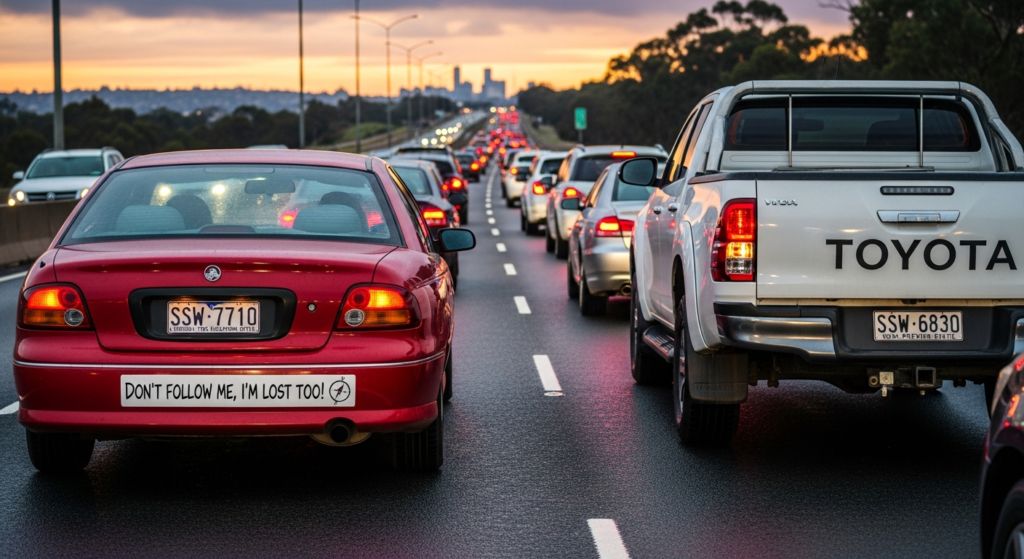
There’s a reason you’ll find bumper stickers on Holdens in Geelong, LandCruisers in Longreach, and Priuses in Fitzroy. Bumper stickers in Australia aren’t just decorations — they’re cultural artefacts, micro-manifestos, and conversation starters rolled into one.
The modern bumper sticker traces its origins back to the United States in the 1940s, when a Kansas City screen printer named Forest P. Gill combined adhesive-backed paper with fluorescent paint to create what he called “bumper strips.” These early versions were initially used by tourist attractions to promote themselves — think roadside diners and national park entry gates. According to a quick history of the car bumper sticker published by carsales.com.au, the format spread rapidly, and by the 1952 U.S. presidential election, political campaigns were using adhesive bumper stickers en masse.
By the time the format reached Australia, it landed in fertile cultural ground. Australians had already built a rich tradition around car culture — the long road trip, the family station wagon, the ute as a symbol of working-class identity. Slapping a sticker on your bumper fit naturally into that world. It was a way to say something loud without opening your mouth, and it cost next to nothing.
If you want to understand why bumper stickers took off so strongly in Australia, you need to understand the larrikin tradition. Australians have a deeply ingrained cultural habit of irreverence — a genuine, democratic disdain for anyone taking themselves too seriously. Bumper stickers became a vehicle (pun entirely intended) for that irreverence. The more absurd, the better. The more self-deprecating, the more beloved.
National pride also plays a massive role. Australians have never been shy about declaring their allegiances — whether it’s their footy team, their surf club, their state, or their hometown. A bumper sticker is a cheap and cheerful way to fly your flag at 110km/h down the Hume Highway.
“Bumper stickers allow individuals to showcase their personality, beliefs, and affiliations — a snapshot into a person’s life.”
This snapshot quality is part of why they endure. In a world of ephemeral social media posts and fleeting digital content, a bumper sticker is a committed statement. You’re putting it on your car. Everyone in your street, your suburb, and your daily commute is going to see it for years. That level of commitment says something.
Bumper stickers have never been just fun and games in Australia. They’ve been a battleground for social and political expression since the 1960s and 70s. Things got so heated that in 1981, Western Australia’s State Advisory Committee reviewed approximately 200 bumper stickers and recommended 23 of them be banned for offensive content — a fascinating chapter in Australian cultural history documented by the State Library of Western Australia. The fact that a government body felt compelled to review and censor bumper stickers tells you everything you need to know about how culturally embedded they had become.
According to e3products.com.au, the reasons Australians love car stickers haven’t changed all that dramatically from the early days. The core drivers are:
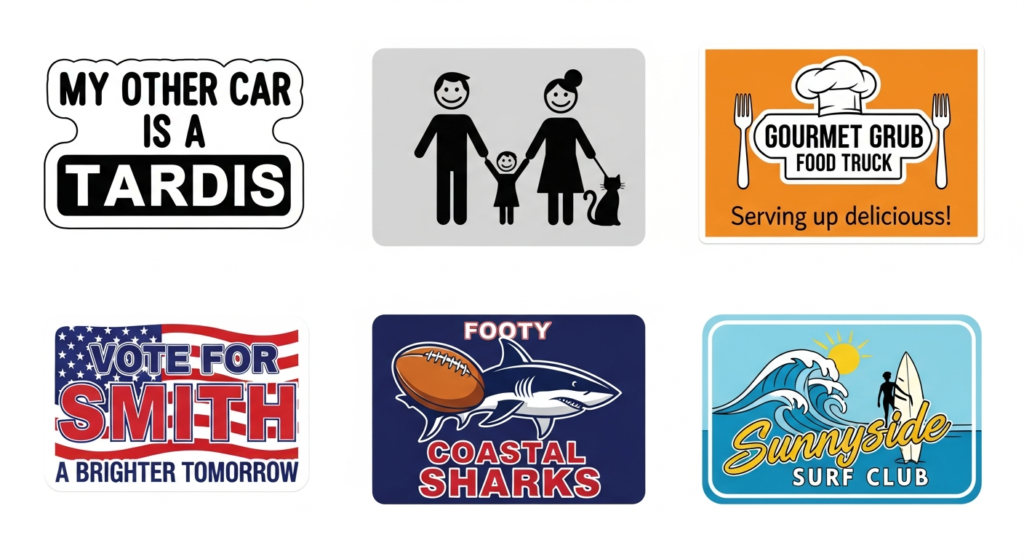
The sheer diversity of bumper stickers for cars in Australia today is staggering — from “Baby on Board” to “My Other Car is a Tardis”, from AFL premiership tributes to handcrafted artisan sourdough bakery logos. Whatever you want to say, there’s a bumper sticker format that says it.
Now that we know why we love them, let’s look at the wild variety of bumper sticker types you can choose from.
Walk into any carpark in Australia and give the rear bumpers a proper look. You’ll see an entire taxonomy of human experience rendered in vinyl. Understanding the different types of bumper stickers isn’t just useful — it’ll help you zero in on exactly what you’re looking for, and help you communicate exactly who you are every time someone pulls up behind you at the lights.
If there’s one category that Australians have truly made their own, it’s the funny bumper sticker. The search volume for funny bumper stickers and hilarious bumper stickers in Australia is consistently high — and it’s no mystery why. Aussie humour is a specific flavour: dry, self-deprecating, occasionally absurd, and deeply suspicious of anyone who thinks they’re better than everyone else. The best funny bumper stickers lean into all of that.
Classic Aussie-style one-liners that have graced rear bumpers across the country include gems like “Honk if you love peace and quiet”, “I’m not speeding, I’m qualifying”, and the perennial favourite “My other car is also a piece of junk.” Dad-joke territory is alive and well. So is sarcastic social commentary — stickers that make you laugh and then think, which is really the gold standard of the format.
The funny sticker is also incredibly democratic. It doesn’t require a political opinion, a sporting loyalty, or even a strong sense of personal identity. You just need a sense of humour — and in Australia, that’s pretty universal.
The stick-figure family sticker became one of the most recognised bumper sticker formats of the 21st century — and Australians embraced it wholeheartedly. A row of little vinyl people representing mum, dad, kids, dogs, cats, and the occasional pet rabbit lined up across the rear windscreens of SUVs and family wagons from Perth to Penrith.
Family bumper stickers have evolved considerably beyond the original stick-figure format. Today you can get personalised versions featuring your family’s actual names, customised silhouettes, or even stylised illustrations that better reflect your family’s personality — complete with surfboards, footy jerseys, or gardening tools. Baby-on-board signs remain popular, and modern versions have graduated from plain yellow diamonds to creative custom designs that parents actually want on their cars.
This is where things get really interesting. Custom bumper stickers and personalised car bumper stickers allow you to design something that exists nowhere else in the world — a sticker that carries your name, your artwork, your business logo, your inside joke, or your manifesto. These are increasingly popular with individuals who want something genuinely unique, as well as with businesses, clubs, and community organisations that need to present a consistent brand.
Fast Stickers’ bumper stickers page offers fully custom printing with free artwork design assistance — so even if you come to them with nothing more than a rough idea scribbled on a notepad, you can end up with a professionally designed, high-quality sticker that reflects exactly what you had in mind.
Australian politics has a long, proud tradition of bumper sticker campaigns — from local council elections to federal contests, from environmental movements to social justice causes. The rear bumper of a car is, in its own way, a billboard that moves through every suburb and socioeconomic area of the country. Political and advocacy stickers reach people who wouldn’t click on an ad, wouldn’t pick up a flyer, and definitely wouldn’t attend a town hall meeting.
Environmental advocacy stickers are particularly popular in Australia right now — reef protection, renewable energy, water conservation. These stickers signal values as much as they promote causes, which gives them a durability beyond the election cycle.
AFL fans. NRL loyalists. Cricket tragics. Local netball club volunteers. Surf lifesavers. In Australia, sport isn’t just something you watch — it’s a fundamental part of community identity. And nothing broadcasts your sporting allegiances quite as clearly and permanently as a bumper sticker.
Club and sports bumper stickers create an instant sense of kinship on the road — there’s a reason Collingwood fans and Richmond fans have been having non-verbal arguments at traffic lights via bumper sticker for decades. Local footy clubs and community sporting organisations also use them as fundraising and awareness tools, which makes them both a cultural artefact and a practical community asset.
For tradies, small businesses, food trucks, and local service providers, a bumper sticker on a work vehicle is one of the most cost-effective marketing tools available. Your van is already driving thousands of kilometres a week through your target geographic area — why not put it to work? A professionally designed business bumper sticker, printed on quality vinyl, can generate thousands of impressions per week at a cost that makes digital advertising look extravagant by comparison.
For a deep dive into how small businesses can use custom stickers strategically, the Fast Stickers guide to custom stickers for small business is an excellent starting point.
Choosing the right type of sticker is just the beginning — the material it’s made from is what determines whether it’ll last a week or five years on an Aussie road.
Australia is one of the most punishing environments on the planet for any outdoor material. The UV is extreme, the temperature swings are dramatic, the coastal salt air is relentless, and in the tropical north, the humidity is a force unto itself. A bumper sticker that performs beautifully in a European winter can look like a piece of soggy newspaper after a single Queensland summer. This is why material choice is not a minor consideration — it’s the single most important factor in whether your sticker looks great for years or peels and fades within months.
Let’s settle this quickly: for outdoor bumper stickers in Australia, paper-based stickers are simply not viable. Full stop. Paper degrades rapidly when exposed to UV radiation, moisture, and temperature fluctuations. Even in mild conditions, a paper sticker on a vehicle will begin to discolour, bubble, and peel within weeks. In Australian conditions, you’re lucky to get days.
Automotive-grade vinyl is the only appropriate material for bumper stickers. It’s engineered to flex with surface movement, withstand highway speeds (where wind shear creates constant stress on the sticker’s edges), and adhere cleanly to the curved surfaces of modern bumpers. For a comprehensive comparison, Fast Stickers’ vinyl vs. paper stickers guide breaks down the differences in detail. The short version: vinyl wins, in every category, for outdoor vehicle use.
Australia’s UV index regularly hits 12 to 15 during summer — that’s the “extreme” category, and it’s sustained for months at a time, particularly in Queensland, Western Australia, South Australia, and the Northern Territory. UV radiation doesn’t just cause sunburn; it causes photodegradation in pigments, breaking down colour molecules and causing fading, yellowing, and loss of contrast.
UV-resistant inks are specifically formulated to resist this degradation. Without them, even a high-quality vinyl sticker can fade dramatically within a season. With them, your sticker retains its colour integrity for three to five years outdoors — which is exactly the lifespan you should expect from a properly manufactured bumper sticker used in Australian conditions.
Rain, car washes, morning dew, Darwin’s wet season, and coastal spray are all realities that a bumper sticker needs to handle without delaminating, bubbling, or losing adhesion. Quality automotive vinyl is fully waterproof — it creates a sealed surface that prevents moisture penetration. The adhesive layer is similarly engineered to maintain bond strength even when wet, then dried, then wet again.
This matters especially in high-humidity environments like Brisbane, Cairns, and Darwin, where the combination of heat and moisture accelerates material degradation. A premium weatherproof vinyl bumper sticker handles these conditions without complaint.
Australia’s temperature extremes are remarkable. In alpine regions of the Victorian High Country and Kosciuszko National Park, overnight temperatures can drop to -10°C in winter. In the Western Australian desert, a dark car bumper surface can reach +70°C in summer. The vinyl and adhesive used in quality bumper stickers need to remain stable, flexible, and bonded across this entire range.
Cheap vinyl becomes brittle in cold and gooey in heat. Cheap adhesive loses its bond in temperature extremes. Automotive-grade vinyl formulations are specifically engineered for this kind of performance — they flex rather than crack in cold, and maintain adhesion rather than sliding or bubbling in heat.
The finish of your bumper sticker is partly a practical choice and partly an aesthetic one. Here’s how to think about it:
Gloss finish produces vibrant, high-contrast colour reproduction. It has a shiny, polished appearance that pops in photographs and catches the eye in direct sunlight. It’s the most popular choice for colourful, image-heavy, or logo-based designs.
Matte finish has a flat, non-reflective surface that looks sophisticated and premium. It reduces glare in strong sunlight, which can actually make text more readable in bright Australian conditions. It’s an excellent choice for minimalist designs, monochrome artwork, or brands that want a more understated, high-end aesthetic.
While custom sizes are always available, the most common bumper sticker dimensions in Australia are:
For those wanting broader guidance on selecting the right sticker product for their needs, the Fast Stickers guide to choosing the perfect sticker is a practical resource worth bookmarking.
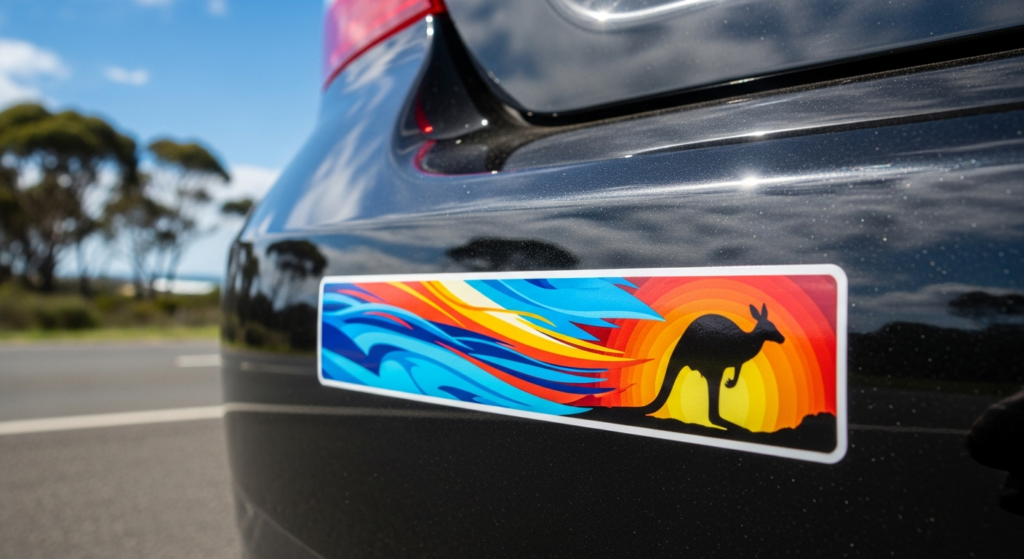
Now you know what your bumper sticker should be made of — the next step is designing one that actually turns heads.
The thought of designing your own sticker can feel daunting if you’ve never done it before. What file format do you need? What fonts work? How do you know if the colours will print the way they look on screen? The good news is that with a bit of guidance — and the right printing partner — the process is far simpler than it appears. Here’s how to design custom bumper stickers that actually work.
Bumper stickers are read at 60 to 100 kilometres per hour. Drivers have approximately one to three seconds to absorb the message on the car in front of them. This fundamental constraint shapes everything about good bumper sticker design: less is always more.
The most effective bumper stickers communicate their message in three to seven words, or with a single strong, simple visual. Every additional word reduces the number of people who will successfully read and process your message before the moment passes. If you can’t say it in a sentence fragment, you may need to rethink your concept.
Refer to the standard sizes outlined in the previous section. As a general rule, horizontal (landscape) layouts work far better on bumper surfaces than vertical ones, simply because car bumpers are horizontal surfaces. For text-heavy designs, err toward larger sizes to ensure readability at distance.
A useful test: print a draft of your design at actual size on a home printer, stick it to a wall, and read it from ten metres away while squinting. If it’s legible, you’re on the right track.
Font choice can make or break a bumper sticker. The guiding principle is legibility at distance and speed. Bold, sans-serif typefaces — think Helvetica, Montserrat, or Impact — are dramatically easier to read from a moving vehicle than delicate serif or decorative fonts. Script fonts might look beautiful in isolation, but they become a blur at 80km/h.
High contrast between text and background is equally critical. Dark text on a light background, or light text on a dark background — these combinations work. Mid-tone text on mid-tone background, regardless of how artistically interesting it looks, will simply not be readable in real-world conditions.
Colours in digital design (RGB colour mode) look different when printed (CMYK colour mode). If you’re supplying your own artwork, always ensure your file is set to CMYK to ensure colour accuracy. Bright, saturated colours generally print beautifully on gloss vinyl. Matte vinyl can slightly reduce colour vibrancy, so account for this when designing for a matte finish.
For those supplying their own design to the printer:
Modern custom bumper stickers can incorporate far more than text and simple graphics. Photo-quality printing means photographs can be reproduced faithfully. QR codes are increasingly popular — particularly for business stickers — as they bridge the physical and digital worlds, allowing a passing driver or pedestrian to scan and land directly on your website or social media. For more on this trend, Fast Stickers has a dedicated QR code stickers Australia guide worth reading.
Here’s the part that most people don’t realise: you don’t need to be a designer, or even have a design ready, to order custom bumper stickers. Fast Stickers offers a free artwork design service staffed by experienced graphic designers who will create your sticker from scratch based on your brief. You describe what you want, they design it, you approve a digital proof, and nothing goes to print until you’re completely happy. Unlimited revisions. 100% satisfaction guarantee. Get a free quote here to get started.
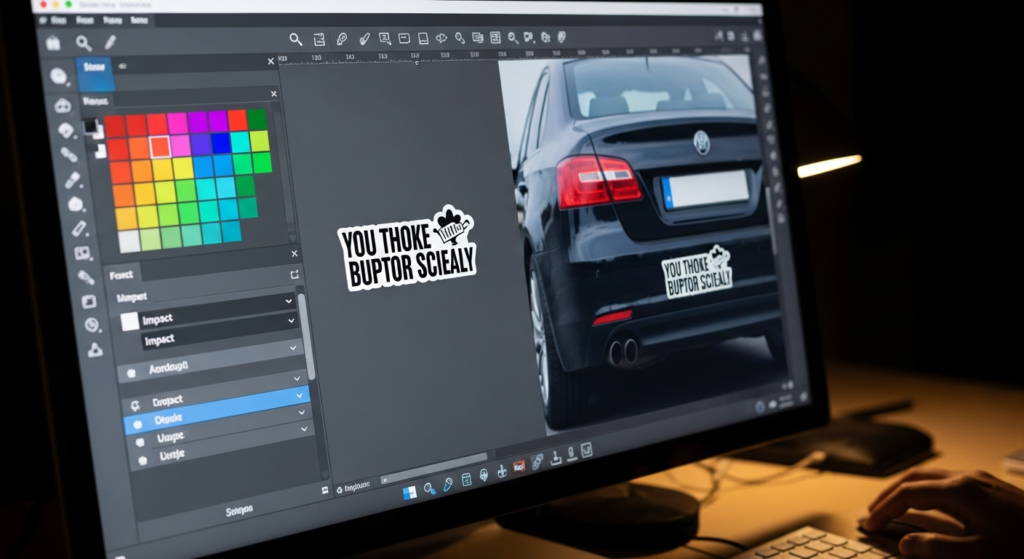
Once your design is ready, the next step is getting it onto your bumper properly — because a great sticker deserves a great application.
Application is where most sticker disasters happen. The sticker itself might be perfect — premium vinyl, brilliant design, flawless print — but if the surface isn’t prepared correctly or the technique is wrong, you’ll end up with bubbles, wrinkles, and edges that lift within weeks. Follow these steps and you’ll get a clean, professional result every time.
What you’ll need:
Before anything touches your car, identify exactly where you want the sticker to go. Flat and smooth surfaces give the best adhesion results. Avoid deeply curved areas, textured plastic trim, or surfaces near moving components where the sticker’s edge might catch and peel. The centre of the rear bumper, the boot lid, or the rear side panels are all excellent locations.
This is the step most people rush — and it’s the most important one. Any dirt, wax, grease, or residue will compromise adhesion. First, clean the area with warm soapy water and a microfiber cloth. Rinse and dry completely. Then wipe the surface again with isopropyl alcohol on a clean cloth and allow it to dry fully. This removes any invisible grease or wax film that soapy water might leave behind.
Before you peel anything, use masking tape to mark the exact placement of your sticker on the surface. Position the sticker (still with backing on) and make small tape marks at the corners or edges to serve as alignment guides. Dry-fit it. Step back. Check the alignment from a distance. Make adjustments now, not after you’ve peeled the backing.
For stickers up to about 300mm wide, the dry method is best:
For larger stickers — 400mm or wider — the wet method gives you more control:
For any remaining small bubbles, press them firmly toward the nearest edge with a squeegee or your thumb. If a bubble won’t move, use a very fine pin to make a tiny puncture, then press the air out and smooth flat. Do not wash the car or expose it to heavy rain for at least 24 hours after application.
Australia-specific tip: Never apply a bumper sticker to a car surface that’s been sitting in direct summer sun. The surface temperature can exceed 60°C, which causes the adhesive to set almost instantly — before you’ve had a chance to position the sticker correctly. Apply in shade, in mild temperatures, ideally in the morning.
Fast Stickers’ bumper stickers use automotive-grade adhesive specifically formulated for curved vehicle surfaces — which makes proper adhesion significantly more reliable than cheaper alternatives. If you need a repositionable or temporary option, the removable stickers range offers that flexibility.
Of course, even the best-applied sticker eventually needs to come off — and removing one the wrong way can damage your car’s paint.
Every sticker that goes on eventually comes off — whether you’re selling the car, changing your mind about a political allegiance, or simply refreshing your vehicle’s look. The good news is that removing a quality vinyl bumper sticker correctly is entirely achievable without damaging your paint. The bad news is that removing one incorrectly can leave adhesive residue, scratches, or even lifted paint. Here’s how to do it right.
The two most common mistakes are rushing and using the wrong tools. Metal scrapers, sharp objects, and abrasive pads will scratch your clear coat. Solvents that aren’t designed for automotive use can strip wax, damage paint, or bleach plastics. And trying to peel a sticker that hasn’t been properly heated — particularly one that’s been baked on through multiple Australian summers — is a recipe for torn sticker fragments that are far harder to remove than the original.
What you’ll need:
Before applying any heat, wipe the area around the sticker clean to prevent you from dragging grit or dirt across the paint surface during removal.
Set a hairdryer to medium heat. Hold it approximately 5 to 10 centimetres from the surface of the sticker and move it constantly in slow, even passes over the sticker for one to two minutes. You’re looking to make the vinyl flexible and warm the adhesive so it loses some of its grip. The sticker should feel warm to the touch and slightly pliable. Do not hold the heat in one spot — you risk scorching the vinyl or the paint beneath.
Lift one corner of the sticker using your plastic scraper — never a metal implement. Once you have a corner lifted, peel the sticker back at a very shallow angle — roughly 15 to 30 degrees from the surface. The lower the angle, the less stress on the adhesive layer and the less chance of residue being left behind or paint being affected. Peel slowly and steadily. If you feel resistance increasing, stop and apply more heat before continuing.
Almost every sticker will leave some adhesive residue behind — this is normal and nothing to worry about. Apply a small amount of adhesive remover (Orange Power works well and is widely available in Australian hardware stores) to a clean microfiber cloth and rub the residue in gentle circular motions. Allow the product to sit for two to three minutes to break down the adhesive before wiping clean.
Wash the area thoroughly with car wash soap and water, rinse well, and dry with a clean cloth. Finally, apply a car wax or polish to the previously stickered area — this restores the sheen and provides a protective layer over the now-exposed paint.
Important Australian note: Stickers that have been on a vehicle for many years in hot Australian climates — particularly in the north or in areas with very high UV exposure — may require significantly more heat time and patience during removal. The adhesive can vulcanise over time, creating a much stronger bond. Take it slow, keep the heat consistent, and don’t force it.
It’s worth noting that this whole process is considerably easier with a quality vinyl sticker than with a cheap one. Fast Stickers’ bumper stickers are made with vinyl formulations designed to be removable without paint damage — a key quality differentiator. If you’re specifically after a sticker designed for temporary use from the outset, explore the removable stickers range for adhesives engineered for clean, residue-free removal.
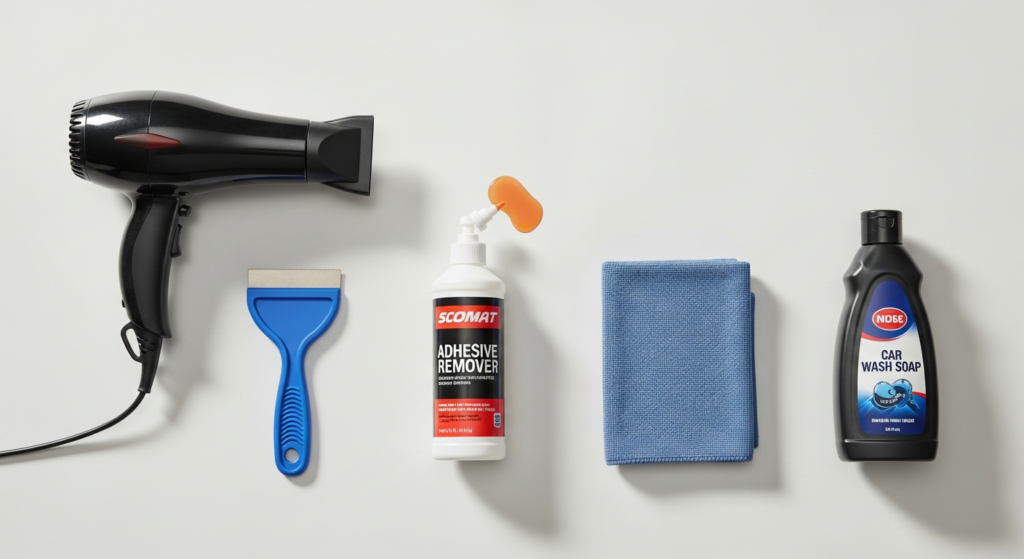
Before you put a new sticker on — or decide to leave the old one there — there’s one important question many Aussie drivers overlook: is your bumper sticker actually legal?
This is one of the most commonly searched questions around the topic of bumper stickers in Australia — and understandably so. Nobody wants to get pinged by a copper because of a vinyl sticker. The reassuring answer is that bumper stickers are legal in Australia for the vast majority of drivers, in the vast majority of situations. But there are specific rules that vary by state, and it pays to know them before you stick.
Regardless of where in Australia you’re driving, these fundamental principles apply everywhere:
While the above principles are universal, the specific regulations vary by jurisdiction:
New South Wales: Transport for NSW prohibits any sticker placed within the driver’s primary line of sight on the windscreen. Small identification stickers (such as inspection certificates) may be placed at the top or bottom corners. The rear of the vehicle — bumper, boot, and rear side panels — is the appropriate zone for personal stickers.
Victoria: VicRoads regulations permit stickers only in the top 10% of the windscreen, or in areas not swept by the windscreen wipers. Anything in the wiper sweep zone that could impair vision is prohibited. Rear bumper and boot placement is fully compliant.
Queensland: The Department of Transport and Main Roads takes a clear position: any sticker that impedes vision through the windscreen is prohibited. Queensland’s strong sun means vision impairment from a poorly placed sticker is a very real practical concern, not just a regulatory one.
South Australia: SA regulations focus specifically on safety — anything with a pointed or sharp edge that could cause injury in a collision is prohibited. The SA Government’s vehicle standards and modifications guidance is the authoritative reference for SA drivers.
Australian Capital Territory: Interestingly, the ACT Road Transport Regulation 2017 specifically notes that bumper stickers in or on vehicles are not classified as advertising under that regulation — which means they’re not subject to the same restrictions as commercial signage on vehicles. This is a nuanced but useful distinction for ACT drivers.
Western Australia: WA has a historically active stance on bumper sticker content — as evidenced by the 1981 State Advisory Committee review documented by the State Library of Western Australia. Current regulations align with the national consensus: vision obstruction and offensive content are the primary concerns.
The golden rule for legal compliance — and for maximum visibility — is simple:
✅ Legal, safe placement: Rear bumper, boot/tailgate, rear quarter panels, rear side windows (not driver’s line of sight)
❌ Avoid: Windscreen (except authorised small stickers at extreme edges), over or near the number plate, covering any lights or indicators
Following these guidelines keeps you compliant in every state and territory, and ensures your sticker is actually seen by the people who should be seeing it — the drivers and pedestrians behind you.
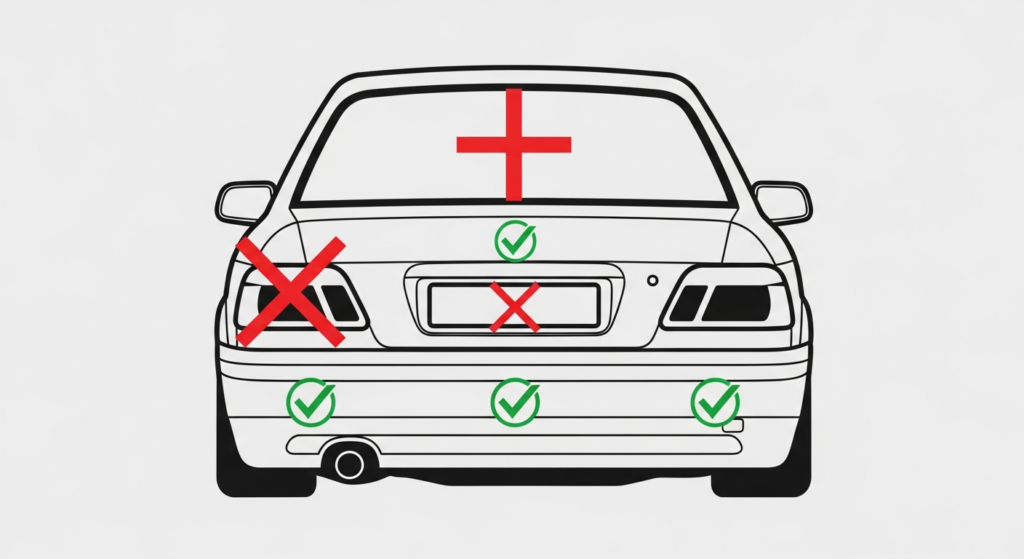
Now that you know the rules, you’re ready to order your perfect bumper sticker — and Fast Stickers makes the whole process as easy and lightning-fast as it should be.
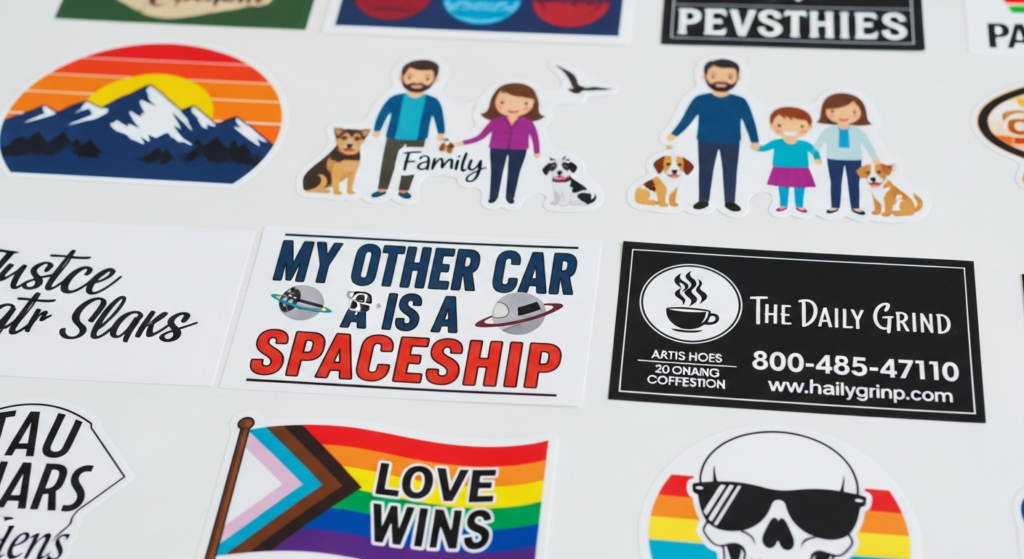
Bumper stickers have come a long way since Forest P. Gill’s fluorescent paper strips in 1940s Kansas City. In Australia, they’ve grown into a genuine cultural institution — a form of self-expression that sits at the intersection of humour, identity, community, and commerce. From the laugh-out-loud one-liners that brighten up a miserable commute, to the lovingly personalised family stickers that tell the story of who’s in the car, to the bold business logos that turn a tradie’s ute into a rolling billboard — bumper stickers remain one of the most versatile, affordable, and effective ways to make a statement.
What this guide has shown is that getting the best from a bumper sticker means thinking beyond the design itself. The material matters — automotive-grade vinyl with UV-resistant inks is non-negotiable in the Australian climate. Application technique matters — a clean surface and a patient squeegee make the difference between a sticker that lasts years and one that peels in weeks. Removal matters — done right, it leaves no trace; done wrong, it leaves a legacy of regret. And legality matters — knowing where to place your sticker keeps you on the right side of state road regulations.
Most importantly, getting a great custom bumper sticker in Australia doesn’t have to be complicated, expensive, or technically demanding. With the right supplier, it can be effortless.
If you’re ready to make your statement, Fast Stickers is Australia’s go-to bumper sticker specialist — and they’ve been doing this for over 15 years. Here’s why Australian individuals and businesses choose Fast Stickers:
Whether you’re after a side-splitting funny bumper sticker that makes the whole carpark smile, a beautifully personalised family sticker set, a striking custom design that’s entirely your own, or a sharp business promotional sticker that turns your vehicle into a marketing machine — Fast Stickers has you covered in every category.
Custom Stickers Melbourne: The Complete 2026 Guide for Victorian Businesses Picture this: it’s a Thursday afternoon in a Brunswick café. The new logo finally landed

Picture this: it’s 9pm on a Tuesday in a spare room in Bendigo, and you’re sitting cross-legged on the floor because the table ran out

Picture this. It’s Friday night in a suburban Australian street — the kind where the smell of melted cheese and wood-fired dough drifts through open

The Complete Australian Guide for Beekeepers and Honey Producers Picture this: it’s a warm December morning in the Yarra Valley. The flow has been extraordinary

Picture this: it’s 6am on the Saturday before Mother’s Day, and a florist in Melbourne’s inner north is already three hours deep into the morning.