
Custom Stickers Melbourne
Custom Stickers Melbourne: The Complete 2026 Guide for Victorian Businesses Picture this: it’s a Thursday afternoon in a Brunswick café. The new logo finally landed
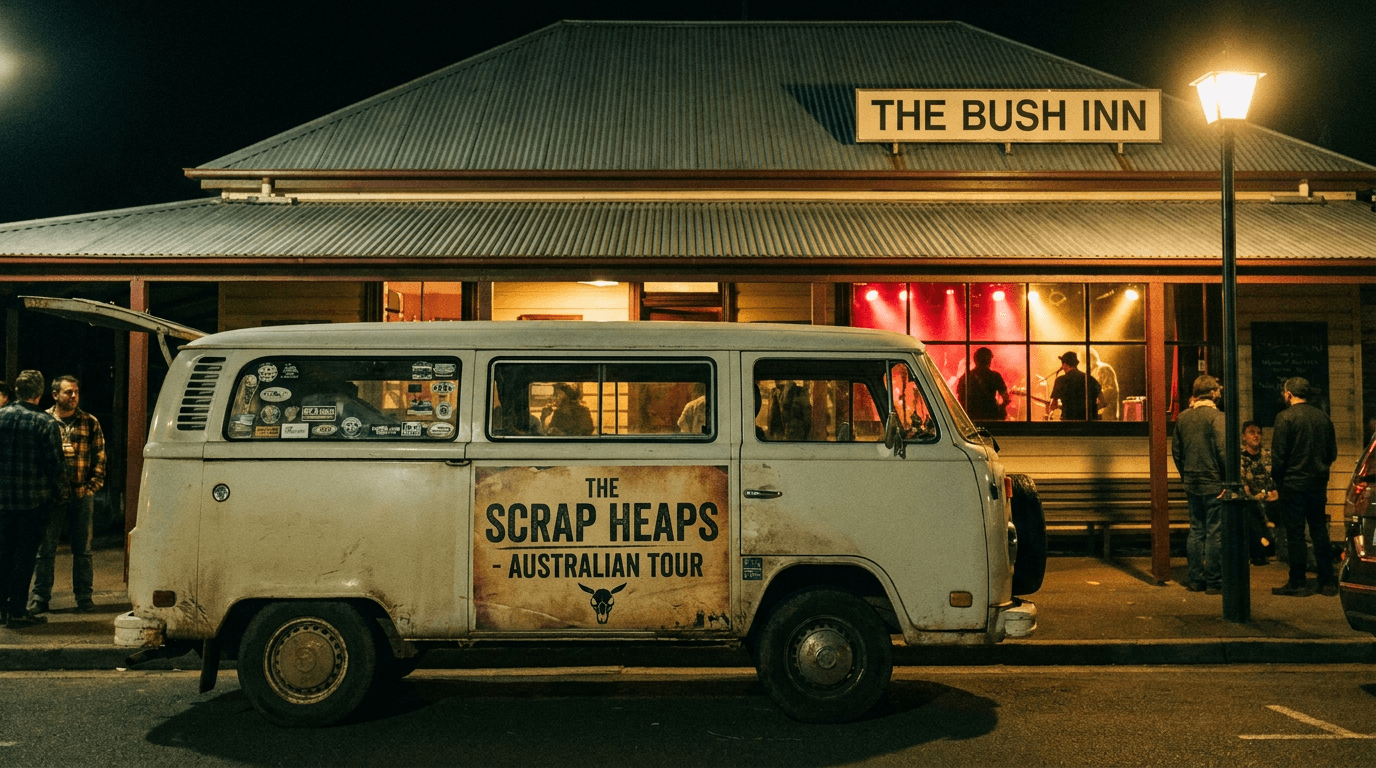
Picture this: it’s a Tuesday night in a sticky-floored pub somewhere in Fitzroy or Fortitude Valley. The lights are low, the monitors are buzzing, and a four-piece indie band is halfway through their first headline set. The crowd is small but loud — the kind of crowd that memorises setlists and argues about B-sides. After the last chord rings out, a young woman at the bar peels the backing off a sticker she picked up from the merch table, smooths it onto the lid of her guitar case, and steps out into the night. The gig is over. The sticker has just begun its life.
That little rectangle of premium vinyl will travel with her to uni lectures, rehearsal rooms, café counters, and interstate trips. Dozens — maybe hundreds — of people will glance at it, register the band name, feel something. A Spotify stream evaporates the moment the algorithm pivots. A music band sticker lingers for years.
In 2026, Australia’s music industry is bigger than ever — Creative Australia’s Bass Line report confirmed the sector generated an estimated $10.76 billion in revenue in 2024–25. But the spoils are not evenly distributed, and breaking through as an independent Australian artist has never been more competitive. In a landscape saturated with playlists, algorithmic recommendations, and social media content cycles measured in hours, physical touchpoints have become unexpectedly powerful. Band stickers Australia wide are having a genuine moment — not because they’re new, but because they work in ways that digital promotion simply cannot replicate.
This is the definitive guide for Australian musicians, independent bands, and music fans who want to understand the full power of band stickers in 2026. We’ll cover every sticker format available, how to design one that actually turns heads, how to use stickers to build a loyal fanbase, where to place them for maximum reach, and how to order custom band stickers in Australia — fast and affordably. Let’s get into it.
Every musician knows that getting people to care is the hardest part. You can record the best EP of your life, post consistently across three platforms, pitch to playlists, and still feel like you’re shouting into a void. That’s not a personal failing — it’s the structure of the current music ecosystem working against independent artists. According to APRA AMCOS, the share of locally written or composed music streamed in Australia has fallen by more than 30% over five years, as algorithms increasingly favour international acts and major-label artists with the budget to game the system. The digital gatekeepers are real, and they are expensive to bypass.
This is exactly why custom band stickers are having a resurgence among savvy Australian musicians. A sticker doesn’t need an algorithm. It doesn’t require a boosted ad budget. It doesn’t disappear from a feed after 48 hours. Once it’s placed, it stays — and it works 24 hours a day, seven days a week, for years.
Think about the economics. Stickers are among the most affordable items a band can produce, with even small print runs delivering a cost-per-unit that makes other merch categories look extravagant by comparison. But the return on a well-placed sticker is wildly asymmetric. Every sticker placed is a tiny, mobile billboard — a brand impression that compounds over time. A sticker on a guitar case seen at 200 gigs over two years has delivered 200 promotional moments from a single unit. No streaming ad buy offers that kind of longevity.
Beyond the economics, band stickers carry something that digital content often cannot: visual identity in the physical world. Your band’s logo, colour palette, and aesthetic travel into spaces a social media post will never reach — the amp head of a guitarist in a rehearsal room, the bumper of a fan’s hatchback, the toilet door of a beloved dive bar. These are spaces of genuine community, where music culture lives and breathes, and where a well-designed sticker can spark a real conversation between two strangers.
There’s also the social proof dimension, which any experienced touring act will tell you is priceless. When a fan puts your sticker on their laptop or guitar case, they are making a public declaration: I listen to this band. I was there before they were big. It signals tribe membership in a way that pressing a “follow” button never quite does. That fan has become a brand ambassador — and they’re proud to be one. Research into brand loyalty and custom stickers consistently shows that physical branded items create deeper emotional connections with a brand or artist than digital interactions alone.
And yes, stickers can be a genuine revenue stream. A band sticker pack priced at $5–$8 is a low-barrier purchase for a fan who wants to support you but can’t stretch to a $40 tee. Multiply that across a run of shows, an online store, and festival appearances, and a well-curated sticker pack adds meaningful income to a touring band’s bottom line.
The medium has longevity that almost nothing else in the merch world matches. A quality vinyl music band sticker — properly finished, properly applied — lasts years outdoors and even longer in sheltered environments. The promotional impression doesn’t decay. It compounds. Every time that sticker is seen, it’s a free advertisement for your band, delivered by someone who genuinely loves your music.
“The sticker is one of the most democratic forms of music promotion ever invented. It costs almost nothing, it travels everywhere, and it lasts forever.” — The touring musician’s gospel, passed down from van to van across every music scene on earth.
Now that we’ve established why band stickers are one of the smartest tools in an Australian musician’s kit, let’s look at what kinds of band stickers are available — because the format you choose shapes the impact you make.
Not all stickers are created equal — and for a band, the format of your sticker is almost as important as the design itself. Different sticker types suit different goals, different aesthetics, and different budgets. Understanding the options means you can make a strategic choice, not just a default one. Here’s a breakdown of every major format worth knowing about.
Die Cut Stickers are the gold standard of band merch stickers, and for good reason. Instead of coming in a standard rectangle or square, a die cut sticker is precision-cut to the exact shape of your design — every curve, angle, and silhouette followed exactly. No white border, no rectangle framing. The result is a sticker that looks genuinely professional, highly collectible, and visually striking. For bands with a strong logo — a distinctive mascot, a bold wordmark with interesting letterforms, a recognisable symbol — die cutting transforms a good sticker into a great one. Fans treat die cut stickers differently; they tend to place them more carefully, value them more highly, and display them more proudly. If you’re building a band brand with longevity in mind, die cut stickers are worth the investment.
Vinyl Stickers are the reliable workhorse of the band merch world. Premium vinyl stickers are waterproof, UV-resistant, and built to survive the Australian climate — which, as anyone who’s left stickers on a touring van through a Queensland summer can attest, is no small feat. Heat, humidity, UV exposure — quality vinyl handles all of it without fading, peeling, or bubbling. This makes vinyl stickers the go-to choice for outdoor placement: guitar cases, car bumpers, street poles, equipment cases, road cases. They’re the format that does the heavy promotional lifting, placed in high-traffic environments and left to do their work for years at a time.
Clear Stickers offer a completely different aesthetic proposition. With a transparent background, the design appears to float directly on whatever surface it’s applied to — no white rectangle interrupting the visual. This is a clean, modern look that works beautifully for bands with minimal, typographic, or elegant branding. Think of a band whose identity leans into negative space, fine-line illustration, or sophisticated colour palettes. Clear stickers feel premium and intentional, and they photograph exceptionally well on glass, polished surfaces, and phone cases.
Holographic, Shiny Gold, and Shiny Silver Stickers exist in their own category: premium and collectible. Shiny gold stickers and their holographic cousins catch light in a way that standard vinyl simply cannot. On a merch table, a holographic sticker genuinely glitters and draws the eye from a metre away. These formats are ideal for limited edition releases — an album launch sticker that only 200 people get, a tour-exclusive design that becomes a collector’s item, a New Year’s Eve show memento. The perceived value is significantly higher than a standard sticker, which means fans are more likely to display them prominently and less likely to stick them anywhere casual. Holographic and premium-finish stickers make fans feel like they’ve received something special — because they have.
Removable Stickers solve a specific problem: temporary placement without commitment. For indoor use — venue windows, event displays, pop-up stalls, music conference booths — a removable sticker delivers all the visual impact of standard vinyl without permanent adhesion. This opens up placement possibilities that permanent stickers cannot access, including spaces where venue owners and event organisers would otherwise say no. If you’re running a pop-up merch booth at a market or setting up a display for a record launch, removable stickers are your best friend.
Bumper Stickers operate at a different scale entirely. Larger format, high visibility, designed for vehicles, road cases, and equipment boxes. If your band tours by van — and in Australia, most bands eventually tour by van — your vehicle is a rolling billboard. A large-format vinyl bumper sticker or vehicle decal with your band name and logo stretched across the side door turns every highway kilometre into a promotional impression. Road crews, touring staff, and diehard fans all use bumper stickers to broadcast their allegiances to every car they pass on the Pacific Highway.
Band Sticker Packs are the merch table MVP. Rather than a single sticker, a pack includes multiple designs, shapes, and sizes — offering variety, perceived value, and genuine collectability. Fans love variety. A five-sticker pack featuring your logo, album art, a tour design, a slogan, and a mascot sticker is a compelling purchase at any price point. Packs are also highly giftable, which extends your reach to music fans buying gifts for the musicians in their lives.
Want to explore another format variation? Kiss cut stickers are another option worth understanding — they’re cut to the sticker shape but leave the backing sheet intact, making them easy to peel and ideal for sheet-format sticker packs.
With so many formats to choose from, the next challenge is nailing the design itself — because even the most premium sticker material falls flat without a strong visual identity behind it.
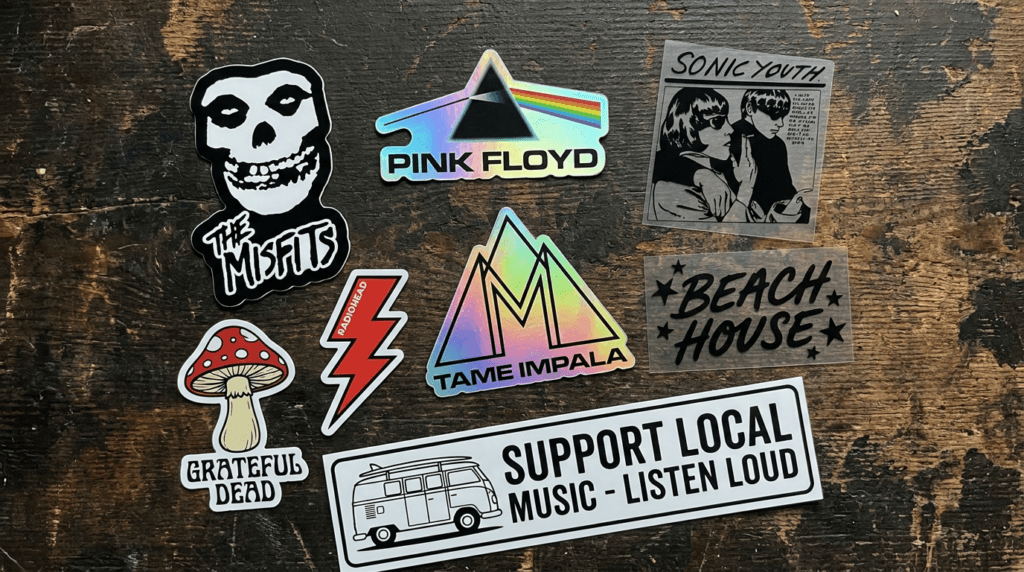
Design is where most bands either win or lose the sticker game. The format and material can be perfect, but if the design doesn’t hold up — if it’s cluttered, illegible at small sizes, or visually inconsistent with the rest of your band’s identity — even the best vinyl won’t save it. The good news is that great sticker design is entirely achievable for bands without a dedicated graphic designer, especially with professional support available. Here’s what you need to know.
Start with visual identity, not the sticker. Before you open a design file, ask yourself: what does your band look like? Not sound like — look like. What colours are yours? What fonts represent your genre and personality? What does your logo communicate? Your sticker should be a concentrated expression of your broader visual identity — not a standalone experiment. According to music industry branding experts at ICMP, consistent visual branding across all touchpoints — social media, merch, flyers, stage backdrops, and yes, stickers — is one of the most powerful things an emerging artist can invest in. Inconsistency dilutes recognition. Consistency compounds it.
Logo-first thinking. Your band logo is the centrepiece of most great sticker designs. A bold, immediately recognisable logo that reads clearly at both 50mm and 150mm is the cornerstone. Music logo design specialists consistently emphasise scalability — a logo that looks great on a poster but becomes unreadable at sticker size is a logo that needs refinement. Test your design by shrinking it down to the smallest size you plan to print. Can you still read the band name? Can you still identify the icon or symbol? If not, simplify.
Contrast is everything at a distance. A sticker on a merch table is competing visually with everything around it — other merch, other bands’ stickers, the environment itself. High contrast between foreground elements and background makes a sticker legible from a distance and immediately eye-catching. Two or three core brand colours, used consistently and boldly, will outperform a complex multicolour gradient every time. Saturated, confident colours attract attention. Muddy, over-complicated palettes repel it.
Typography is a genre signal. The fonts you choose communicate as much as the words themselves. A sludge metal band and an indie dream-pop duo should look completely, unmistakably different — and a huge portion of that difference comes from typography. Heavy, jagged letterforms versus light, flowing scripts. Distressed textures versus clean sans-serifs. Your font choice should feel inevitable for your genre — like it couldn’t belong to any other kind of band. One critical rule: avoid overly decorative or complex fonts at small sizes. At 50mm, elaborate scripts become illegible blobs. Legibility at scale is non-negotiable.
Album artwork makes a natural sticker. Releasing a new album or EP? The cover art is already a complete, considered visual statement. Translating it directly into a sticker design doubles as both merch and promotional material — fans who know the album recognise it immediately, and fans who don’t are introduced to the artwork in a format they’ll actually engage with. Limited edition album-art stickers bundled with physical releases (vinyl, CDs, cassettes) are particularly effective because they feel like part of the release, not an afterthought.
Shape follows the design. For die cut stickers especially, the cut line is part of the design. A guitar silhouette, a band emblem, a hand-drawn mascot — the shape communicates before the eye even processes the words. When designing for die cutting, think about what shape your design naturally wants to be. Let the silhouette do expressive work. A rectangular sticker is fine. A sticker cut to the outline of a skull, a lightning bolt, or a record player is memorable.
Artwork specifications matter. If you’re preparing files yourself, work at 300 DPI minimum. Vector formats — Adobe Illustrator (.AI), .EPS, or high-resolution .PDF — are ideal because they scale without quality loss. High-resolution .PNG or .JPG files work too, as long as the resolution is sufficient for the print size. If design feels outside your wheelhouse, don’t let it stop you. Fast Stickers’ free design service means their team can bring your vision to life from scratch — or refine existing assets — with unlimited revisions until the result is exactly right.
Less is almost always more. The most common mistake in sticker design is trying to communicate too much. Band name, logo, website URL, social handles, tour dates, album name, genre description — resist the urge. Band name plus logo, with an optional URL or social handle, is typically sufficient. Every element you add competes with every other element for attention. A clean, bold, confident sticker that communicates one thing powerfully is infinitely more effective than a busy design that communicates five things weakly.
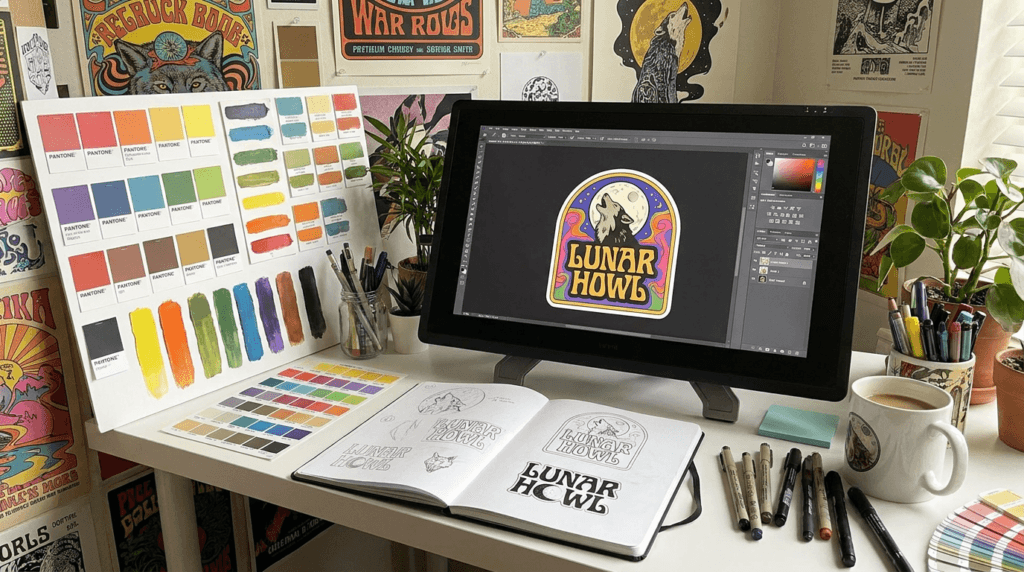
A beautifully designed sticker sitting on a shelf achieves nothing. The magic happens in deployment — and that’s exactly where we’re headed next.
A well-designed, well-printed sticker is potential energy. The strategies you use to distribute, deploy, and amplify that sticker transform it into kinetic energy — momentum for your band that compounds across every show, every city, every season. Going beyond “hand them out at gigs” is where the real promotional power lives. Here’s how to think about sticker strategy like a seasoned tour manager.
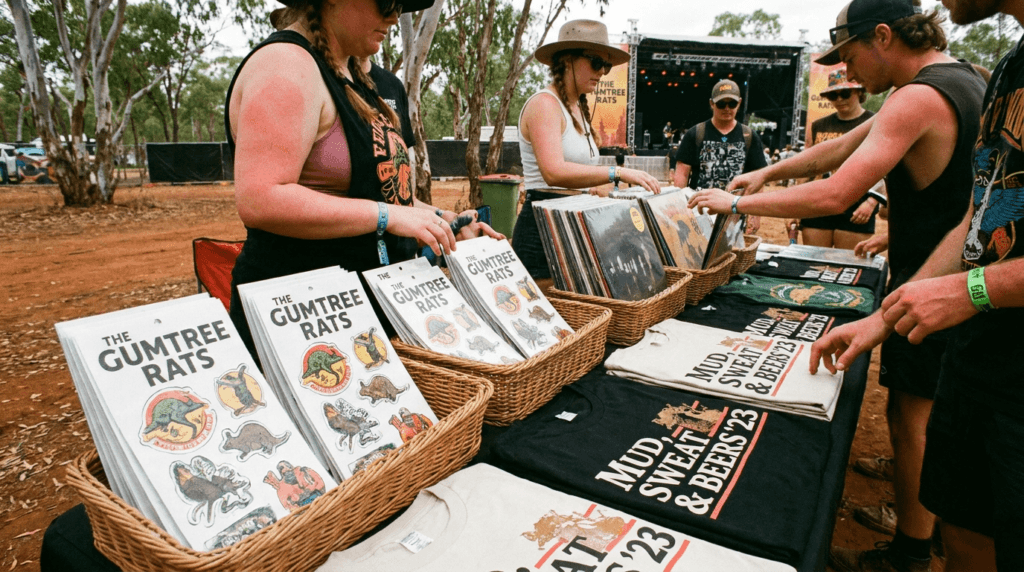
Build your merch table around stickers. The merch table is your band’s retail floor, and stickers should be a structural part of it — not a casual addition. Use them in two ways: as a standalone product (sticker packs at $5–$8) and as a bundle element with higher-ticket items. A T-shirt purchase that comes with a free sticker pack feels like better value to the fan and moves more product overall. Sticker packs displayed prominently at the front of the merch table catch the eye of fans who might not be ready to commit to a $45 hoodie — giving them a low-barrier way to support the band and take something home. Shopify’s analysis of band merch strategy consistently highlights that low-cost, high-perceived-value items like stickers and pins are among the most important conversion drivers at a merch table.
The “free sticker for an email signup” play. This is one of the oldest and most effective grassroots music marketing tactics available, and it works precisely because stickers have genuine perceived value. At every show, have a simple sign-up sheet or QR code at the merch table: email address in exchange for a free sticker. Fans who genuinely enjoy your music are happy to make that trade — and you’ve just built a direct line of communication that no algorithm can take away from you. Your mailing list is the one audience you own completely. Stickers are the currency that grows it.
Album and EP launch kits. Every physical release — pressed vinyl, CD, cassette, even a digital download card — is an opportunity to include a custom sticker as part of the package. A limited edition launch sticker, included only with first-run copies or pre-orders, creates both urgency and collectability. Fans who know the sticker is scarce treat it differently — they display it more prominently, share it more eagerly, and tell more people about it. Scarcity is a powerful emotional driver in music fandom.
Street marketing with intention. In cities like Melbourne, Sydney, Brisbane, and beyond, sticker culture in music precincts is alive and well. Many venues, guitar shops, rehearsal studios, and independent music retailers have designated areas where bands can leave stickers — venue noticeboards, backstage walls, green room fridges (a sacred tradition), bathroom mirrors, instrument shop counters. Place stickers strategically in spaces where your target audience actually spends time. Focus on music-adjacent environments where a fan stumbling across your sticker is already predisposed to be interested in discovering new bands.
Social media UGC as an amplification engine. Every sticker you put into the world is a potential piece of user-generated content. Encourage fans to photograph their sticker “in the wild” — on their guitar case in a practice room, on their laptop at a café, on their van dashboard on a road trip — and tag the band. Run a competition: “Show us where you’ve placed our sticker. Best placement wins a signed merch pack.” The resulting content extends your reach organically, generates genuine fan engagement, and shows prospective new fans a community of people who love your music. Building brand loyalty through custom stickers is deeply tied to this community-signalling dynamic — when people see others displaying a sticker, it triggers curiosity and belonging simultaneously.
Festival strategy. Australian music festivals — Splendour in the Grass, Laneway, Groovin the Moo, Golden Plains, and dozens of regional events — represent extraordinary sticker distribution opportunities. Whether you’re playing the festival or attending as a fan, the density of music-interested people in a confined space is unmatched. Street teams, wristband tables, camping areas, and festival bars are all legitimate distribution zones. A sharp-looking sticker handed to someone at a festival, in a context where they’re already emotionally open to new music, plants a seed that can grow into a genuine fan relationship.
Collaboration stickers. Consider co-designing a sticker with another local band whose music sits in a complementary space. A split sticker — half your logo, half theirs — cross-promotes both acts to each other’s fanbases. It’s cooperative promotion in the best tradition of independent music scenes, where bands build each other up rather than competing in isolation.
Tour-specific and city-specific designs. One of the most powerful things stickers can do is create a sense of occasion. A sticker designed specifically for your east coast tour, or a Melbourne-only design released only at your Corner Hotel show, makes every attendee feel like a genuine insider. Scarcity and specificity create desirability. Fans who own a city-specific sticker will tell the story of where they got it — and that story always includes your band name.
“The best merch doesn’t just represent your band — it represents the fan’s relationship with your band. A sticker from a show they’ll never forget is worth a hundred algorithm impressions.”
Knowing how to use stickers is one thing — knowing where to place them for maximum impact is another. The right locations can dramatically extend your band’s reach across Australia.
Placement is strategy. The same sticker sitting on a desk in your bedroom and stuck to a guitar case at 200 gigs over two years are having completely different promotional lives. Understanding where stickers perform best — and giving fans and bandmates the context to place them deliberately — dramatically multiplies the return on your print run.
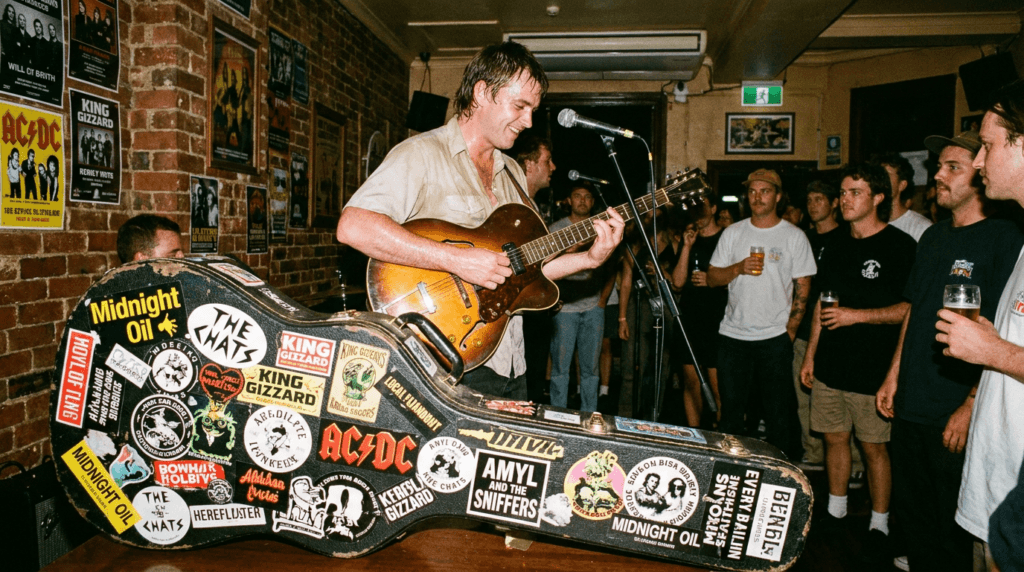
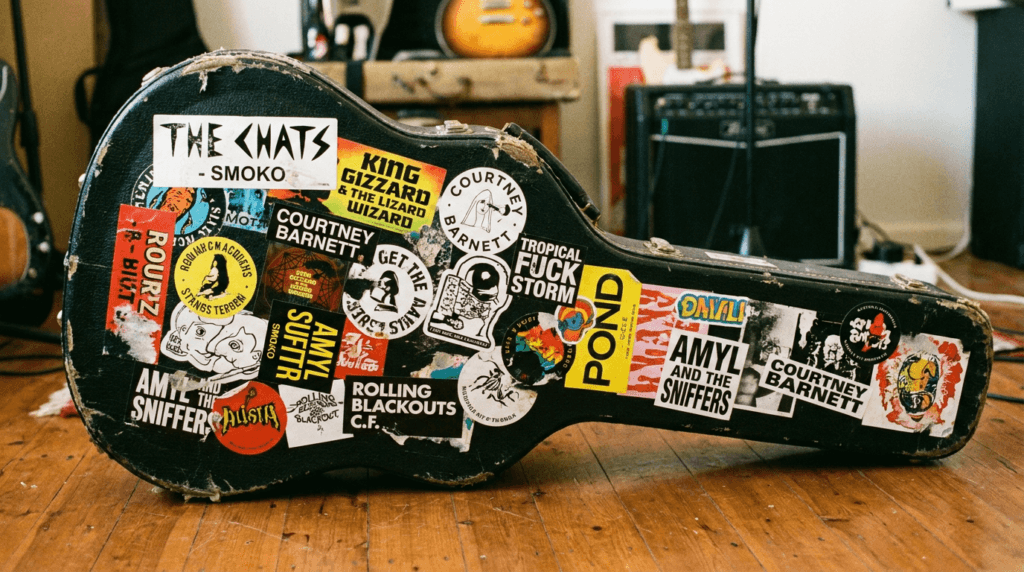
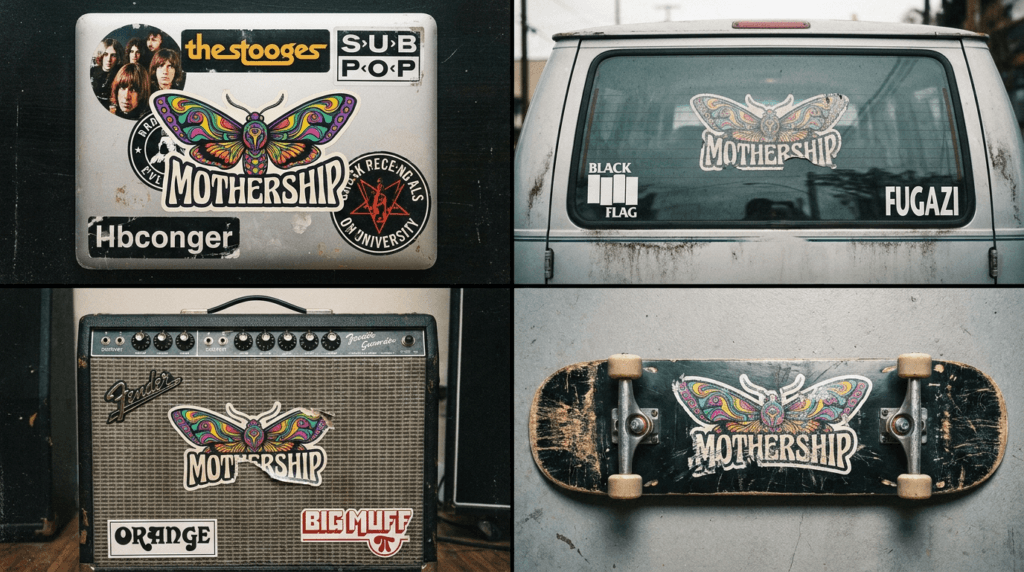
Instruments and gear: the natural homeland. Guitar bodies, guitar cases, amp heads, pedal boards, drum cases, keyboard stands — these are the spaces where band stickers have lived since the dawn of rock and roll. Every rehearsal, every soundcheck, every photo shoot is a passive advertisement. When a photographer snaps your guitarist mid-solo, the stickers on that guitar case are in the frame. When a fan uploads a video from the gig, the sticker on the amp head is visible. Instruments and gear are permanent fixtures of every visual document of your band’s career, which makes them extraordinarily high-value placement real estate.
Laptops and personal devices: the modern guitar case. In 2026, a laptop lid covered in carefully chosen stickers is the contemporary equivalent of a decorated guitar case — it communicates identity, taste, and allegiance in spaces of daily visibility. A fan’s MacBook sits open in a university library, a café, a co-working space, a study group. Dozens of people see it daily, registering the brands, bands, and ideas that fan chooses to display. A well-designed music band sticker on that lid is a tiny cultural recommendation, passed silently from the fan to everyone around them. Design your sticker to look great at laptop scale.
Vehicles: your touring van is a billboard. Picture your touring van rolling into Byron Bay with your band logo stretched across the side door. Every car you pass on the Pacific Highway, every pedestrian you rumble past in Brunswick, every tradesperson parked next to you at a servo — all of them see your band name. Bumper stickers and large-format vinyl decals for vehicles are among the highest-impression placements available at any price point. A quality vehicle decal is a moving advertisement that covers thousands of kilometres a year. For touring bands, a branded van is as essential as a tuner.
Venue walls, backstage areas, and music spaces. Australian pub venues, small bars, and live music rooms have a long tradition of sticker culture — the backstage walls and green rooms of beloved venues like The Tote, The Zoo, or The Exeter are covered in years of band history. Leaving your sticker in these spaces is participating in a living archive of Australian music. Beyond the backstage, many venues have noticeboards, bathroom walls, and stairwells that have served as unofficial community notice boards for the local music scene for decades. These are legitimate, high-value placement zones.
Water bottles, phone cases, skateboards: everyday carry. Anything a fan carries daily is a sticker opportunity. The key is designing stickers that suit the surfaces where fans are likely to place them — rounded shapes for water bottles, medium-format designs for phone cases, bold graphics for skateboard decks. Think about the surfaces your audience actually uses and let that inform the shapes and sizes in your sticker pack.
Removable stickers for temporary contexts. Not every surface invites a permanent commitment. Shop windows, event display stands, pop-up stalls at markets, music conference booths — these spaces benefit from removable stickers that deliver full visual impact without leaving behind adhesive residue when the event ends. Removable stickers open placement opportunities that permanent options simply cannot access, which meaningfully expands your distribution reach.
Music stores, record shops, and independent retailers. Build relationships with local guitar shops, independent record stores, and music retailers in every city you play. Many are happy to display stickers from local artists they support — on the counter, on a dedicated noticeboard, or alongside the register. These are spaces where your exact target audience already self-selects to spend time. A fan browsing records at their local independent shop is exactly the person your sticker needs to reach.
Inside every online merch order. Every package you ship is an unboxing experience — a moment of direct, one-to-one connection between your band and a fan. Including a sticker in every order transforms it from a transaction into a gift. It’s a surprise that costs you almost nothing per unit but delivers real emotional resonance. Custom vinyl stickers included in product packaging are consistently cited as among the most appreciated “extras” in the merch fulfilment world — fans share unboxing moments on social media, and a well-designed sticker inside a parcel is worth more than its weight in promotional value.
You now know what stickers to get, how to design them, and where to put them — so let’s talk about the final, most practical step: how to actually order custom band stickers in Australia, fast and affordably.
The ordering process doesn’t have to be complicated or stressful — and with the right printer, it genuinely isn’t. Here’s a complete walkthrough of how to go from “we need stickers” to a freshly printed pack arriving at your door, in time for your next show.
Step 1: Choose the right sticker type for your goals.
Everything you’ve read in this guide is preparation for this decision. Are you making an everyday guitar-case sticker that fans will place everywhere? Vinyl stickers are your answer. Do you have a strong logo silhouette you want to show off in its purest form? Die cut stickers are the move. Launching a limited edition album? Holographic or shiny gold stickers will feel appropriately premium. Building a merch table sticker pack with variety? Mix formats — a combination of die cut, standard vinyl, and holographic creates a genuinely exciting pack. Match the format to the purpose.
Step 2: Determine your sizes.
Sizing is a practical decision, not an artistic one. Think about where the sticker will live:
Order a mix if you’re producing a sticker pack. Variety in size is part of the appeal.
Step 3: Choose your finish.
Gloss finish delivers vivid, saturated colour with a polished, professional look — ideal for bold, colourful designs and anything that needs to stand out on a merch table. Matte finish has a softer, more tactile feel — sophisticated, understated, and well-suited to bands whose aesthetic leans more towards the underground, the artistic, or the deliberately lo-fi. Holographic and premium metallic finishes are their own category: reserved for limited edition and high-end applications where the material itself is part of the statement.
Step 4: Prepare your artwork — or let the professionals handle it.
If you’re preparing artwork yourself, work in vector format (Adobe Illustrator .AI or .EPS) or supply a high-resolution .PDF. If you’re working with raster files (.PNG, .JPG), ensure the resolution is 300 DPI or higher at the intended print size. Include bleed if required, and make sure text is outlined or embedded. If any of that felt like a foreign language — don’t worry. Fast Stickers’ completely free design service means their in-house design team can build your sticker from scratch based on your brief, or refine whatever logo assets you have. There are no hidden design fees, and revisions continue until the result is exactly what your band needs.
Step 5: Review your digital proof.
Before any printing begins, Fast Stickers provides a digital proof — a visual representation of exactly what your sticker will look like when printed. Review it carefully. Check the colours, the sizing, the cut line, the text. Once you approve it, production begins. This step exists specifically to eliminate surprises and ensure that what arrives at your door matches exactly what you envisioned.
Step 6: Receive your order — lightning fast.
Most orders are completed within 2–3 business days after proof approval. And critically: Fast Stickers ships free, via express post, to anywhere in Australia — from the inner suburbs of Melbourne and Sydney to regional Queensland, the Northern Territory, Western Australia, and every music venue in between. Gippsland to Geraldton, express. If you need stickers for a gig on Friday, order by Tuesday at the latest. And if you’re truly cutting it fine — a last-minute festival booking, an unexpected support slot — call the team and mention “URGENT.” Fast Stickers accommodates rush orders and will work with you to find a solution. The show must go on, and so must the stickers.
A note on quantities. Order enough to sell and enough to give away generously. The promotional return on a sticker distributed freely far exceeds the marginal cost per unit. The temptation to order conservatively is understandable, but stickers get more valuable as they spread — the more of them out in the world, the stronger your band’s visual presence becomes. Order a proper run. Distribute boldly.
Ready to place your order? Browse the full range at the Fast Stickers shop or get a custom quote for your specific needs.
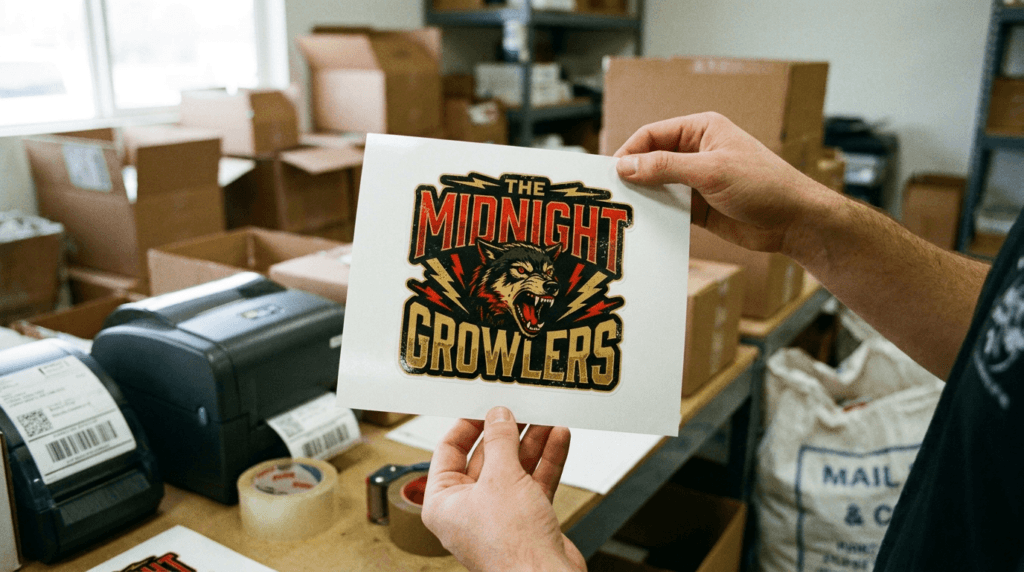
We started this guide in a sticky-floored pub in Fitzroy. We end it somewhere on a highway between cities — a touring van rolling through the dark, a handmade setlist taped to the dashboard, a band logo stretched across the side door catching the headlights of the cars behind.
Music band stickers are, at their core, a form of storytelling. They carry a band’s identity into the world in a form that is physical, durable, and deeply personal. In a music landscape where Australian artists are fighting harder than ever for digital visibility — where streaming algorithms systematically depress the reach of local music and where content cycles move faster than most bands can create — a physical sticker is a radical act of patience and confidence. It says: we are building something real, and it will last longer than the algorithm.
The Australian music industry is a $10.76 billion ecosystem full of extraordinary artists, passionate fans, and a live music culture that the rest of the world legitimately envies. Breaking through in that landscape requires multiple strategies working in concert — but the oldest and most effective grassroots tools are often the ones that get overlooked in the rush to master the next platform. Stickers are one of those tools. They’ve been working for bands since before the internet existed, and they’ll be working long after the current generation of social platforms is replaced by whatever comes next.
You now have everything you need. You understand the formats, the design principles, the fan engagement strategies, the placement logic, and the ordering process. The only thing left is to make it happen.
Whether you’re gearing up for your next gig, launching a new album, or building your band’s merch range from the ground up, Fast Stickers is here to help you make your mark — lightning fast.
🎸 Free professional design service — the team will bring your band’s vision to life, from logo to finished sticker, with unlimited revisions.
⚡ 2–3 business day turnaround — because gigs don’t wait and momentum doesn’t pause.
🚚 Free express shipping across Australia — from Gippsland to your door, wherever in the country that happens to be.
🏆 15+ years of sticker expertise — trusted by Australian bands, businesses, and creatives who need quality they can count on.
Last-minute gig coming up? Call the team and mention “URGENT” — they’ll do everything they can to make it happen.
Custom Stickers Melbourne: The Complete 2026 Guide for Victorian Businesses Picture this: it’s a Thursday afternoon in a Brunswick café. The new logo finally landed

Picture this: it’s 9pm on a Tuesday in a spare room in Bendigo, and you’re sitting cross-legged on the floor because the table ran out

Picture this. It’s Friday night in a suburban Australian street — the kind where the smell of melted cheese and wood-fired dough drifts through open

The Complete Australian Guide for Beekeepers and Honey Producers Picture this: it’s a warm December morning in the Yarra Valley. The flow has been extraordinary

Picture this: it’s 6am on the Saturday before Mother’s Day, and a florist in Melbourne’s inner north is already three hours deep into the morning.