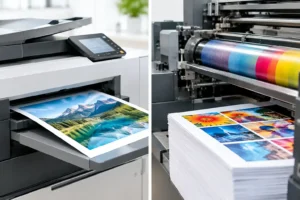
Digital Versus Offset Printing for Your Job
Digital versus offset printing explained for Australian businesses. Compare cost, speed, colour, quantities and the right choice for your next print run.
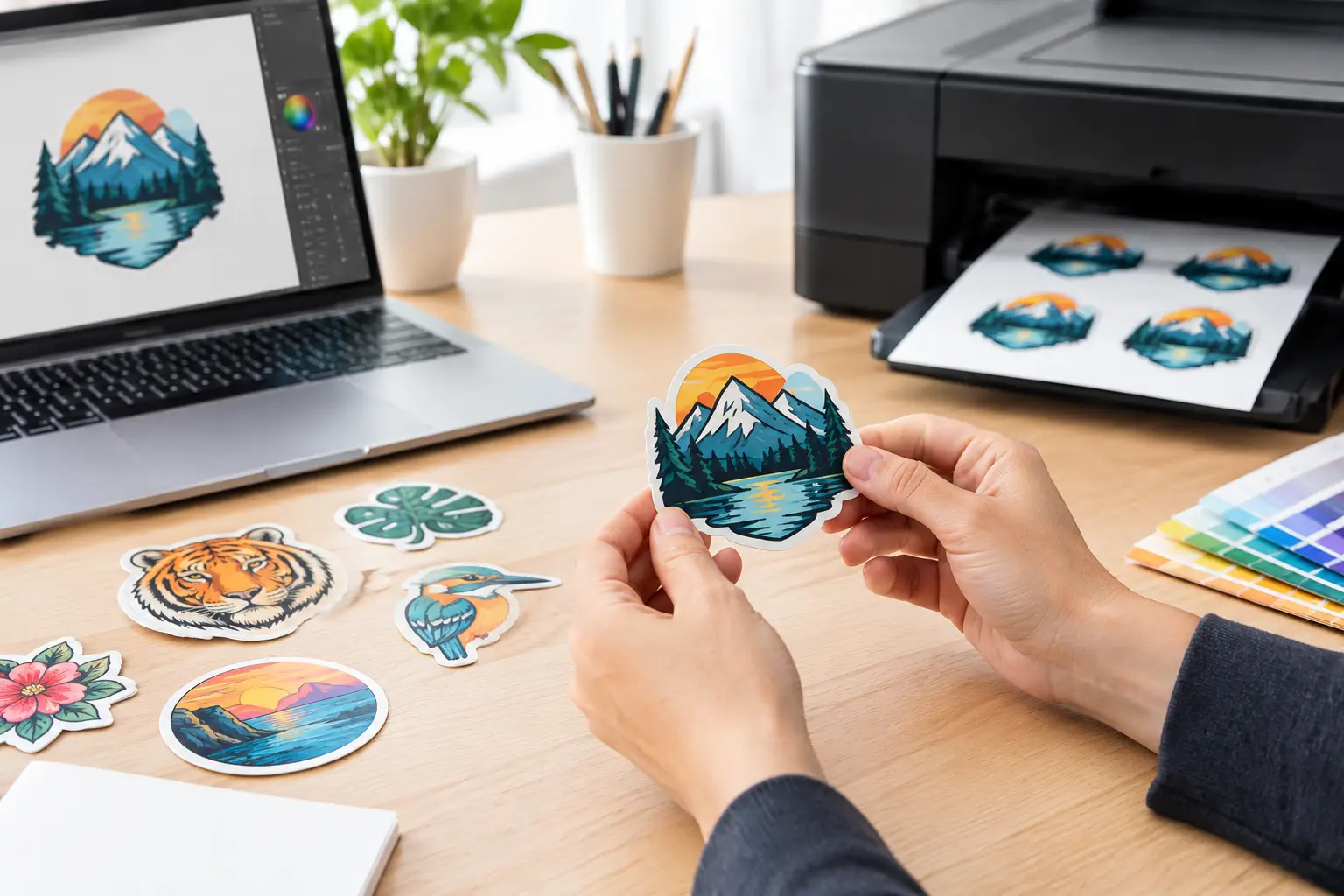
A sticker can look brilliant on a screen and still disappoint once it lands on a jar, ute, shop window or product box. Fine lines fill in, small text vanishes, colours shift and a square file gets printed as an awkward rectangle. A professional sticker artwork design service prevents those expensive little surprises before your job goes to print.
For a café launching takeaway labels, a tradie branding a work vehicle or a local club organising an event, the goal is simple: stickers that look sharp, fit the job and arrive ready to use. Good artwork support turns a rough idea, logo or mobile photo into a file that can actually be printed well.
Sticker design is not just about making something look nice. It needs to work at the size you are ordering, on the material you have chosen and in the place the sticker will be used. A label for a small candle jar has different needs to a die-cut bumper sticker, and a clear window decal needs a different approach again.
The right service starts by understanding the job. Is the sticker promoting a business, labelling a product, giving directions at an event or adding personality to a laptop? Will it live indoors, on packaging, in a fridge, on a boat or exposed to sun and rain? These details shape the artwork from the beginning.
A print-ready design should account for bleed, cut lines, safe areas and image resolution. Bleed is the extra artwork that runs beyond the finished edge, so there is no accidental white sliver after cutting. Safe areas keep important text and logos away from the trim line. They are small production details, but they make the difference between a sticker that feels polished and one that looks rushed.
At Fast Stickers, free artwork assistance and unlimited proof revisions give customers room to get the details right before production starts. That is especially useful when you have a strong idea but not a finished design file.
The best sticker artwork does one job clearly. A product label might need to show a flavour, ingredients cue and brand name. A vehicle sticker may need a business name, service and phone number that can be read from a few metres away. An event sticker might only need a bold graphic and a date.
Trying to fit every detail into a small space is one of the fastest ways to weaken a design. If people cannot read it at the intended viewing distance, it is not doing its job. Keep the hierarchy clear: what should people notice first, what should they read second, and what can be left out?
Colour matters here too. High contrast is usually more useful than a complicated palette, particularly for small labels and outdoor decals. Dark type on a light background, or light type on a dark solid colour, tends to hold up better than thin lettering over a busy image. Your brand colours should still lead the way, but sometimes a practical adjustment makes the finished sticker far easier to use.
You do not need to be a designer to place an order, but the file you provide affects what can be achieved. Vector files such as AI, EPS, SVG or print-ready PDF are ideal for logos because they can be scaled without losing sharpness. High-resolution PNG, JPG and PDF files can also work well when they are large enough for the finished sticker size.
A screenshot copied from social media is often too small for print. It may look fine on a mobile, then turn soft or pixelated when enlarged. The same goes for photos taken in poor light or images pulled from a website. An artwork team can advise whether a supplied file is suitable, clean it up where practical or rebuild key elements for a clearer result.
If you only have a rough sketch, a business card, a photo of an old decal or a logo on a shirt, send it through. It gives the designer a starting point. Be clear about the wording, colours, shape and purpose, then review the proof carefully before approving it.
Artwork and material should be planned together. A design is not finished until it suits the surface and conditions it will face.
Vinyl is a practical choice for many business, outdoor and promotional stickers because it is durable and built to handle Australian weather. High-tack stickers suit harder-to-stick surfaces or demanding applications. Removable options are better where the sticker needs to come off cleanly, such as short-term promotions or rentals. Static-cling decals suit windows without adhesive, while clear stickers can create a clean, premium look on glass and packaging.
Clear material comes with a design decision that is easy to miss: white ink. Without a white ink layer, colours printed on clear stock can appear translucent and take on the colour of whatever sits behind them. This can look great for a subtle window graphic, but it may not suit a bright logo or detailed product label. Adding white ink behind selected colours can make artwork appear more solid and readable.
Metallic gold and silver finishes also need thoughtful design. They work best when used as a feature rather than a substitute for good contrast. Fine text and pale colours may lose impact against a reflective finish, while simple shapes, bold type and generous spacing tend to look more deliberate.
A circle, rectangle or square is efficient and familiar, particularly for sticker rolls and product labels. Die-cut stickers follow the outline of your artwork, which gives logos, mascots and illustrations more presence. The trade-off is that intricate shapes need enough space around narrow points, tiny details and fragile-looking edges to cut cleanly.
When in doubt, simplify the silhouette. A strong die-cut shape is memorable, easier to apply and less likely to lose visual impact from a distance. Your proof should show the cut line so you can see exactly where the finished edge will sit.
A proof is your chance to check the real-world details, not just admire the layout. Read every word slowly. Confirm phone numbers, websites, dates, prices and product names. Check that your logo is current and that the quantities, dimensions, material and finish match the job you intended to order.
It also helps to view the proof at roughly the final size. Text that looks generous on a large monitor can be tiny on a 50 mm label. If the sticker will be applied by hand, think about how easy it will be to position. If it is going on a curved bottle, a narrow panel or a vehicle door, make sure key details are not pushed into an area where they will bend or be obscured.
Unlimited proof revisions are valuable because good design often comes from one or two practical tweaks. A larger phone number, a simpler background, a heavier font or a slightly different shape can improve the finished result far more than adding another graphic effect.
When you need stickers quickly, clear communication keeps the job moving. Send the best artwork you have, state the finished size and quantity, explain where the sticker will be used, and flag any deadline upfront. If you are ordering for a launch, market, party or trade event, allow time for proof approval as well as production and delivery.
Fast production should not mean guessing. A reliable printer can move quickly once the artwork, material and proof are confirmed. For customers across Australia, local production, a 2-3 business-day turnaround and free express shipping can make a genuine difference when stock is low or an event date is close.
The most effective sticker artwork is rarely the busiest. Give it one clear message, choose a material that suits the application and take the proof seriously. Then your sticker has the best chance of doing what it was made to do: get noticed, stay put and represent your brand properly.
Digital versus offset printing explained for Australian businesses. Compare cost, speed, colour, quantities and the right choice for your next print run.
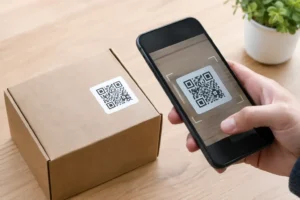
Creating QR code stickers for packaging, shops and events? Get the design, sizing, testing and material choices so every scan works in Australia.
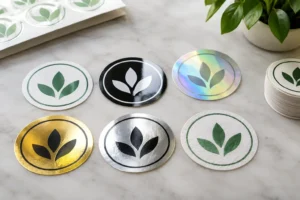
Compare popular sticker finishes for branding, from gloss and matte to clear, metallic and more, so every label, product or promotion looks spot on too.
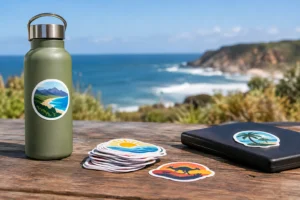
Choose outdoor sticker materials that stand up to sun, rain, salt spray and daily wear, with practical advice for labels, vehicles, windows, gear and more.
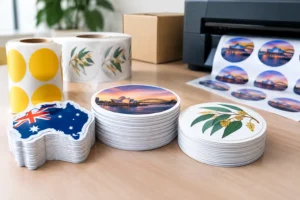
Need urgent sticker printing Australia-wide? Choose the right material, approve artwork fast and get durable custom stickers ready for your deadline today.