

Creating QR Code Stickers That Get Scanned
Creating QR code stickers for packaging, shops and events? Get the design, sizing, testing and material choices so every scan works in Australia.
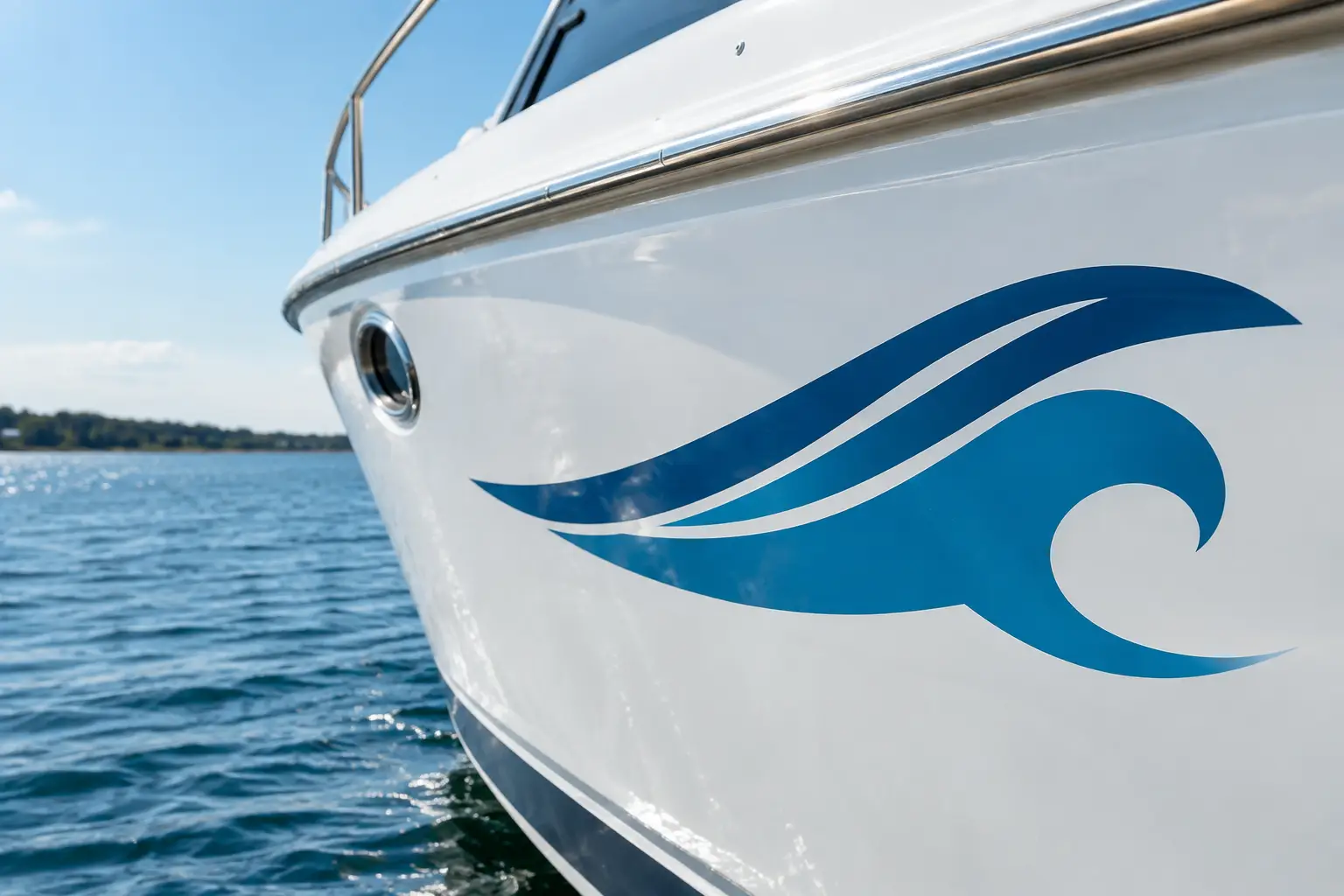
A boat name is one of the first things people notice at the ramp, marina or mooring. It should look sharp from a distance, suit the boat’s personality and still be easy to read after a summer of sun, salt spray and wash-downs. That is why custom boat name stickers need more than a good-looking font. The material, adhesive, finish, size and application all play a part in how long they last.
For a tinny that sees weekend fishing trips, a family bowrider, a serious offshore rig or a yacht kept in the marina, the right decal gives your boat a finished, unmistakably yours look. Here is how to get it right before you order.
A boat decal spends its life outdoors. UV exposure can fade weak inks, salt can work its way into edges, and repeated cleaning can lift a poorly matched adhesive. Paper labels and low-grade indoor stickers might look fine on day one, but they are not made for this job.
For most hulls, premium outdoor vinyl is the practical choice. It is flexible enough to sit neatly on a slight curve, durable enough for regular exposure and designed to hold colour over time. A protective laminate adds another layer of defence against scratches, sun and spray. It also makes the surface easier to wipe down after a day on the water.
The surface matters too. Smooth gelcoat, painted aluminium and clean glass are generally sticker-friendly. Textured plastics, oxidised paint, waxed surfaces and porous finishes can be trickier. If your boat has an older hull, spend time preparing the application area rather than hoping a stronger sticker will solve every issue.
The best boat names have character, but readability comes first. A clever name is wasted if it disappears into the hull colour or cannot be read from the next berth.
Think about where the decal will sit and how far away people will view it. A name on the stern generally needs larger lettering than one placed on a cabin side. Long names can work, but they may need a narrower typeface, a stacked layout or a simpler secondary line to avoid looking cramped.
Script fonts can look classic on a cruiser and playful on a ski boat, yet very fine flourishes are harder to read and more likely to cause trouble in small lettering. Bold sans serif fonts suit modern boats, work well at distance and are easier to cut and apply cleanly. If you want a traditional nautical feel, choose a serif font with enough weight to remain clear.
A simple test helps: view the design on your mobile from a few metres away. If you need to squint at it on screen, it will not improve once it is on the boat.
Contrast does most of the hard work. White lettering stands out on navy, black, red and darker coloured hulls. Black, charcoal or navy works well on white and light-coloured boats. Metallic finishes can add a polished touch, but they are best used where the contrast remains strong.
Clear vinyl is a smart option when you want the hull colour to show through around the lettering or artwork. White ink can make a big difference on clear decals, especially over dark hulls, because it stops colours looking transparent or washed out.
Avoid relying on two similar tones, such as pale blue on white or silver on light grey. They may look subtle in a design preview but often disappear in bright Australian sunlight.
Measure the available space, then measure it again. Boat lines, rails, hatches, registration marks, outboards and fenders can all reduce the usable area. A decal that looks perfect in a flat digital proof may need adjusting once you account for a curved transom or a narrow side panel.
For a stern name, use the widest clean section of the transom while allowing room around fittings and existing required markings. On the sides, place the name where it will not be regularly covered by fenders or rubbed by ropes at the berth. Cabin sides can offer excellent visibility, although a sharply curved surface may call for a smaller layout or separate elements rather than one large decal.
Before committing, use masking tape to mark out the intended width and height. Step back, check it from the dock or driveway, and make sure the scale feels right for the boat. Bigger is not always better, but tiny text on a large hull can look unfinished.
If you are including a home port, keep it clearly secondary to the boat name. It should complement the design, not compete with it.
Even premium vinyl needs a clean surface to bond well. This is the part that is easy to rush and hardest to fix later.
Wash the area first to remove salt, grime and surface dirt. Once dry, wipe it with an appropriate cleaning solution that removes wax, polish, silicone and oils. Do not apply the decal straight over fresh wax or detailing products. They can leave a barrier between the adhesive and the hull.
Apply stickers in dry, calm conditions. Extreme heat can make vinyl more difficult to handle, while cold or damp weather can affect adhesion. A sheltered garage, shed or still day at home is usually easier than trying to work beside a windy ramp.
For larger boat names, a second pair of hands is worthwhile. It is much easier to keep a long decal level when one person holds the backing and the other uses a squeegee to apply it progressively.
Take your time with alignment. Use low-tack masking tape to position the decal, stand back to check it is level, then create a hinged edge with tape before removing the backing. This gives you control and stops the sticker landing in the wrong spot all at once.
Apply from the centre outward with firm, even pressure. A felt-edge squeegee is ideal because it helps press the adhesive down without scratching the surface. Work slowly across curves, and do not stretch the vinyl to force it around a difficult shape. Stretching can distort letters and put tension into the material, which may cause edges to lift later.
Once the decal is down, go over every letter and edge again. Remove application tape carefully at a low angle, pulling it back over itself rather than straight away from the hull. If the weather is warm, let the decal settle before heading out or washing the boat.
Not everyone has a print-ready boat name file, and that is completely fine. A rough idea, a favourite font, a photo of the hull and the name you want can be enough to get started. The key is seeing a proof before anything goes to print.
A proper proof lets you check spelling, colours, overall dimensions and layout against the actual boat. It is also the time to simplify a crowded design or make lettering heavier for better visibility. Unlimited proof revisions are particularly useful when you are deciding between a classic name treatment and something more modern.
Fast Stickers can help turn an idea into production-ready artwork, whether you have a finished logo or only the boat name scribbled in your notes. That support is useful for first-time boat owners and anyone replacing faded decals without wanting to recreate the old design from scratch.
A few design decisions can make custom boat name stickers look more professional and stay that way. Keep outlines thick enough to print cleanly. Leave breathing room around the name rather than crowding it with anchors, fish silhouettes, waves and slogans. Use one strong visual idea instead of several competing ones.
If the boat is regularly trailered, consider where tie-downs, covers and straps rub. If it lives in a marina, think about fender placement and dock-side visibility. For a hard-working fishing boat, durability and clarity usually matter more than ornate styling. For a leisure cruiser, you may have more room to add a refined script, metallic accent or matching tender decal.
Your boat name should feel personal, but it also needs to do its job in real conditions. Choose quality vinyl, create enough contrast, size it for the hull and apply it to a properly prepared surface. Get those details right and every time you pull in, launch out or look back from the water, the name will look like it belongs there.
Creating QR code stickers for packaging, shops and events? Get the design, sizing, testing and material choices so every scan works in Australia.
Compare popular sticker finishes for branding, from gloss and matte to clear, metallic and more, so every label, product or promotion looks spot on too.
Choose outdoor sticker materials that stand up to sun, rain, salt spray and daily wear, with practical advice for labels, vehicles, windows, gear and more.
Need a sticker artwork design service? Get print-ready designs, unlimited proof changes and durable custom stickers made for tough Australian weather, promptly.
Need urgent sticker printing Australia-wide? Choose the right material, approve artwork fast and get durable custom stickers ready for your deadline today.