
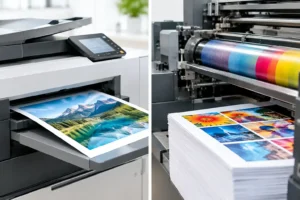
Digital Versus Offset Printing for Your Job
Digital versus offset printing explained for Australian businesses. Compare cost, speed, colour, quantities and the right choice for your next print run.
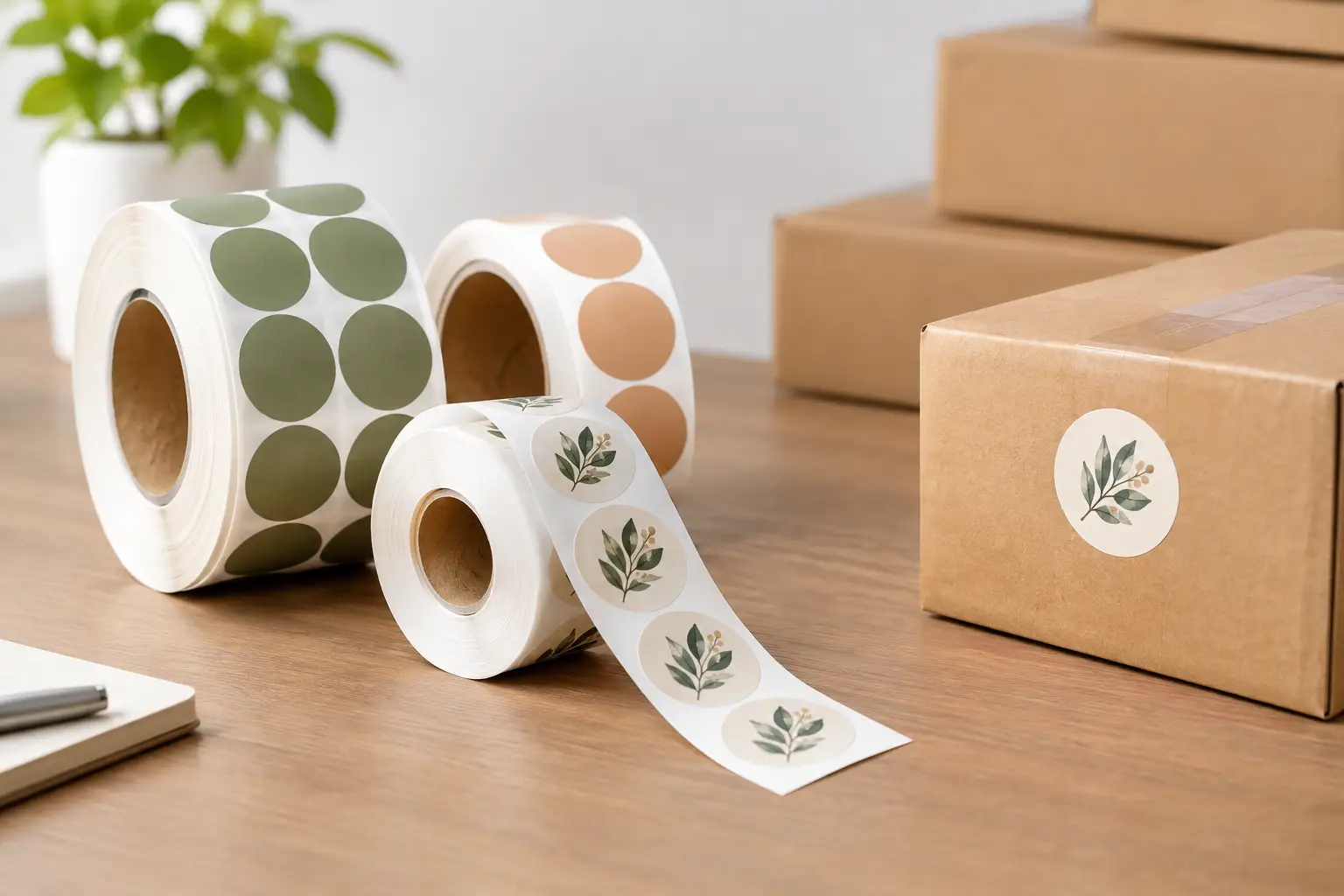
A fresh batch of products can be ready to sell, then lose half a morning at the packing bench because every label needs peeling, lining up and applying one at a time. Custom sticker rolls are made for that moment. They keep your labels in sequence, within easy reach and ready for quick, consistent application across jars, boxes, pouches, takeaway cups and more.
For Australian businesses that pack products regularly, sticker rolls are not just a tidy way to buy labels. They can make daily fulfilment quicker, help your branding look more professional and reduce the small errors that creep in when the bench gets busy. The key is choosing a roll that suits the job rather than simply choosing the cheapest option.
A roll format makes most sense when you have a repeatable labelling task. Think candle makers applying safety labels, cafes sealing takeaway packaging, breweries labelling cartons, tradies branding giveaway packs, or retailers adding price and product information before stock hits the shelf.
The labels feed off the roll one after another, which keeps the process moving. You are not sorting through loose sheets or trying to separate individual stickers with wet hands, flour on the bench or a queue of orders waiting to go out. For hand application, a roll can be a simple operational win. If your production grows, the same format can also work with many label dispensers and applicators.
Consistency matters just as much as speed. When every label is the same size and is placed in the same position, your packaging looks considered. That creates a stronger first impression whether the product is on a market stall, in a local shop or arriving at a customer’s front door.
The best label is not always the thickest, glossiest or most decorative one. Start with where it will go, how it will be handled and what the customer needs to see.
Round labels are a practical choice for lids, jars, tubs and cups. They suit logos especially well and are quick to centre. Rectangle labels offer more room for ingredients, directions, barcodes or contact details, making them useful for bottles, boxes and pouches. Square labels can give a clean, modern look on flat packaging, while custom shapes make sense when the outline itself is part of the brand.
Keep the application area in mind. A label that is too large for a curved bottle may wrinkle at the edges. A tiny label on a large carton can look lost and may not leave enough room for essential information. Measure the usable flat space before finalising your artwork. If you are labelling a container with a taper, test a sample size first where possible.
Paper labels are a strong fit for dry, short-life applications such as bakery bags, retail packaging, event favours and indoor products. They are economical and give many products a familiar retail finish.
Vinyl is the better call when moisture, scuffing or outdoor exposure is likely. It is well suited to chilled products, bottles that may get condensation, outdoor giveaways, toolboxes and packaging that works hard in transit. For a premium look, clear material can let the product or container show through, while white ink can ensure lighter colours and small text remain visible on transparent surfaces.
The trade-off is straightforward: paper can be the practical choice for controlled indoor use, while vinyl gives greater durability where water, handling and Australian conditions are part of the picture. Do not pay for extreme weather resistance if the sticker only needs to last a weekend indoors. But do not put a paper label on a product that will live in an ice bucket, fridge or work ute and expect it to stay pristine.
Your label has only seconds to do its job. A customer should be able to spot the brand, understand the product and find the key detail without hunting for it. Put the most important information first: your logo or product name, followed by the detail that helps someone make a decision.
High contrast is your friend. Dark type on a light background is often easier to read than pale text over a busy photograph. Fine lines and tiny type can look sharp on a screen but become difficult to read once printed at small scale. If you need ingredients, warnings, batch details or instructions, give them enough space and use a type size that works in the real world.
Leave a little breathing room around the edges too. Artwork that runs right to the cut line can feel cramped, and important text placed too close to the edge risks being cut off. A simple design with clear hierarchy usually works harder than a label trying to say everything at once.
One product may need more than one label. A front label sells the product. A back label carries practical information. A small seal can close tissue paper, a box or a takeaway bag. Designing these pieces as a set creates a more polished brand experience without making every sticker identical.
This is where custom sticker rolls can be especially useful. You might order a main product label for daily use, a smaller logo seal for packing orders and a seasonal promotional roll for a limited release. The visual elements stay connected through the same colours, fonts and logo treatment, while each label has a clear purpose.
For food, cosmetics, candles and other regulated or information-heavy products, allow for the details that must be shown. Requirements vary by product and state, so check what applies to your category before printing a large run. It is far cheaper to update artwork before production than to relabel stock later.
Print-ready files are helpful, but they are not a requirement for getting started. A clear logo, rough layout, product measurements and a few notes about what you need can be enough for a design team to turn the idea into production-ready artwork.
If you are supplying files, use high-resolution artwork and avoid screenshots, blurry social media images or logos copied from a website. Vector files are ideal for sharp logos and text, but a high-quality PDF can also work well. Include any required colours, product copy and barcode files from the beginning so the proof reflects the final label.
Always check the proof carefully. Read every word, zoom in on small details, confirm the dimensions and imagine the label on the actual product. Check that phone numbers, web addresses, ingredients and punctuation are correct. Proofing can feel like a delay when you need labels quickly, but it is the best chance to catch a costly mistake.
Very small runs are useful for testing a new flavour, market stall product or event. They let you trial a design before committing to a larger quantity. Once the label is proven, ordering more can reduce the cost per sticker and keep your packaging consistent across future batches.
There is a balance, though. Avoid ordering a huge quantity if your product details, pricing, formulation or branding are about to change. Businesses with frequent updates may be better off ordering enough for the next production cycle rather than storing labels that could become outdated.
Also consider how quickly you use them. A roll that lasts a month is easy to manage. A year’s worth may need clean, dry storage away from heat and direct sunlight. Keep labels in their original packaging where possible, especially if they use a specialist adhesive or finish.
Set the roll on the side of your dominant hand and position the product or packaging in the same place each time. This small setup change can improve speed and placement accuracy. For bottles and jars, mark a guide on the bench or use a simple jig so the label lands at the same height on every unit.
Apply labels to clean, dry surfaces. Dust, oil, moisture and condensation can affect adhesion, particularly around edges. Press from the centre outward to reduce bubbles, then give the adhesive a firm final rub. If you are applying labels to refrigerated goods, test the process on the actual cold container rather than assuming it will behave like a room-temperature sample.
When timing matters, Fast Stickers combines free artwork help and proof revisions with fast local production and express shipping Australia-wide. That means you can move from an idea to labels that are ready for the packing bench without making the process harder than it needs to be.
The best roll is the one that makes your next packing run feel easier: clear enough to sell the product, tough enough for its environment and simple enough that anyone on the team can apply it neatly.
Digital versus offset printing explained for Australian businesses. Compare cost, speed, colour, quantities and the right choice for your next print run.
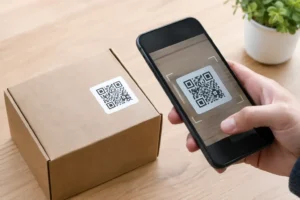
Creating QR code stickers for packaging, shops and events? Get the design, sizing, testing and material choices so every scan works in Australia.
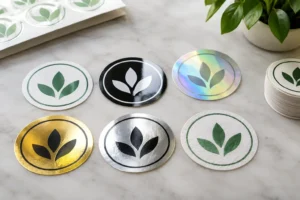
Compare popular sticker finishes for branding, from gloss and matte to clear, metallic and more, so every label, product or promotion looks spot on too.
Choose outdoor sticker materials that stand up to sun, rain, salt spray and daily wear, with practical advice for labels, vehicles, windows, gear and more.
Need a sticker artwork design service? Get print-ready designs, unlimited proof changes and durable custom stickers made for tough Australian weather, promptly.